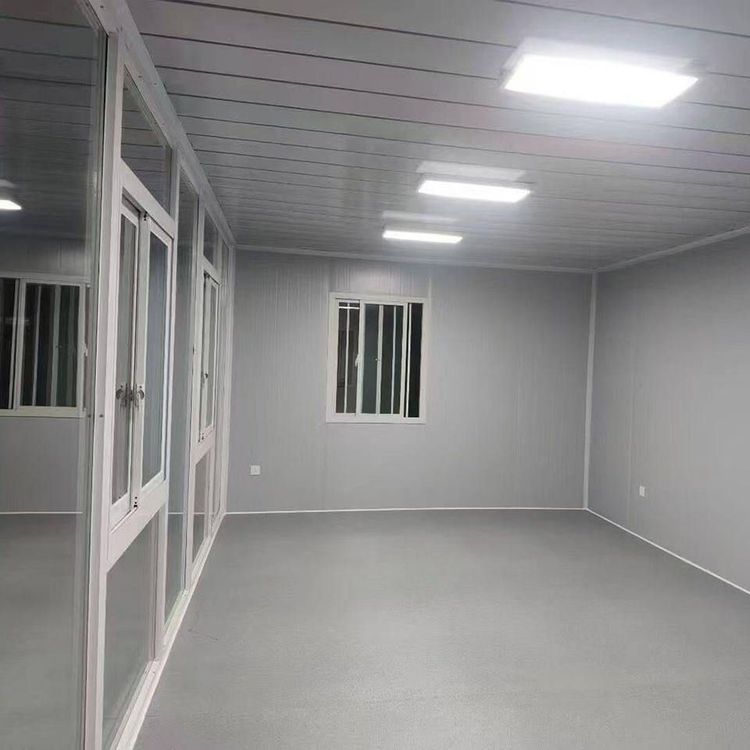
Temporary Container House Residence
A temporary container house residence is a habitable or office building transformed from a container as its basic structural module. It features environmental friendliness, flexibility, and low cost, but has spatial limitations and fire safety hazards, requiring reasonable application according to scenario needs and safety regulations.

Structural Performance and Applicable Scenarios
Container residences are based on standard containers and achieve residential functionality through structural modifications. Their core advantages lie in modular design and rapid deployment capabilities, making them suitable for temporary office spaces, accommodations, event support facilities, and other scenarios. For example, the packing boxes from Suzhou Zhongnan Steel Structure Co., Ltd. adopt a fully steel structural frame, with a wind resistance rating of up to Level 12, an earthquake resistance rating of Level 8, and a frame deformation rate of only 0.18%, meeting extreme working condition requirements. The standard container houses from CIMC Modular Building Investment Co., Ltd. have an installation efficiency of 3 hours per unit, suitable for rapid delivery scenarios such as engineering camps. Additionally, the material recyclability of container residences significantly reduces carbon emissions. Their steel consumption is only 1/2.3 of that of traditional concrete temporary houses, and the disassembly and assembly loss rate is controlled within 5%, aligning with green building trends.
Spatial and Comfort Limitations
Due to the original dimensions of containers, their internal space has inherent defects. Taking the athlete dormitories for the 2026 Nagoya Asian Games as an example, the standard container has an interior height of about 2.4 meters, with a net height possibly only 2.1 meters, restricting the movement of tall athletes. The bed size is 195cm×90cm, narrower than university dormitory beds, and the aisle between double beds is narrow, making it difficult to open suitcases. Furthermore, the cold-bridge effect of the metal container walls needs to be improved with a broken-bridge lining structure; otherwise, the indoor temperature in winter may be 8-10℃ lower than the outside, and in summer, the strong airtightness may lead to insufficient air conditioning load, affecting the living experience.
Fire Safety Hazards and Prevention
The fire risks of container residences mainly stem from illegal construction materials and structural characteristics. Some low-priced products use flammable sandwich materials such as polystyrene and polyurethane foam, which burn rapidly and are highly toxic, melting and dripping at 80℃, with the fire spreading extremely quickly. At the same time, the iron sheet wrapping structure makes firefighting difficult, as water cannons cannot easily penetrate the iron sheet to extinguish the fire, and trapped personnel may suffocate from toxic smoke. Preventive measures include using A-grade fire-resistant materials such as rock wool boards and fireproof cotton; adding protective sleeves to wires and cables, and using metal galvanized surface-mounted switch boxes; maintaining a spacing of more than 6 meters between containers, and equipping them with simple firefighting equipment.