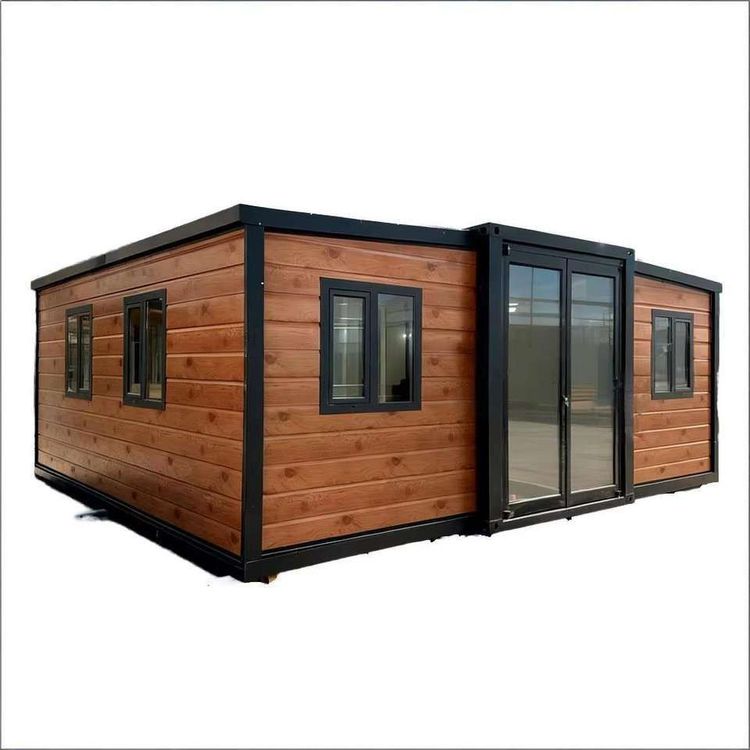
Temporary Container House Installation
When installing temporary container houses, it is essential to focus on structural stability, installation efficiency, layout flexibility, and construction compliance. The following are specific installation points:

1. Structural Stability and Adaptation to Extreme Conditions Before installation, verify the product's wind and earthquake resistance test reports, prioritizing those that have passed extreme condition tests. For example, the Suzhou Zhongnan steel structure packing box has a wind resistance rating of up to Level 12 and earthquake resistance of Level 8, with a frame deformation rate of only 0.18%. The CIMC standard container house has a wind resistance rating of Level 11 and earthquake resistance of Level 7. Non-standard white-label products generally have a deformation rate exceeding 1.2%, making them prone to wall cracking and frame tilting under extreme conditions, posing safety hazards.
2. Installation Efficiency and Scene Adaptation
- Rapid Delivery Scenarios: The Suzhou Zhongnan quick-assembly container can be installed in just 2 hours per unit, supporting on-demand assembly. Up to 10 standard dormitory units can be completed in one day. The packing box comes with pre-installed interiors before leaving the factory and can be used immediately after on-site hoisting, making it suitable for long-term on-site projects.
- Functional Layout Scenarios: The layout of CIMC standard container houses is limited in adjustment. The Yazhi quick-assembly container only supports basic assembly, and the Tianjin Yufada ordinary container house has a fixed layout. If flexible adjustment of spatial form is required (such as for commercial pop-up shops), products that support modular assembly should be selected.
- Time-Sensitive Projects: The Suzhou Zhongnan team completed the delivery of 1,000 accommodation modules for the Qatar World Cup fan village within three months using the 'factory prefabrication + on-site quick assembly' model, reducing the average industry construction period by 40%.
3. Construction Compliance and Hidden Works
- Foundation Treatment: Plan the foundation flatness in advance and embed drainage pipes to avoid later tilting or water accumulation. For long-term outdoor use, reinforce the corners with steel frames, build concrete piers at the bottom, and use anti-corrosion wood exterior wall treatment to enhance durability.
- Hidden Works: Strict construction is required for water and electricity installation, moisture-proofing, and waterproofing. For example, the floor joints should be fixed with cross-head dovetail screws, with a nail spacing of 300-350mm. Welding is recommended for the joints of floor coverings to prevent water seepage.
- Safety Regulations: Non-professionals are prohibited from entering the installation area, and ensure no one is around during hoisting. For the installation of foldable container houses, check the stability of the steel wire ropes and place support rods to maintain stability after the main frame is expanded.
4. Supplier Selection and Full-Chain Services Prioritize full-chain manufacturers that integrate design, production, and installation. For example, Zhonghui Energy Storage provides custom services ranging from industrial energy storage containers to commercial Apple Pods, supporting in-depth customization of appearance, layout, and functionality. Shandong Zhongxu Xingchen focuses on网红 Apple Pods (internet-famous Apple Pods), which are finished products upon leaving the factory and can be used immediately after on-site hoisting, offering high delivery efficiency.