
Telescopic Mobile Toilet
Currently, there is no standardized definition or widely applied mature product information regarding the 'telescopic mobile toilet'. The following is a popular science analysis from the aspects of possible design principles, potential application scenarios, and technical challenges:
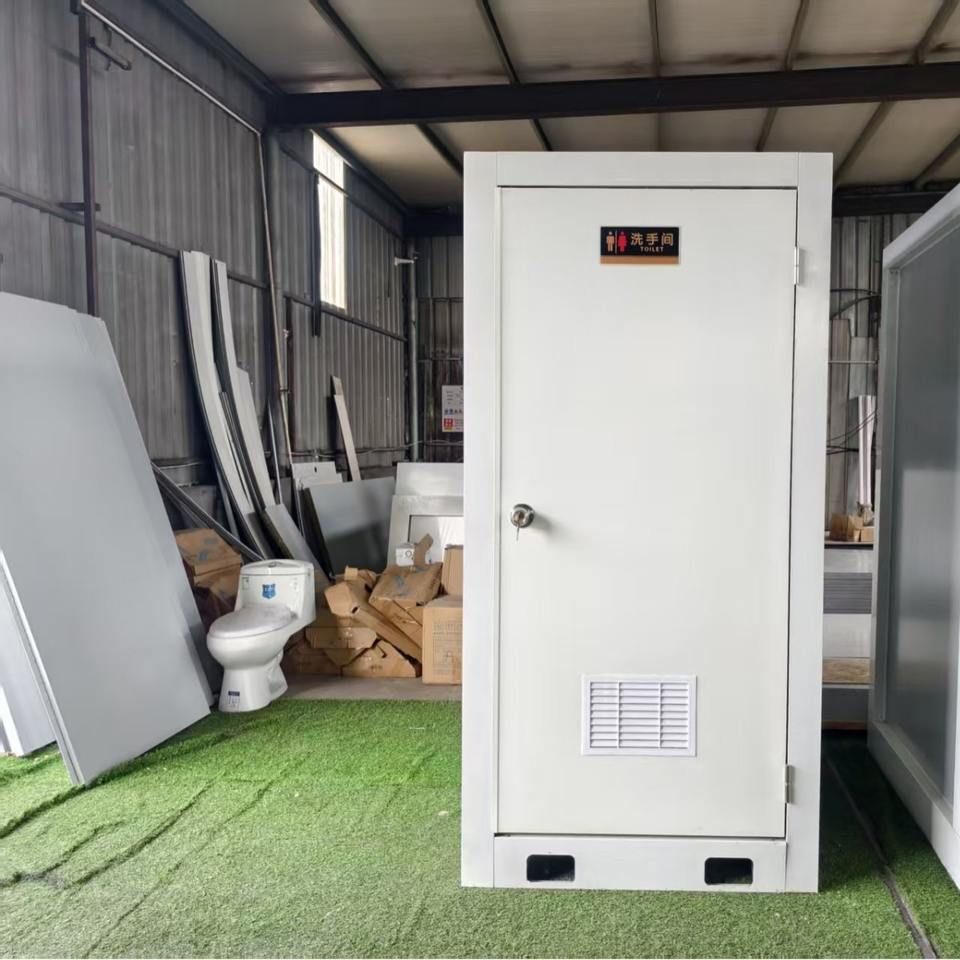
Possible Design Principles
Judging from its name, the 'telescopic mobile toilet' may combine the portability of mobile toilets with the spatial flexibility of telescopic structures. Its main structure may adopt foldable or telescopic frame materials, such as high-strength aluminum alloy or carbon fiber, and achieve expansion and contraction through mechanical linkage devices (such as sliding rails and hinges). When expanded, the frame supports the walls, roof, and internal facilities (such as toilets and sinks); when contracted, the overall volume is significantly reduced, facilitating transportation and storage. This design may draw inspiration from the principles of tents, telescopic stages, or foldable containers, but it needs to be optimized for the special requirements of toilets (such as airtightness and sewage systems).
Potential Application Scenarios
If such products exist, their application scenarios may focus on occasions that require temporary and rapid deployment of sanitary facilities. For example, in large-scale outdoor events (music festivals, sports events), the construction cost of traditional fixed toilets is high, and dismantling is difficult. Telescopic mobile toilets can be quickly expanded for use and contracted for transportation after the event, reducing resource waste. At disaster relief sites, where roads are damaged or space is limited, their compact form facilitates transportation by helicopters or small vehicles, quickly providing sanitary services for affected people. In addition, tourist attractions, construction sites, and other temporary personnel gathering areas may also become application scenarios.
Technical Challenges and Limitations
The current lack of widespread promotion may stem from multiple technical challenges. Airtightness is the primary issue. The connections of the telescopic structure must ensure no leakage to prevent odor diffusion or sewage overflow. In terms of stability, the expanded structure needs to resist external forces such as wind and personnel activities to prevent tipping over. The design of the sewage system needs to be compatible with different environments. If it relies on a septic tank, the fixation during contraction and the sealing after expansion need to be resolved. If it is connected to the municipal sewage network, rapid docking technology is required. In addition, material corrosion resistance, cost control, service life, etc., are also key points that need to be overcome.
Industry Status and Alternative Solutions
Currently, the mobile toilet market is mainly dominated by integral hoisting, towable, and container-type toilets. Although there is a lack of 'telescopic' products, some designs achieve spatial expansion through modular combinations (such as the splicing of multiple single units). If temporary sanitary facilities are required, existing types can be selected according to the scenario: for short-term events, lightweight packaged toilets can be used; for long-term projects, container-type toilets can be chosen, which have a more stable structure and more complete functions.
You may also like

Portable Toilet Color Steel Custom & OEM: Design & Bulk Production Guide
Read More
Portable Toilet Color Steel: Top Options & Considerations
Read More
Portable Toilet Color Steel Explained: How to Choose the Right One
Read More