
Taizhou Village Committee Portable Toilet
Renting portable toilets from the Taizhou Village Committee can meet the needs of rural events and daily life, providing flexible and convenient sanitation solutions. Portable toilets are suitable for various scenarios in rural areas, such as temple fairs, cultural performances, sports competitions, festivals, and farmland work areas. After the events, they can be removed without damaging the environment. With low construction costs and environmental friendliness, they are an economical and practical choice for village committees. The specific rental process is as follows:
I. Initial Demand Communication and Confirmation
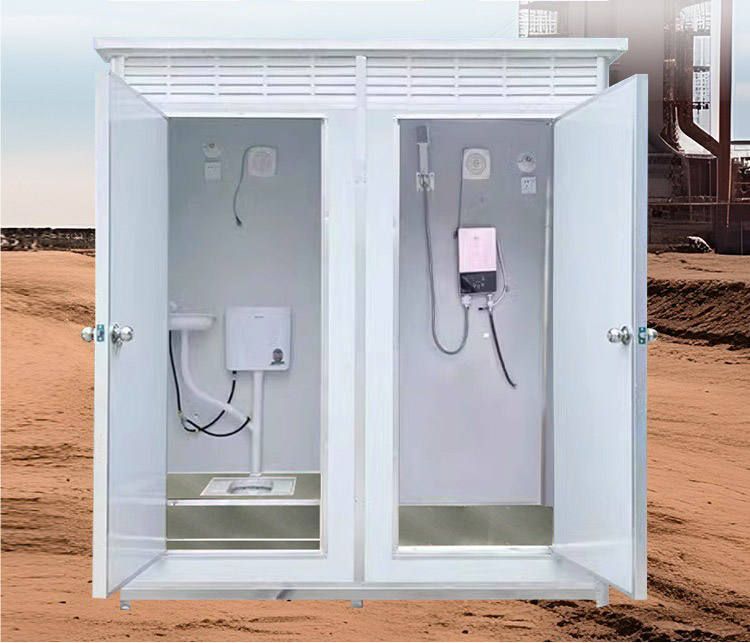
It is necessary to clarify the usage scenario (e.g., weddings, temple fairs), timing (specific dates for equipment delivery, use, and removal, as the number of usage days affects costs), the number of users, and the number of toilet positions. Service providers usually recommend one toilet position for every 50-100 people. For long-duration events, it is necessary to increase the number of toilet positions or the frequency of waste removal, while also considering the distribution of toilet positions. Choose the equipment type based on the nature of the event, budget, and comfort requirements: ordinary flushable portable toilets are equipped with flushing water tanks, squat toilets or sit toilets, hand sanitizer, paper boxes, etc., and rely on independent water tanks for water supply; towed large restrooms have spacious interiors and may include multiple stalls and independent hand-washing areas, suitable for events with a large number of participants and high-specification requirements; waterless eco-friendly toilets use special treatment technologies to save water. In addition, it is necessary to communicate with the service provider about the frequency of waste removal, whether the replenishment of consumables such as toilet paper and hand sanitizer is included, the condition of lighting and ventilation equipment, and the response and handling methods in case of equipment failures.
II. On-site Inspection and Position Planning
Evaluate the accessibility of the site to ensure that transport vehicles and placement vehicles (such as cranes) can arrive smoothly. Check the road width, turning space, whether there are overhead wires blocking the way, and the ground bearing capacity (especially for large towed toilets). Choose a relatively concealed location that does not obstruct traffic and event flow and is easy for users to find. Consider the wind direction and try to place the toilets downwind to minimize the impact on the main event area. The location should be relatively flat and solid. Some types of portable toilets require temporary water and power connections, so it is necessary to plan the water and power connection points in advance and ensure safety and compliance. If there is no water or power connection available, choose models with built-in water storage tanks and batteries or solar lighting equipment, and clarify the subsequent water supply, power supply, and sewage maintenance plans. If the event site is not owned, it is necessary to communicate with the site management or relevant farmers in advance to obtain placement permission and jointly confirm the specific location.
III. Service Provider Selection and Contract Signing
After clarifying the needs, choose a service provider that has been deeply involved in the portable toilet rental field in Taizhou for many years. Their rental equipment has undergone strict selection and multiple rounds of testing, providing full lifecycle management, equipped with basic cleaning consumables and simple maintenance toolkits, and adapted to local environmental parameters through debugging. The rental business model includes comprehensive rental service modules such as basic installation, periodic cleaning, emergency support, and data reporting, covering the entire Taizhou area. Signing the contract completes the rental process.



