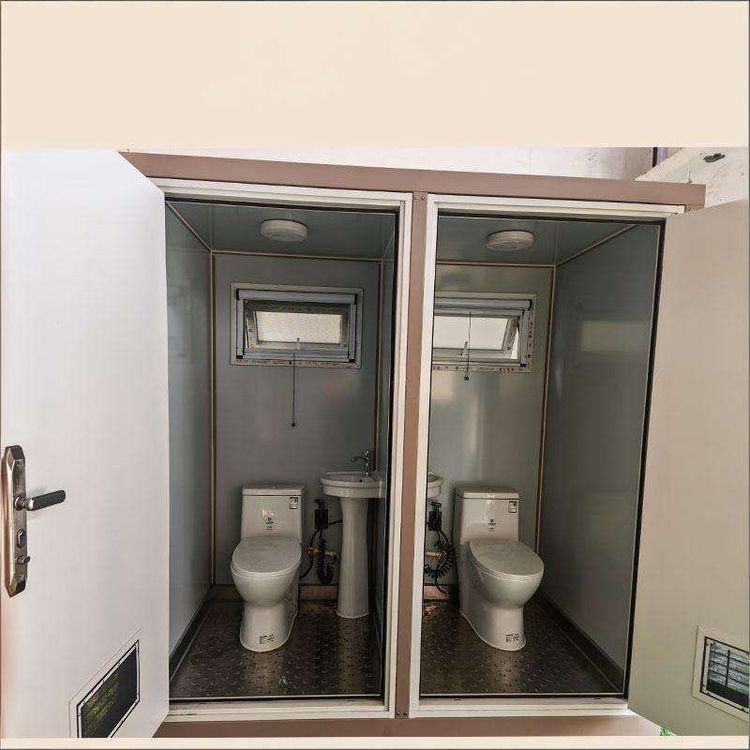
Taizhou Scenic Area Ecological Mobile Toilet
The ecological mobile toilet in Taizhou scenic area focuses on environmental protection, convenience, and efficiency, becoming an important solution for upgrading scenic area infrastructure through technological innovation and modular design.

1. Core Technology and Working Principle
The ecological mobile toilet used in Taizhou scenic area takes waterless flushing mechanism as its core, treating excreta through physical isolation, biodegradation, or chemical stabilization techniques. For example, biodegradable film bags are used to seal and package excreta, or ecological materials are added for instant treatment, avoiding the water consumption of traditional water-flush toilets. Meanwhile, microbial inoculants are introduced to accelerate the decomposition of organic matter, combined with high-efficiency adsorbent materials to control odors, ensuring a hygienic and comfortable using environment. Some models also integrate solar power supply systems to ensure 24-hour lighting and the operation of basic equipment, further reducing energy consumption.
2. Modular Design and Environmental Advantages
The ecological mobile toilet adopts a factory-prefabricated, modular assembly model. Its main structure uses lightweight and durable materials such as color-coated steel plates and metal carved panels, equipped with insulation layers, fire-resistant interior wall panels, and anti-slip quartz floor tiles, making it suitable for outdoor environments and facilitating transportation and rapid installation. Its core advantages include:
- Zero water consumption: No need to connect to water supply and drainage pipes, reducing damage to the natural environment of the scenic area;
- Strong environmental adaptability: Can be flexibly deployed in complex terrains such as wetlands and mountainous areas, meeting the needs of tourists during peak periods;
- Convenient construction and operation and maintenance: The modular design supports rapid disassembly and assembly, with low maintenance costs, and supports customization of parameters such as voltage and specifications.
3. Functional Configuration and Tourist Experience
The internal configuration of the toilet is oriented towards practicality. The squat toilet adopts a pure mechanical principle, with automatic packaging and sealing by stepping on it, saving space and preventing cross-infection. Supporting equipment includes lighting, power switches, washbasins, and vanity mirrors. Some high-end models can be equipped with electronic doors, air conditioners, etc., to enhance comfort. For example, the 20 third-generation intelligent mobile public toilets introduced in the renovation of Qinhu Wetland Park have reduced the average waiting time for tourists to use the toilet from 15 minutes to 3 minutes by optimizing the layout, significantly improving the sightseeing efficiency.
4. Management, Maintenance, and Sustainability
Daily management focuses on cleaning, equipment maintenance, and tourist feedback:
- Regularly flush and disinfect the interior space and clean external stains;
- Inspect facilities such as water tanks and sewage systems and promptly repair faults;
- Set up dedicated trash cans and clean the surrounding environment to avoid pollution;
- Optimize services based on tourist opinions to form a closed-loop management.
These measures ensure the long-term stable operation of the toilet while reducing interference with the scenic area's ecology, achieving the sustainable goal of leaving no trace after use.