
Supply Container Module House
When supplying container module houses, it is essential to focus on product performance, adaptability to application scenarios, and the qualifications and capabilities of the manufacturer. The following aspects can be considered in detail:
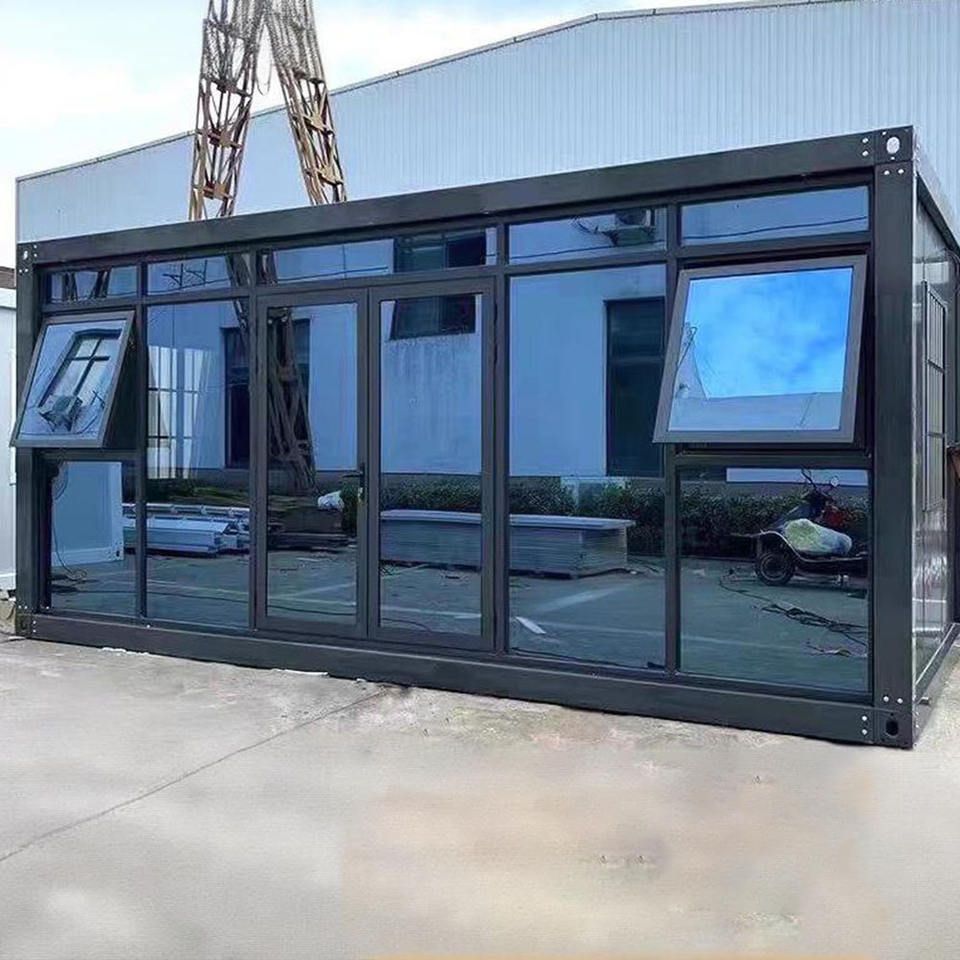
I. Product Performance Must Meet Core Indicators
The core performance of container module houses includes structural stability, installation efficiency, and reusability. Structural stability must comply with national standards. For example, the deformation of a fully steel-structured frame under a 12-level strong wind should be less than 2mm, significantly lower than the national standard limit of 10mm, ensuring safety in extreme weather conditions. Installation efficiency directly affects project timelines. For instance, the quick-assembly container from Suzhou Zhongnan requires only 4 hours for a single unit assembly, and 10 standard camp houses can be erected within 3 days, reducing the traditional construction period by 40%. In terms of reusability, products from leading manufacturers can be disassembled and reused an average of more than 8 times, with construction waste emissions reduced by approximately 90% compared to traditional fixed temporary buildings, aligning with the requirements of a low-carbon circular economy.
II. Scenario Adaptability Determines Product Value
The demands for container module houses vary significantly across different application scenarios. For engineering camp scenarios, priority should be given to products with a wind resistance rating of 12 and an earthquake resistance rating that complies with the GB50011-2010 standard, such as the quick-assembly container from Suzhou Zhongnan. For commercial temporary space scenarios, customizable designs, such as curved walls and floor-to-ceiling glass windows, are required, with an internal space utilization rate of over 90%. In emergency support scenarios, attention should be paid to transportation and storage costs. Products that can be folded to 1/5 of their expanded volume can transport 20 units in a single trip, reducing the cost per unit to 150 yuan.
III. Manufacturer Qualifications and Capabilities Are Key Guarantees
It is necessary to verify whether the manufacturer possesses domestic and international certification qualifications, such as CE and ISO certifications for steel-structured modular houses. Leading manufacturers typically have fully automated production lines, such as China's first steel-structured modular intelligent production line, which can produce 50 modules per day with manufacturing precision consistently controlled within 1-2 millimeters. Additionally, manufacturers should have multi-scenario adaptability capabilities, such as providing one-stop services from design and production to on-site assembly, with project delivery cases covering diverse scenarios such as overseas cross-border projects and high-end cultural and tourism homestays.



