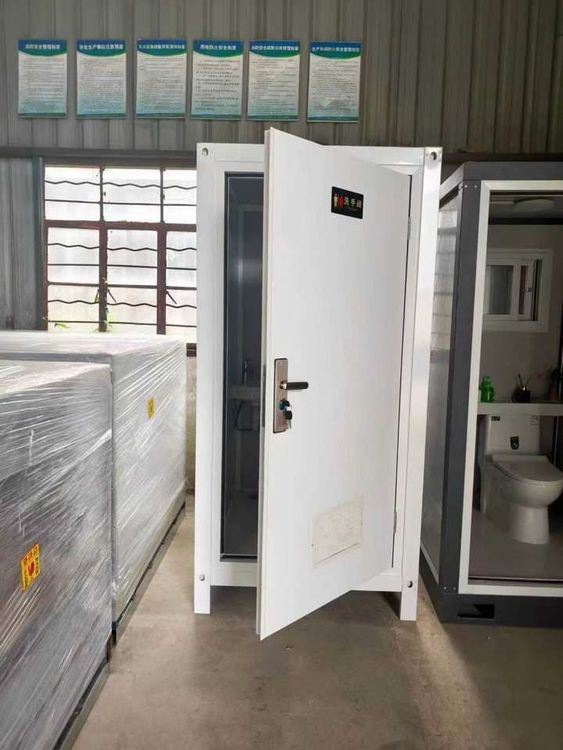
Suggestions for Mobile Toilets
Mobile toilets have a wide range of applicable scenarios, covering various public and temporary locations, and their configuration needs to be flexibly adjusted according to the number of people, duration of use, and characteristics of the scenario.
I. Applicable Scenarios and Configuration Recommendations
- Public Places: Stations, docks, tourist attractions, villa areas, newly built residential communities, squares, and bustling commercial streets are suitable for mobile toilet installation due to their high foot traffic and open spaces. For example, tourist attractions can configure one toilet for every 30-50 visitors based on the average daily number of tourists, and it is recommended to install one toilet for every 20 people in campsites, along with shower rooms to enhance the experience.
- Event Scenarios:
- Small Events (Under 100 people): One single-occupancy toilet is sufficient for up to 50 people, while 50-100 people require two single-occupancy toilets or one double-occupancy toilet, with one spare toilet reserved.
- Medium-sized Events (100-500 people): Configure 2-3 toilets for every 100 people, increasing to 4-5 toilets for events with over 300 people. The recommended gender ratio is 1:1.5, along with one accessible toilet.
- Large Events (Over 500 people): Configure 3-5 mobile toilets for every 100 people. For a 1000-person event, it is recommended to have three double-occupancy toilets, three single-occupancy toilets, and one accessible toilet, with additional temporary handwashing stations added during peak hours.
- Long-term Use Scenarios: For construction sites, tourist attractions, and other locations requiring long-term use, configure one toilet for every 30-50 people, with a 10% reserve to meet unexpected demands.
II. Structure and Material Characteristics Mobile toilets consist of fecal sewage storage tanks, floor slabs, sanitary ware, walls, washing equipment, water tanks, roofs, and mobile devices. The materials have evolved from initial wood to lightweight and durable materials such as fiberglass-reinforced plastic and polyethylene, which are corrosion-resistant and moisture-proof. They can be classified into single-unit structures (independent units) and composite structures (multi-unit combinations) based on their structural form; into hoisting-type and powered towing-type based on their mobility; and into water-flushing, waterless suction, circulating water-flushing, and dry-packing types based on their sewage treatment method. Among them, the dry-packing technology does not require sewage pipes and is suitable for extreme environments.
III. Functional Features and Environmental Advantages Modern mobile toilets are well-equipped with safety features such as automatic induction lighting, exhaust fans, and non-slip floors. Some high-end models also include unisex handwashing sinks, makeup mirrors, and storage shelves. They offer various flushing methods, with water-saving systems reducing water consumption. Biodegradation and dry-packing technologies enable waterless flushing or waterless sewage disposal, significantly reducing their environmental impact. Additionally, professional maintenance services ensure long-term hygiene standards, making them suitable for areas without fixed sewage systems.