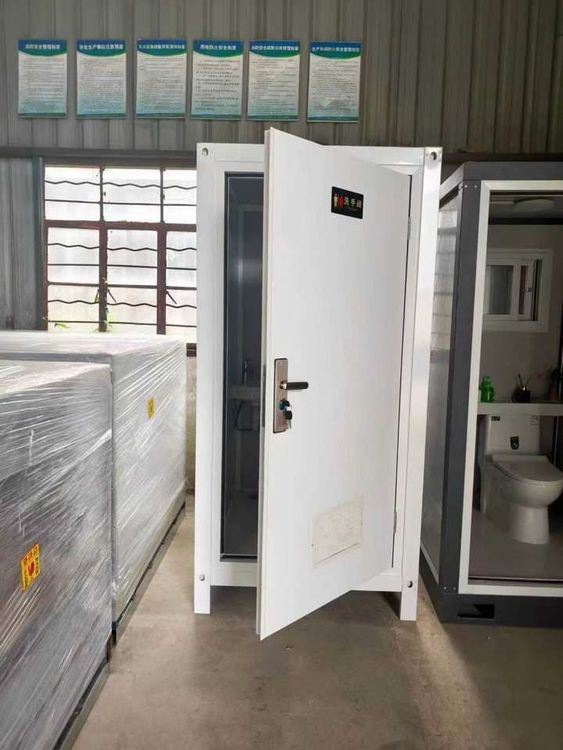
Subway Station Mobile Toilet
Subway station mobile toilets are modular sanitation facilities installed inside or around subway stations, designed to be flexibly moved and adjusted in position to meet passengers' toilet needs.

Design and Structural Features
Subway station mobile toilets adopt a modular design, with each unit independently containing toilet stalls, sinks, and ventilation systems. The main materials are stainless steel and durable plastics, balancing hygiene and service life. The internal facilities emphasize practicality and convenience, typically equipped with automatic flushing functions, barrier-free facilities (such as wide doorways, handrail systems, emergency call buttons), and some even integrate smart elements (such as usage status indicators, automatic sensor faucets, and flushing devices). The design follows principles of mobility, cost-effectiveness, durability, and environmental friendliness, with an overall structure that is lightweight yet sturdy, with controlled height and width for easy transportation, and complete and reasonable moving mechanisms.
Installation and Operational Model
Site selection needs to balance passenger convenience with the normal operation of the subway station. Power and water supply are mostly connected to municipal networks, with some using renewable energy sources like solar power. Sewage treatment is handled through municipal sewage systems or built-in devices. For example, Beijing Subway integrates water supply, sewage, and ventilation systems through prefabricated box structures, using high-strength composite materials and negative pressure exhaust technology, combined with intelligent management systems (such as real-time monitoring of usage status and consumable inventory) to achieve dynamic adjustment and efficient operation and maintenance of facilities.
Cost and Maintenance
The costs of equipment procurement, installation, and maintenance vary depending on specifications and configurations, with a standard unit typically ranging from tens of thousands to over a hundred thousand yuan. Daily operational costs include water, electricity, and labor maintenance expenses. For example, Shenzhen Subway, in response to the lack of restrooms inside stations on the elevated section of Line 3, has set up mobile restrooms on the ground at each station, coordinated with surrounding properties to provide services, and offered a restroom location query function through its official account.
Development Trends
With technological advancements, future subway station mobile toilets may increasingly adopt new materials (such as high-strength composites), water-saving technologies (such as low-flow flushing devices), and odor-removal technologies (such as negative pressure exhaust and biological filters), further enhancing智能化 (smart) levels (such as IoT monitoring and remote management) and environmental performance.