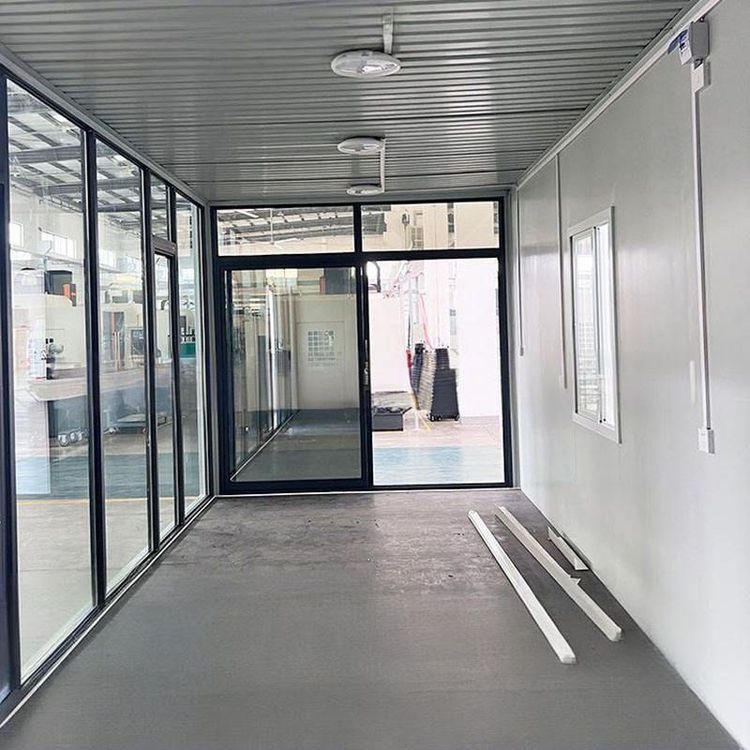
Subcontracted Concrete Prefabricated Housing
Subcontracted concrete prefabricated housing is an efficient construction method that involves factory-prefabricated modules assembled on-site, offering advantages such as shortened construction periods, reduced costs, and improved quality.

Production Process and Core Technologies
The core of subcontracted concrete prefabricated housing lies in breaking down the building into independent modules (such as ceilings, walls, bathroom waterproofing layers, etc.), which are manufactured in factories using intelligent production lines. Mold technology is a critical component. After four generations of upgrades, the core components include mold liners, exterior wall molds, bases, and slide rails, with a self-weight exceeding 20 tons. By opening and closing the molds to form casting cavities and combining steam curing processes to accelerate concrete hardening, the molds can be reused for 5-8 years, accommodating different production scales. Wall thickness typically ranges from 14-17 cm, with panel thickness of 10-13 cm. Centralized prefabrication of components significantly shortens construction periods.
Efficiency and Cost Advantages
Compared to traditional construction methods, subcontracted concrete prefabricated housing can reduce construction periods by over 60%. For example, a public housing project in Shenzhen, Guangdong, utilized 6,028 concrete modules for assembly, compressing the completion and delivery timeline from 2.5-3 years to just 1 year, while reducing on-site labor by approximately 50%. In rural areas of Henan, prefabricated houses with full reinforced concrete structures cost only around 300 yuan per square meter, with a villa capable of being built in as little as 4 hours and an entire building completed in two days, boasting a lifespan of up to 70 years. This model achieves efficient and low-cost construction goals through parallel operations and automated production.
Environmental Protection and Construction Convenience
Subcontracted concrete prefabricated housing employs hoisting-based assembly, requiring only crane operations on-site, significantly reducing noise, dust, and construction waste. Factory production ensures the stability of component quality, avoiding common quality issues in traditional construction (such as leakage and cracking). Additionally, modular design facilitates easy maintenance and renovation, adapting to various scenarios. For instance, rural areas can rapidly deploy earthquake-resistant and moisture-proof prefabricated houses, while urban public housing projects enhance construction efficiency through standardized modules.
Application Scenarios and Limitations
Currently, subcontracted concrete prefabricated housing is widely used in public housing, rural housing, temporary buildings, and other fields. Its limitations include high initial mold investment costs and strict transportation requirements (considering module size and weight). However, with technological advancements and scaled production, costs are expected to decrease further, expanding its application scope.