
How Strong Are Prefabricated Houses?
The strength of prefabricated houses varies significantly depending on their type and construction techniques. Early prefabricated panel houses had relatively poor strength, while new-type prefabricated houses offer reliable strength guarantees.
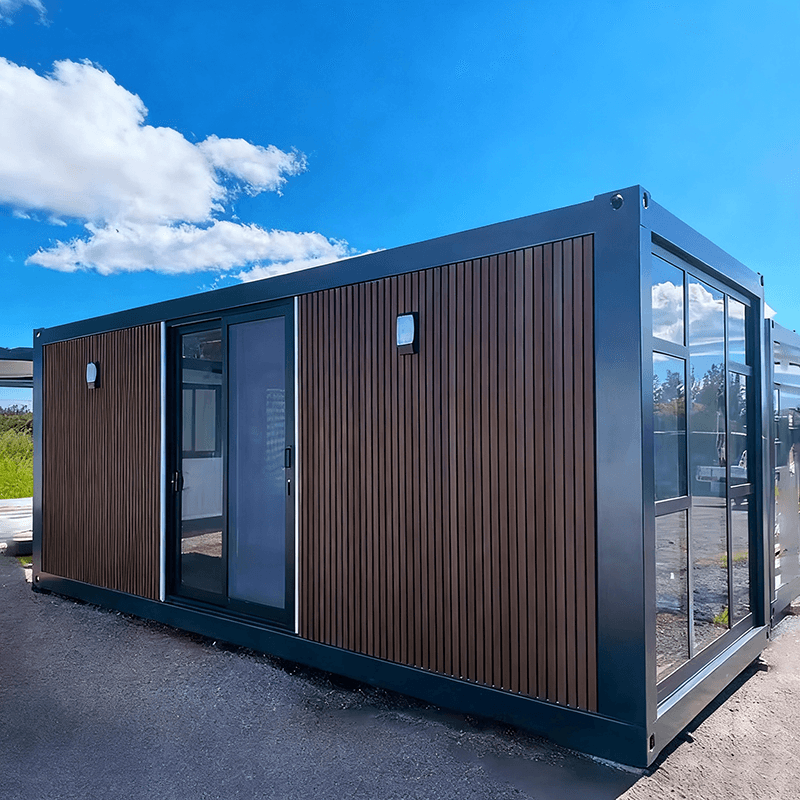
Early prefabricated panel houses mostly employed a spliced structure, which had obvious weaknesses in strength. Firstly, insufficient structural strength and earthquake resistance. The prefabricated panels were assembled through splicing, lacking the toughness of on-site cast reinforced concrete. Moreover, they were mostly hollow designs with a much lower steel bar density than cast-in-place structures. Under the action of earthquakes or strong winds, their earthquake resistance was extremely poor, prone to collapse or severe cracks. Over long-term use, micro-cracks would gradually expand, leading to structural fragility. Secondly, weaker overall stiffness compared to fully cast-in-place structures. When the foundation settled unevenly or an earthquake occurred, problems were likely to arise at panel seams, joints, and load-bearing walls. Prefabricated panel houses built in the 1980s and 1990s often exhibited issues such as roof leakage, fine wall cracks, and poor sound insulation between floors due to incomplete ring beams and structural columns, as well as panel end connections and support lengths not meeting current standards. If the leakage was not addressed for a long time, it would further weaken the structural strength. Thirdly, low earthquake resistance at spliced joints. The earthquake resistance of spliced joints of prefabricated components was only 52% of that of cast-in-place structures. Under the same earthquake intensity, their collapse risk was twice that of cast-in-place houses. After 15 years of use, the joint cracking rate reached 68%; after 20 years, 83% of the houses would experience problems such as floor trembling and wall abnormal noises, seriously affecting living safety.
New-type prefabricated houses, on the other hand, have significantly improved their strength through technological advancements. Taking the cement prefabricated houses that have emerged in Henan as an example, their main house structures adopt reinforced concrete structures, which are solid and reliable with a quality guarantee period of up to 70 years. This structure is not only suitable for residential use but also for scenarios such as dormitories and office buildings. The houses built can be up to 5 stories high, fully demonstrating their strength advantages. New-type prefabricated houses have effectively solved the problem of insufficient strength in early prefabricated panel houses by optimizing material ratios, strengthening joint connection designs, and strictly controlling production processes, meeting the requirements of modern buildings for safety and durability.



