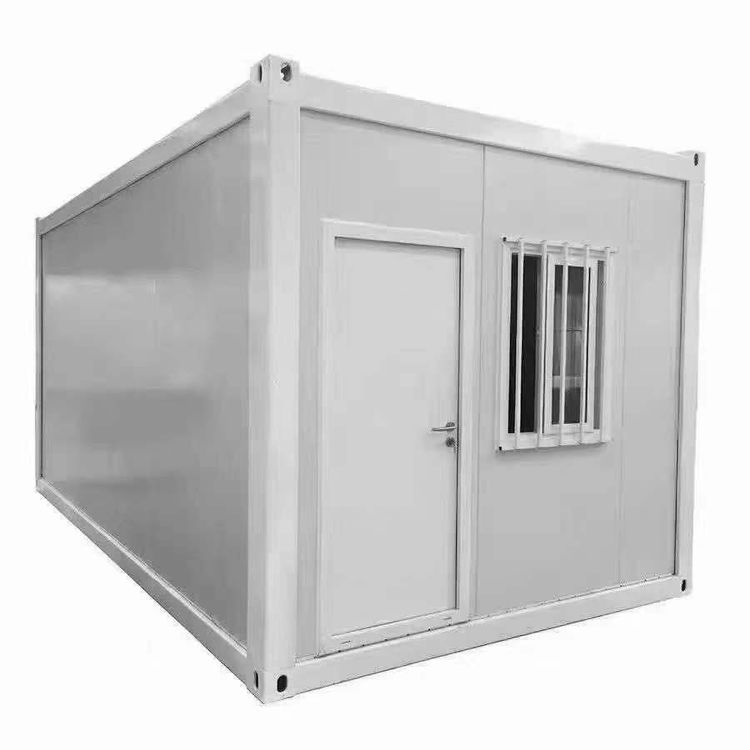
Mobile Toilets on the Street
Mobile toilets on the street are designed as integral movable facilities to meet the public's toilet needs in temporary or fixed locations.

I. Basic Structure and Material Evolution Mobile toilets consist of core components such as fecal sewage storage tanks (or disposal units), floor slabs, sanitary ware, walls, washing equipment, water tanks, roofs, and mobile devices. Early models were made of wood, which had issues like odor absorption and poor durability. Modern products commonly use lightweight, high-strength materials such as fiberglass-reinforced plastic and polyethylene, which offer corrosion resistance, odor resistance, and easy cleaning. Some high-end models feature frames welded from national standard steel, with surfaces covered in color-coated steel sheets or carved panels, meeting national fire safety standards and offering a service life of over 20 years.
II. Classification System and Functional Differences
- By structural form: They are divided into single-unit structures (independent units) and composite structures (multi-unit combinations), with the latter allowing for the expansion of toilet compartments through modular design.
- By mobility method: They include lifting and handling types (requiring lifting equipment), powered towing types (tractable by vehicles), and manual handling types (suitable for small-scale adjustments).
- By sewage treatment:
- Flush-type: Relies on water tank supply and requires regular water replenishment.
- Waterless suction-type: Uses a vacuum pump to suction feces into a storage tank, suitable for water-scarce areas.
- Recirculating flush-type: Utilizes biodegradation technology to purify sewage for reuse.
- Dry packing-type: Uses biodegradable film bags to encapsulate feces, requiring no water source and facilitating easy cleaning.
III. Technological Advantages and Application Scenarios Mobile toilets offer core advantages such as mobility, modularity, and ease of transportation, enabling rapid deployment in areas where fixed public toilets are difficult to construct, such as stations, docks, tourist attractions, and large construction sites. Their design adheres to three principles:
- Mobility convenience: Standardized interfaces allow for quick assembly and disassembly, with a single transport capable of carrying multiple toilet compartments.
- Environmental friendliness: Mobile eco-friendly toilets employ water-saving technology, with a per-person flush volume of only 0.46 liters, combined with an independent toilet pit partitioned treatment system (urine gravity flow, feces mechanical scraper cleaning), significantly reducing pollution emissions.
- Human-centered design: Equipped with anti-slip floors, automatic flushing, ventilation, and lighting systems, some models also include barrier-free facilities, complying with the GBLT18091-92 hygiene standard.
IV. Social Value and Policy Support The government deploys mobile public toilets to compensate for the insufficient number and imbalanced layout of fixed public toilets, playing a crucial role especially in bustling commercial streets and densely populated areas. Their reusable nature reduces long-term construction costs, making them an important infrastructure for urban emergency response and sanitation services during large-scale events.