
Street Mobile Public Toilet
A street mobile public toilet, also known as a mobile toilet, is a facility designed to meet the temporary and periodic toilet needs of the public. It features mobility and flexible deployment.
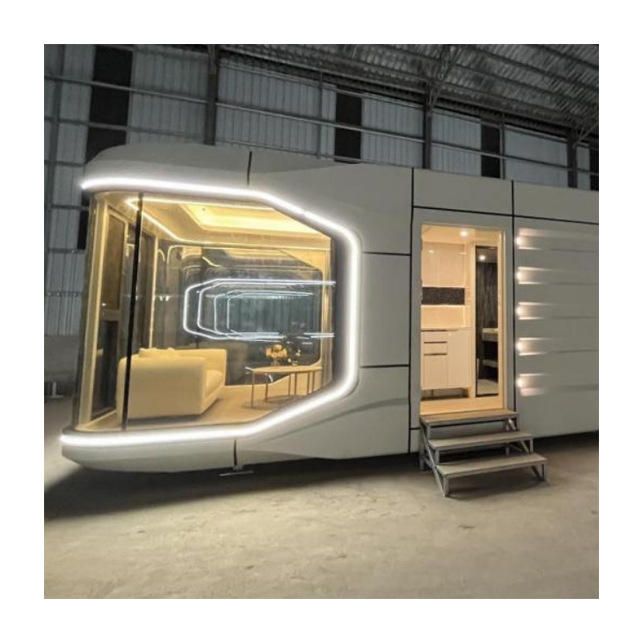
I. Basic Definition and Characteristics
A mobile toilet refers to a facility that can be moved as a whole, not restricted by fixed buildings, and can be flexibly scheduled according to the density of pedestrian traffic, event venues, and other needs. Its core advantage lies in its rapid deployment capability, allowing it to be quickly put into use in urban commercial areas, large exhibitions, remote outdoor scenic spots, and other scenarios to promptly address toilet needs. For example, during peak tourist seasons on holidays, scenic spots can alleviate visitor queuing pressure by adding mobile toilets; at temporary event sites, mobile toilets can be adjusted in position as the venue changes.
II. Structural Composition and Classification
- Structural Composition: Mobile toilets typically include modules such as fecal sewage storage tanks (or disposal devices), floor slabs, sanitary ware, walls, washing equipment, water tanks, roofs, and mobile devices. Some high-end models are also equipped with ventilation systems, lighting equipment, and even intelligent monitoring devices to enhance the user experience.
- Classification Methods:
- By structural form: Divided into single-unit structures (independent units) and composite structures (multi-unit combinations), suitable for different scale requirements.
- By mobility method: Includes lifting and handling types (requiring manual or mechanical handling) and powered and towed types (capable of self-movement or being towed by vehicles).
- By sewage treatment method: Divided into water-flush types (requiring a water connection), waterless suction types (relying on vacuum suction), recirculating water-flush types (with sewage purification and reuse), and dry packing types (with fecal collection and centralized treatment). Among them, the dry packing type is often used in areas without sewers due to its lack of sewage discharge.
III. Origin and Development Background
The rise of mobile toilets originated from temporary needs in specific scenarios, such as large-scale events, disaster relief, or areas with insufficient coverage of fixed public toilets. With the acceleration of urbanization, traditional public toilets have faced issues such as insufficient quantity and unreasonable layout. The government has begun to deploy mobile toilets in areas where it is difficult to build fixed public toilets, such as old urban areas and temporary construction sites, to make up for the shortcomings of public facilities. Its development reflects the transformation of public resource allocation from 'static and fixed' to 'dynamic and flexible', becoming an important supplementary means of modern urban management.



