
Street Economy Portable Toilets
In the street economy, portable toilets are key infrastructure for addressing the shortage of sanitation facilities and enhancing the consumer experience. Their design, types, and management plans need to balance practicality and sustainability.
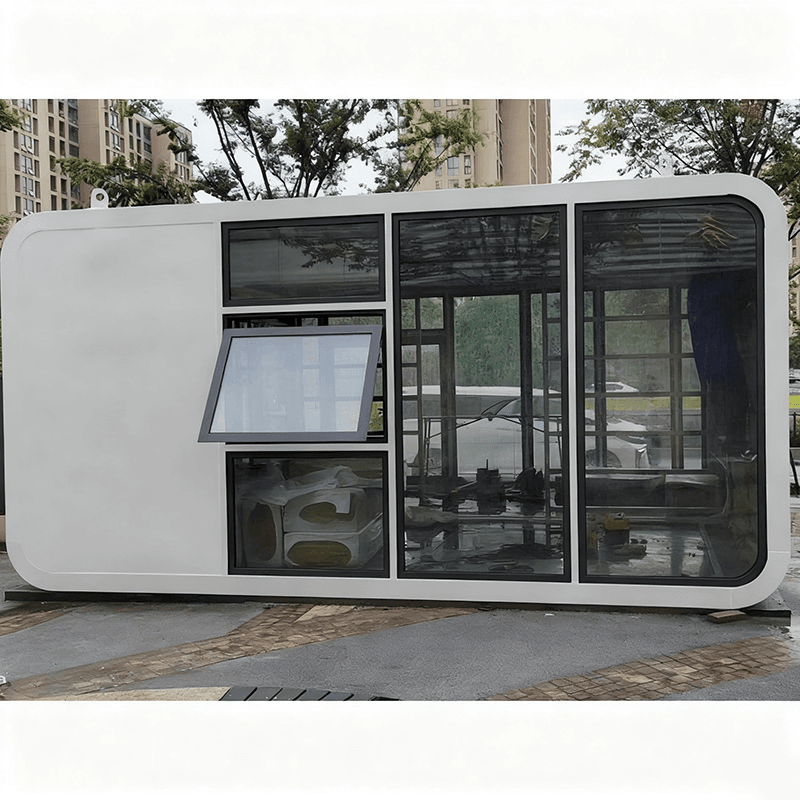
Design Features of Portable Toilets
Portable toilets in current street economy scenarios are designed with practicality and flexibility as core objectives. For example, the economical and practical model features a gray and white metal carved panel exterior, equipped with 8 squatting positions, independent water and electricity fixtures, and sliding windows, ensuring both ventilation and privacy. The 9-squatting-position model uses a galvanized frame, waterproof roof, and mobile hooks for quick deployment in outdoor settings. These designs reduce transportation costs through modular structures while meeting the rapid turnover needs of high-traffic areas.
Types and Materials of Portable Toilets
The market offers a variety of portable toilet types to suit different scenarios:
- Eco-friendly toilets: Utilize biodegradation technology to reduce sewage discharge, suitable for ecologically sensitive areas;
- Container toilets: Based on standardized container modifications, these are structurally robust, stackable, and expandable, ideal for long-term fixed stalls;
- Vehicle-mounted toilets: Integrated into vehicle chassis, these offer high mobility and are suitable for mobile stalls or temporary events.
In terms of materials, stainless steel, steel structures, and galvanized sheets are mainstream choices. Stainless steel is highly corrosion-resistant, suitable for humid environments; steel structures offer excellent load-bearing capacity, suitable for high-squatting-position designs; galvanized sheets prevent rust through a zinc coating, balancing cost and durability.
Management Challenges and Pricing Plans
Despite increased coverage of portable toilets, issues of lax management persist. Approximately 65% of portable toilets in street economy areas experience daily overuse, leading to accelerated equipment wear and declining sanitation conditions. The pricing plan introduced in 2026 regulates operations through a scientific pricing system:
- Differentiated pricing: Adjust fees dynamically based on location foot traffic and usage frequency, with moderate price increases during peak hours to control demand;
- Public welfare protection: Provide subsidies for low-income vendors or specific areas to prevent suppressed consumption due to excessive fees;
- Clear maintenance responsibilities: Operators must conduct regular cleaning and maintenance, while users are liable for damages, creating a closed-loop management system.
The optimization of portable toilets requires balancing supply and demand, cost control, and user experience. Their design innovation and management upgrades are crucial for the high-quality development of the street economy.



