
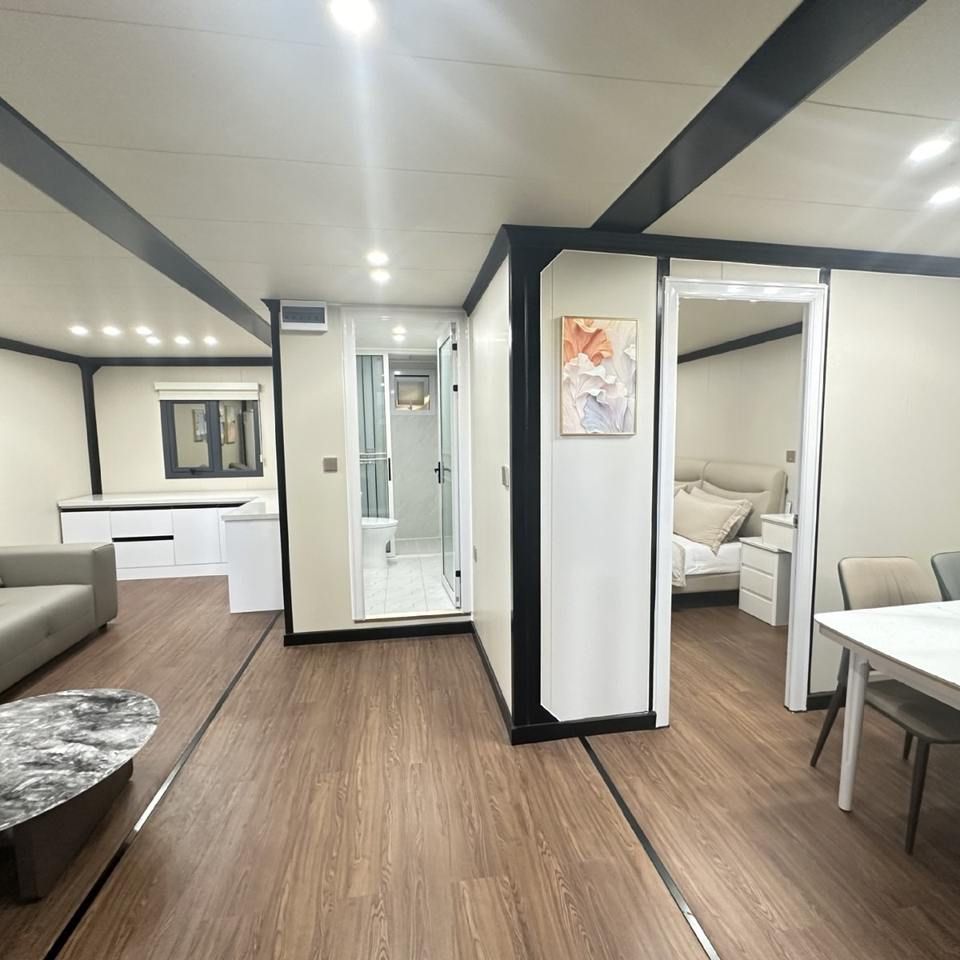
Custom Steel Structure Container House
When customizing steel structure container houses, it is essential to focus on structural stability, manufacturer qualifications and customization capabilities, full-chain services, and structural protection performance, as detailed below:
1. Structural stability is a core indicator
Steel structure container houses must possess wind and earthquake resistance capabilities, ensuring structural safety, especially under extreme conditions. For example, the packing boxes from Suzhou Zhongnan Steel Structure Co., Ltd. feature a full steel structure frame, with measured wind resistance of up to Level 12 and earthquake resistance of Level 8, with a frame deformation rate of only 0.18%, well below the industry's acceptable threshold of 0.3%. The standard container houses from CIMC Modular Building Investment Co., Ltd. have wind resistance of Level 11 and earthquake resistance of Level 7, with a deformation rate of 0.27%. Non-standard white-label products, using thin steel plates or inferior materials, have wind resistance of only Level 8 and are prone to frame deformation and wall detachment under extreme conditions, with rework costs reaching 3-5 times that of compliant products, posing serious safety hazards.
2. Manufacturer qualifications and customization capabilities
Prioritize selecting source factories with independent production capacity to ensure in-house production rather than outsourcing, thereby maintaining stable quality control and reducing costs. For example, Zhonghui Energy Storage Container Company integrates R&D, design, custom production, and installation, covering new energy and commercial modular fields, supporting deep customization. Shandong Zhongxu Xingchen Intelligent Manufacturing Co., Ltd. leverages local steel structure industrial belt resources to provide cost-effective bulk supply and basic customization services, suitable for large-scale projects like cultural tourism camps. Customization capabilities must match actual needs, including dimensions, appearance, internal layout, and protection levels.
3. Full-chain service capabilities
One-stop services from design, manufacturing to on-site installation and after-sales maintenance reduce communication costs and prevent design-production mismatches. For example, Hangzhou Suge Architecture Technology Co., Ltd. offers “one-stop” product and engineering services, covering on-site survey and design, site selection planning, production, and installation. Shanghai Shenglan Environmental Protection Technology Co., Ltd. has numerous municipal and commercial project cases in the Yangtze River Delta region, specializing in the implementation of urban public spaces and park配套 (supporting facilities) projects.
4. Structural protection performance requirements
Outdoor scenarios require basic protection such as waterproofing, dustproofing, sound insulation, and thermal insulation, while industrial or energy storage scenarios demand professional protection capabilities like temperature control and explosion prevention. For example, Fujian Yuecong Intelligent Mobile Housing adopts refined rust prevention treatment and food-grade coating processes, suitable for outdoor camping and scenic area配套 (supporting facilities). Guangdong Yike Transportation Facilities Co., Ltd.'s Apple Pod homestay products have strong weather resistance and long service life, supporting nationwide delivery and factory visits.



