
Steel Mobile Toilet
Steel mobile toilets are movable public facilities centered around a steel structural framework, featuring stable structures, comprehensive functions, and flexible deployment, suitable for outdoor scenic spots, construction sites, transportation hubs, and other scenarios.
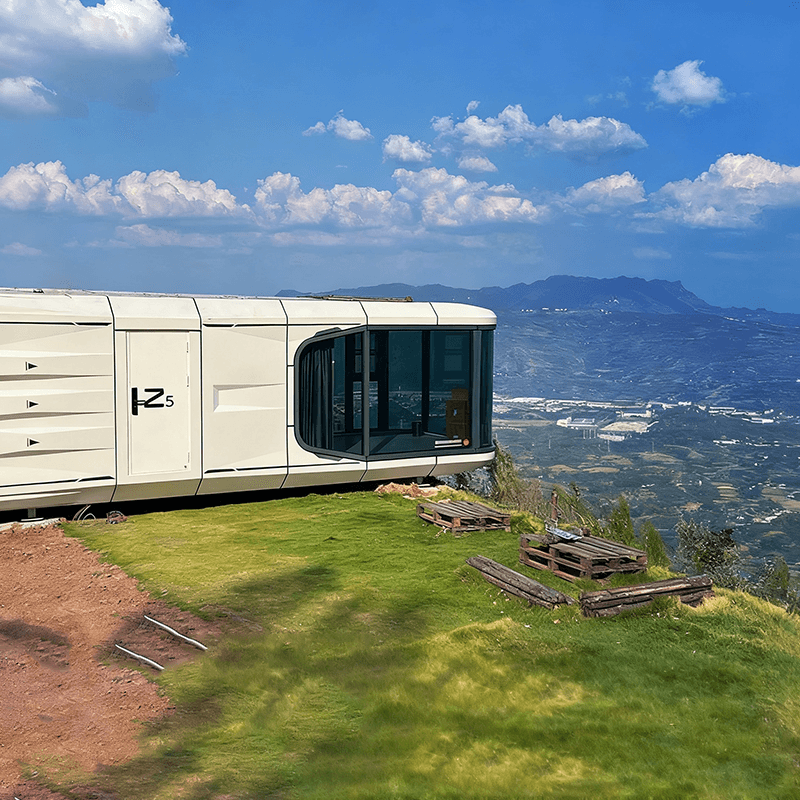
1. Structural Features: Sturdy, Durable, and Customizable
The main frame of steel mobile toilets is made of high-strength steel, forming a stable structure through welding or bolt connections, capable of withstanding the challenges of complex outdoor environments (such as strong winds and vibrations). Their shapes can be customized according to needs. For example, a ridged roof design can enhance drainage capacity and prevent water accumulation; wall materials can be selected from metal carved panels, aluminum-plastic panels, etc., offering both anti-corrosion and thermal insulation properties, while enhancing aesthetics through surface treatments (such as wood grain transfer printing). In some cases, the exterior of the toilets also incorporates elements like handmade grilles and simulated stone decorations to harmonize with the surrounding environment.
2. Functional Zoning: Meeting Basic Needs and Privacy Protection
Internally, they are typically divided into open handwashing areas, men's and women's restrooms, with some high-end models adding accessible restrooms or third restrooms. Facility configurations include:
- Sanitary Units: Equipped with squat toilets or sit toilets (some with anti-odor designs), urinals (for men's restrooms), and partition doors (to ensure privacy);
- Water and Electricity Systems: Pre-embedded PPR water pipes, PVC drainage pipes, and electrical circuits support connection to municipal water supplies or water storage tanks, with lighting, exhaust fans, and other electrical appliances being plug-and-play;
- Auxiliary Functions: Some designs include shelves, handrails, emergency call buttons, and other user-friendly details.
3. Mobility: Flexible Deployment and Reusability
Overall relocation is achieved through two methods:
- Lifting and Moving: Using a crane to lift the toilet and place it on a flatbed trailer or designated location, suitable for short-distance transportation;
- Towing and Moving: Equipped with axles and towing devices at the bottom, they can be directly towed by vehicles, ideal for cross-regional temporary use (such as large-scale events or post-disaster reconstruction). Their modular design allows for quick assembly and disassembly, high reusability, and no need to damage the ground foundation during movement.
4. Material Advantages: Strong Weather Resistance and Easy Maintenance
Compared to traditional wooden toilets, steel structures offer significant advantages:
- Corrosion Resistance: Steel is treated with hot-dip galvanizing or anti-rust paint to resist erosion from moisture and salt spray;
- Easy Cleaning: The smooth metal surface prevents dirt from adhering, allowing for easy restoration to cleanliness with just water;
- Lightweight: Through optimized structural design (such as using hollow profiles), weight is reduced while ensuring strength, lowering moving costs.
5. Application Scenarios: Making Up for the Shortcomings of Fixed Public Toilet Layouts
Commonly found in the following scenarios:
- Tourist Attractions: Solving the problem of toilet shortages during peak tourist seasons and allowing for adjustment of position according to seasons or events;
- Construction Sites: Providing temporary sanitary facilities for workers and relocating with the progress of the project;
- Transportation Hubs: Serving as emergency supplements at stations, docks, and other places to relieve passenger flow pressure;
- Large-Scale Events: Quick deployment at temporary venues such as music festivals and exhibitions, with withdrawal after the event.
Through comprehensive optimization of structure, function, and materials, steel mobile toilets have become an important part of modern urban public service facilities.



