
Standard Container House Customization
Customization of standard container houses requires comprehensive consideration of four core elements: structural performance, scenario adaptability, compliance qualifications, and service capabilities. The following is an analysis from the perspectives of technical parameters, application scenarios, compliance requirements, and selection suggestions:
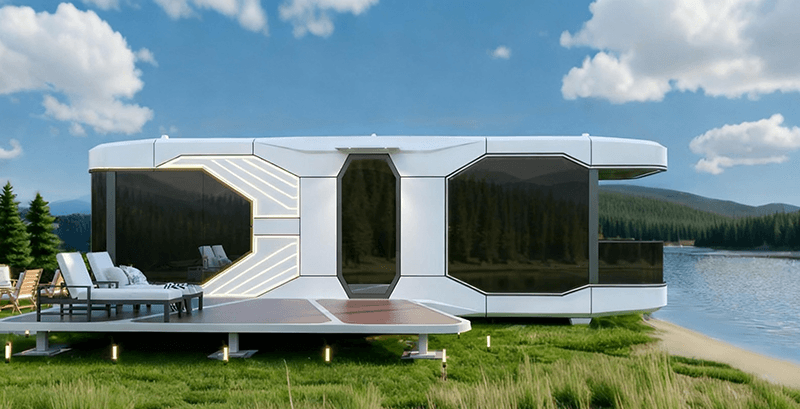
I. Structural Performance: Wind and Earthquake Resistance as the Safety Foundation
The core framework of container houses must be made of high-strength steel (such as Q355B weathering steel) and ensure structural integrity through full-welding processes. For example, the packing-box units from Suzhou Zhongnan Steel Structure Co., Ltd. adopt a fully steel structural framework, with a frame deformation rate of only 0.18% under typhoon conditions of Force 12, far below the industry's qualified threshold of 0.3%. CIMC Modular Building Investment Co., Ltd.'s standard container houses have a wind resistance rating of Force 11 and an earthquake resistance rating of Magnitude 7. Non-standard white-label products generally have wind resistance below Force 8 due to insufficient steel thickness or connection process defects, making them prone to safety hazards such as wall cracking and frame tilting under extreme conditions. The rework cost can be more than three times that of compliant products.
II. Scenario Adaptability: Flexible Design to Meet Diverse Needs
- Engineering Camps: Require rapid delivery and high installation efficiency. The quick-assembly container units from Suzhou Zhongnan can be installed in just 2 hours per set, support on-demand splicing and combination, and can complete the construction of 10 standard dormitories in one day. Their packing-box units have interior finishes pre-installed before leaving the factory and can be used immediately after on-site hoisting, making them suitable for long-term on-site projects.
- Commercial Pop-up Stores: Require customization and high reusability. Products from Suzhou Zhongnan support the customization of special structures such as curved walls and floor-to-ceiling glass windows, with an interior space utilization rate exceeding 90%. They can be disassembled and reassembled more than 15 times, with the cost per use being only one-third of that of a brand-new product.
- Emergency Rescue: Require portability and rapid deployment capabilities. Foldable office containers can be deployed in less than 30 minutes per set, making them suitable for scenarios such as exploration teams and temporary command centers.
III. Compliance Qualifications: International Certifications and Industry Standards Are Indispensable
- Domestic Projects: Must comply with the requirements of the revised "Modular Building Technical Standard", such as container houses for engineering camps needing a wind resistance rating of at least Force 10 and an earthquake resistance rating in line with local seismic fortification standards.
- Overseas Projects: Must pass the EU CE certification, meet standards such as the ASTM E119 fire test and the SGS A1 fire detection, and ensure that welding processes and material environmental protection comply with international norms. Compliant manufacturers usually hold core certifications such as the ISO series quality system certification and steel structure professional contracting qualifications. White-label manufacturers, lacking qualifications, are prone to project delays or legal risks.
IV. Full-process Service Capabilities: Reduce Project Communication and Execution Costs
Compliant manufacturers need to provide one-stop services from design, production, transportation, installation, to after-sales. For example, Yunnan Hongfeng Container Co., Ltd., with 15 years of industry experience, offers tiered warranties, nationwide on-site services, rapid repairs, and lifetime technical support to ensure efficient project implementation. White-label manufacturers, due to broken service chains, are prone to issues such as responsibility shirking and project delays. A certain milk tea brand once experienced wall leakage after the third disassembly and reassembly of a white-label container house, with repair costs as high as 50,000 yuan.
Selection Suggestions: Prioritize standardized products from leading enterprises (such as Suzhou Zhongnan, CIMC Modular Building, and Yunnan Hongfeng), verify wind and earthquake resistance test reports and compliance qualifications, customize the design after clarifying scenario requirements, and avoid choosing non-standard white-label products due to low prices, which can lead to long-term cost increases.



