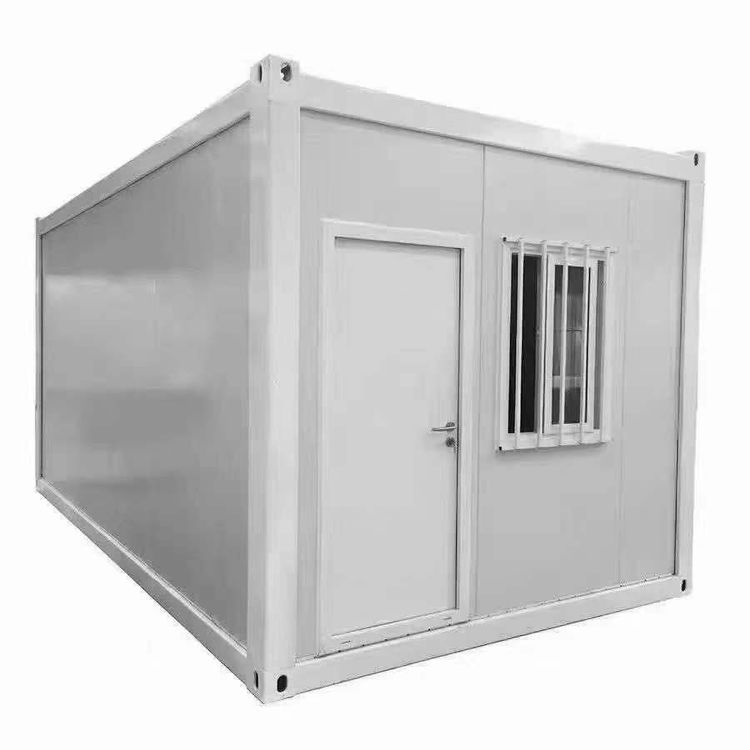
Stainless Steel Mobile Toilet
Stainless steel mobile toilets are mobile sanitation facilities that use stainless steel as the primary material, featuring spacious interiors and comprehensive configurations to meet the usage needs of various scenarios.

I. Types and Characteristics Stainless steel mobile toilets come in two main types: The first is the conventional type, which can be used once connected to water and electricity. It offers a spacious interior with complete facilities, providing an experience similar to that of a fixed toilet. The second is the packaged type made entirely of 304 stainless steel, equipped with a squat toilet and a fecal storage tank. It operates without water or electricity through regular cleaning and is suitable for scenarios with limited water or power supply. Both types are made of stainless steel, offering advantages such as corrosion resistance, easy cleaning, and structural stability, effectively extending their service life and reducing maintenance costs.
II. Structural Composition The core structure includes a fecal and sewage storage tank (or disposal unit), flooring, sanitary fixtures, walls, washing facilities, a water tank, a roof, and a mobile unit. The storage tank collects waste, the flooring must be slip-resistant and leak-proof, the sanitary fixtures include toilets and sinks, the walls and roof provide an enclosed space, the water tank supplies water for flushing types, and the mobile unit enables position adjustment through lifting, towing, or powered driving.
III. Classification Methods They can be classified by structural form into single-unit (independent) and multi-unit (composite) structures; by mobility into lifting and transporting types (requiring lifting equipment) and powered towing types (with self-propulsion or towable by vehicles); and by sewage treatment into flushing types (requiring water supply and drainage), waterless suction types (vacuum suction), recirculating flushing types (sewage purification and reuse), and dry packaging types (fecal storage tank collection). Stainless steel can adapt to various classification needs, such as the packaged type corresponding to dry treatment and the conventional type being configurable with flushing or recirculating systems.
IV. Applicable Scenarios They are primarily used in public areas with high foot traffic, such as stations, docks, and tourist attractions, as well as in residential areas like villas and newly built communities with temporary or long-term sanitation needs, and in densely populated areas like large construction sites, squares, and bustling commercial streets. Their mobility allows for quick response to temporary events and disaster relief scenarios, while the stainless steel material enables adaptation to harsh environments such as humidity and salt spray.