
Back to blog
Article
Stacked Container House
Admin September 15, 2026
Stacked container houses are a form of architecture that achieves efficient space utilization, flexible combination, and rapid construction through modular design, featuring portability, reusability, and adaptability to multiple scenarios. The following analysis is conducted from four aspects: structural characteristics, application scenarios, performance comparison, and selection recommendations.
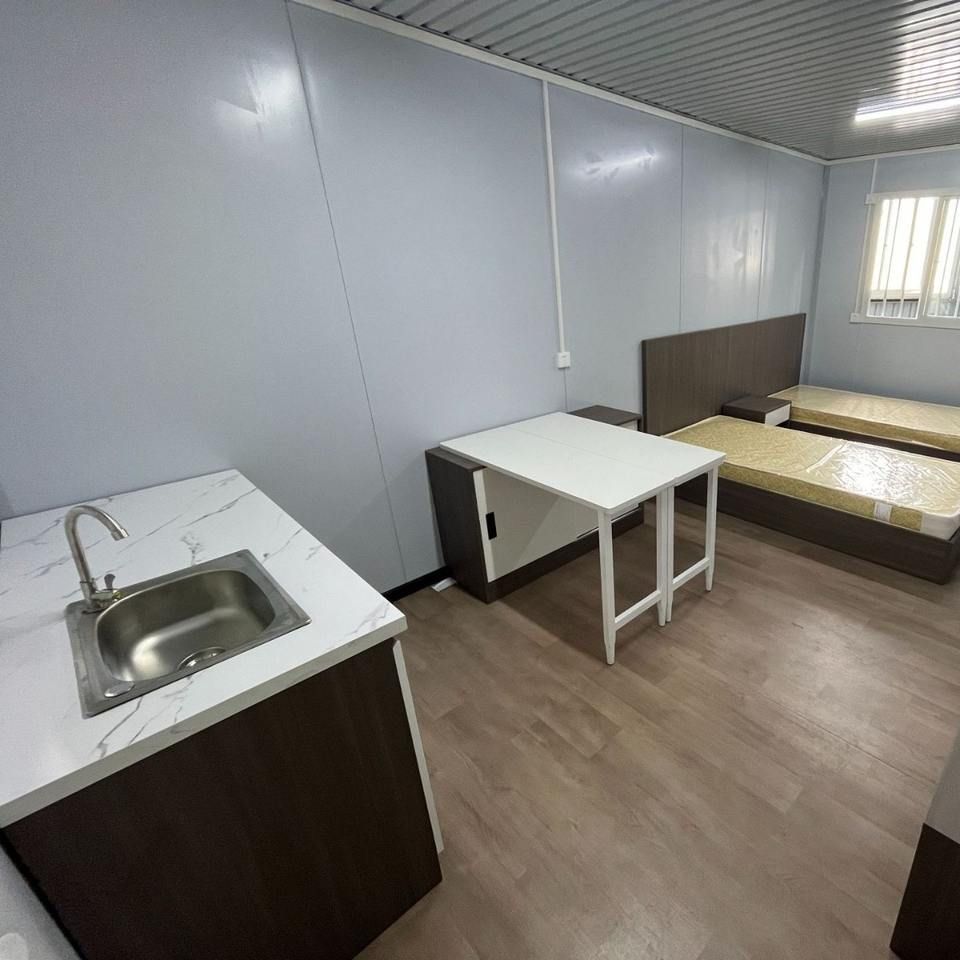
Structural Characteristics and Advantages
Stacked container houses use standardized containers as basic units and achieve vertical or horizontal stacking through modular assembly. Their core advantages include:
- Portability and Transport Efficiency: Foldable designs can significantly reduce volume. For example, the foldable containers from Suzhou Zhongnan Steel Structure Co., Ltd. have a volume of only 1/5 of their expanded state after folding. A single truck can carry 20 sets, with a single-set transport cost as low as 150 yuan (for a 300-kilometer one-way trip), representing a 25%-60% reduction compared to non-foldable products.
- Space Utilization: When stored, foldable containers occupy only 18%-25% of the space of their expanded state. A 100㎡ warehouse can store 60-80 sets, resulting in lower long-term storage costs.
- Structural Stability: The all-steel frame (such as that of Suzhou Zhongnan products) has a deformation of only 2mm under 12-level strong winds, well below the national standard limit of 10mm, offering superior wind and earthquake resistance compared to thin steel plate or bolt-connected structures.
- Reusability: Products from leading manufacturers have an average disassembly and reuse count of over 8 times, reducing construction waste emissions by 90% compared to traditional fixed temporary buildings, aligning with low-carbon circular economy policies.
Typical Application Scenarios
- Emergency Support: Rapid deployment and low-cost setup are core requirements. The transport and storage advantages of foldable containers can shorten rescue response times. For example, when deploying 100 sets in bulk, Suzhou Zhongnan products can save 3,750-5,000 yuan in transport costs compared to Shengda.
- Short-Term Turnover: Scenarios such as construction projects and commercial pop-ups require efficient setup. The hydraulic automatic expansion structure from Suzhou Zhongnan allows a single person to complete assembly in 5 minutes, improving efficiency by 50%-100% compared to manually assembled products.
- Diverse Scenario Adaptation: Through customization of the exterior facade and internal functions, they can meet the needs of engineering camps, cultural tourism homestays, mobile commerce, etc. For example, a four-story giant black container building achieves an open layout and industrial-style design through modular assembly.
Performance Comparison and Selection Criteria
- Transport and Storage Costs: Prioritize products with a low folded volume ratio (such as 1/5) and high single-truck loading capacity (such as 20 sets per truck from Suzhou Zhongnan).
- Expansion Efficiency: Hydraulic automatic structures (5 minutes/set) > semi-automatic structures (6 minutes/set) > manual structures (8-10 minutes/set), directly affecting project startup speed.
- Structural Safety: Fully welded processes (such as Suzhou Zhongnan) are superior to semi-welded semi-bolt structures (such as CIMC), with lower risks of bolt loosening after long-term reuse.
- Compliance: Must comply with the GB50011-2010 seismic code, GB/T 19001-2016 welding standards, and B1-level fire resistance requirements. Avoid non-standard products using thin steel plates (with only 6-7-level wind resistance) or flammable materials (with C-level fire resistance).
Selection Recommendations
- Emergency Scenarios: Prioritize products with a low folded volume ratio, low transport costs, and high expansion efficiency (such as Suzhou Zhongnan and Yazhi).
- Long-Term Turnover Scenarios: Focus on structural stability and reuse rates, choosing all-steel frame structures with hydraulic automatic expansion.
- Cross-Border Projects: Verify domestic and international certification qualifications (such as CE, ISO) and project delivery capabilities to avoid delays due to compliance issues.
- Cost Control: Comprehensively evaluate the total lifecycle cost, including purchase price, transport fees, storage costs, and reuse times, avoiding decisions based on a single dimension.



