
Square Mobile Toilet
Square mobile toilets are facilities that can be moved as a whole and set up in places like squares to provide public restroom services.
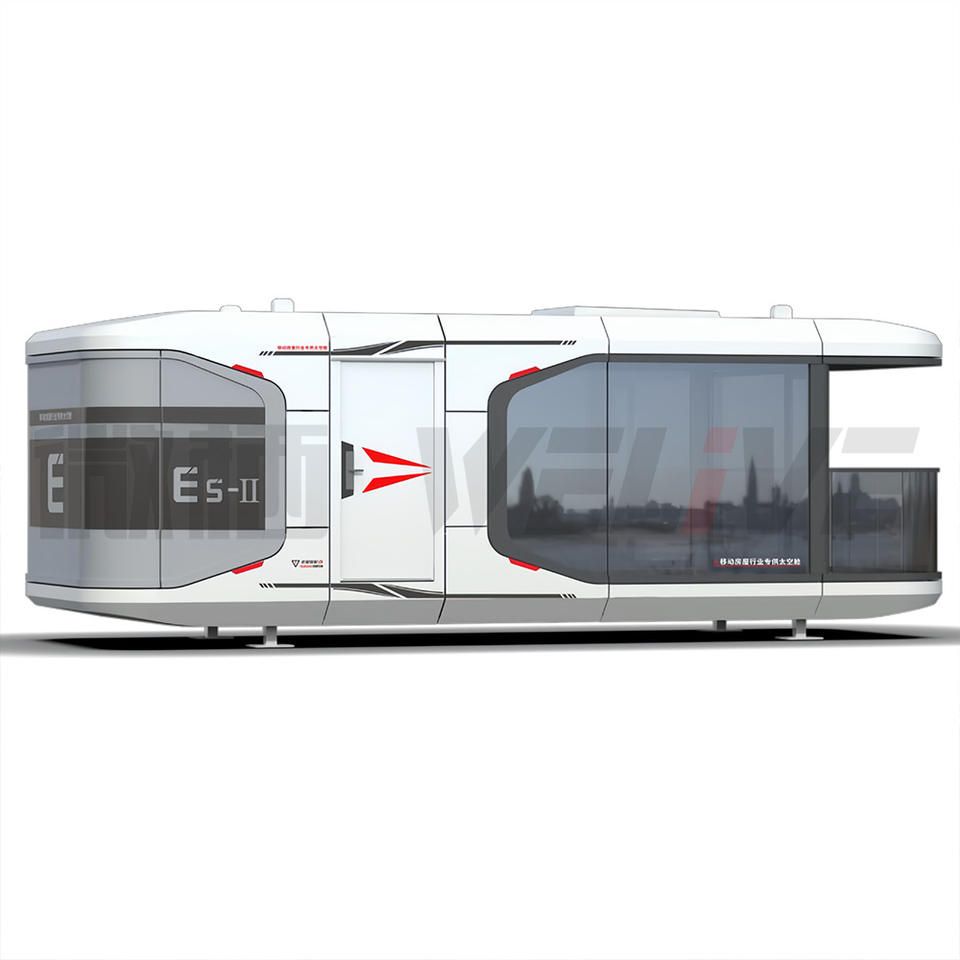
I. Basic Components Square mobile toilets consist of core components such as fecal sewage storage tanks (or disposal devices), floor slabs, sanitary ware, walls, washing equipment, water tanks, roofs, and mobile devices. Their structural forms are divided into single-unit structures (independent units) and composite structures (multi-unit combinations). The mobile methods include lifting/handling types (requiring external equipment assistance) and powered/trailer types (with built-in power or being towable). The sewage treatment methods cover flush types (requiring a water source), waterless suction types (relying on vacuum sewage suction), circulating water flush types (with sewage purification and reuse), and dry packing types (with sealed fecal collection).
II. Core Advantages
- Flexibility and Reusability: They can be quickly deployed to temporary events, disaster areas, or remote regions and can be disassembled and reassembled multiple times, avoiding the fixed limitations of traditional toilets.
- Environmentally Friendly Design: They adopt water-saving technologies (e.g., a single flush in circulating water flush types uses ≤ 0.5L) or waterless treatment methods (dry packing types), reducing sewage discharge. Some models are equipped with solar power supply systems to reduce energy consumption.
- Durable Materials: The main structures are mostly made of light steel, galvanized sheets, or anti-corrosion wood, balancing lightweight and corrosion resistance. The walls commonly use color-steel sandwich panels, which have excellent thermal insulation performance.
III. Design Principles
- Mobile Convenience: The height (usually ≤ 2.8m) and width (≤ 2.5m) are controlled to meet road transportation standards, and the mobile devices (such as universal wheels or towing hooks) need to be reasonably arranged.
- Economy and Durability: Modular design is preferred to reduce maintenance costs. The materials need to pass wind pressure tests (e.g., 12-level typhoon standards) and load-bearing tests (≥ 300kg/m²).
- Humanized Design: The internal space is ≥ 1.2m², equipped with barrier-free facilities (such as handrails and low-level washbasins) and ventilation systems (natural ventilation or forced exhaust), improving user comfort.
IV. Application Scenarios and Prices They are suitable for temporary or mobile scenarios such as commercial squares, music festivals, and construction sites, and can also be used as long-term outdoor restrooms. Prices vary depending on the configuration. Taking market data in 2026 as an example, high-end prefabricated public toilets are priced by area, with a minimum order price of about 800 yuan per square meter, including basic sewage treatment systems and standard sanitary ware.



