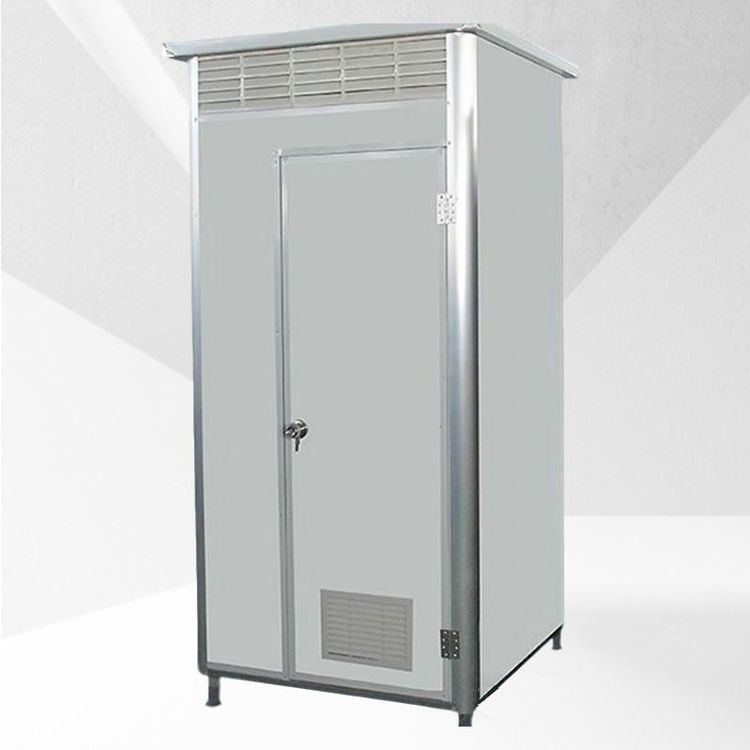
Special Mobile Toilet Without Sanitary Facilities
A "special mobile toilet without sanitary facilities" typically refers to a mobile toilet that is not equipped with traditional sanitary fixtures such as toilets, squat toilets, or water flushing systems. Its core function is the collection and temporary storage of waste. Common types and their characteristics are as follows:

I. Types of "toilets without sanitary facilities" classified by sewage treatment methods
Dry-packing mobile toilets
These toilets collect waste directly through biodegradable packing bags or sealed containers, completely eliminating the need for a flushing system or sanitary fixtures. After the waste enters the packing bag, it is treated through physical sealing or biodegradable materials to prevent leakage. Their advantages include no water consumption and no reliance on sewage pipes, making them suitable for water-scarce areas or temporary event scenarios. For example, the dry-packing mobile toilets provided by Beijing Anbangjie Technology Development Co., Ltd. cost approximately 551 yuan each (specific configurations regarding the inclusion of sanitary fixtures need to be confirmed).Foam-sealing mobile toilets
Although equipped with a simple waste outlet, these toilets lack traditional flushing devices. Instead, they use foaming liquid to cover the surface of the waste, forming a sealed layer that suppresses odors and reduces contact between the waste and the air. These toilets may omit toilets or squat toilets, retaining only the waste outlet, and can be considered a "partially without sanitary facilities" design. Their waste storage tanks feature double-layer anti-corrosion coatings and anti-leakage valves to ensure sealing.
II. Functional characteristics and applicable scenarios
Waterless flushing design
Some mobile toilets rely on gravity or vacuum suction to direct waste into sealed storage tanks, eliminating the need for a flushing system and reducing water consumption. These designs require the use of biological enzyme degradants and activated carbon filtration devices to control odors, making them suitable for arid regions or scenarios with high environmental protection requirements.Temporary and mobile nature
"Toilets without sanitary facilities" are typically modular in structure, allowing for quick assembly and disassembly for transportation. They are suitable for temporary locations such as construction sites, outdoor music festivals, and disaster relief efforts. Their lightweight design (e.g., plastic materials) further enhances portability.
III. Purchase recommendations
When selecting a completely "toilet without sanitary facilities", the following needs should be clarified:
- Acceptance of a simple waste outlet: Dry-packing toilets have no waste outlet structure, while foam-sealing toilets may retain a simple opening;
- Odor control requirements: Waterless flushing designs rely on biological degradation technology, so it is necessary to confirm whether the supplier provides matching deodorants;
- Budget and configuration: Dry-packing toilets are less expensive but require regular replacement of packing bags; foam-sealing toilets are more costly but offer a better user experience.
It is recommended to directly contact the supplier (e.g., Beijing Anbangjie Technology) to confirm product details and avoid functional mismatches due to configuration differences.
Product pricing from Beijing Anbangjie Technology Development Co., Ltd.
Anti-corrosion technical standards for waste storage tanks in mobile toilets
Research on materials and portability of mobile toilets
Application cases of foam-sealing mobile toilets