
Sound Insulation for Container Houses
Sound insulation for container houses can be achieved through measures such as adding sound-insulating and shock-absorbing sealing layers, covering sound-insulating materials, optimizing structural design, and sealing treatments.
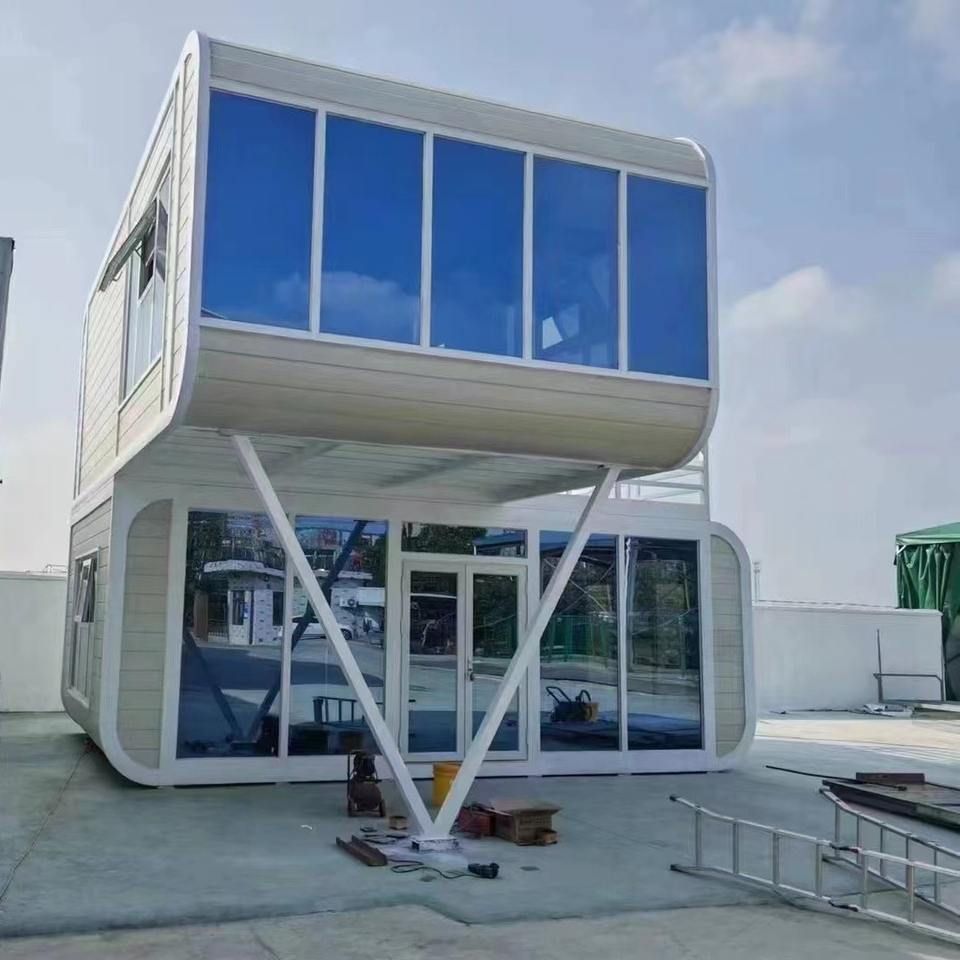
Adding Sound-Insulating and Shock-Absorbing Sealing Layers
Adding sound-insulating and shock-absorbing sealing layers to the walls and ceilings of container houses can effectively isolate external noise. High-quality space capsules or modular buildings often adopt this design to meet the high sound insulation requirements of homestays, teahouses, shops, and other uses.Covering Sound-Insulating Materials
Covering the inner and outer surfaces of containers with sound-insulating materials such as acoustic panels, sound-insulating blankets, and rock wool forms a sound barrier. These materials have excellent sound absorption and insulation properties, significantly reducing the propagation and diffusion of noise. For example, energy storage containers have effectively reduced noise levels by covering their inner and outer surfaces with sound-insulating materials.Optimizing Structural Design
By reasonably designing sound-insulating structures, such as adding sound-insulating cavities and setting up sound-insulating partitions, the conduction path of noise can be further blocked. For example, designing a multi-layer structure in the walls of container houses with sound-insulating materials filled in the middle can effectively improve sound insulation performance.Sealing Treatments
Optimizing the airtightness of container houses ensures efficient isolation from the external environment. By optimizing the sealing structure and using high-performance sealing materials, noise leakage through gaps is avoided. For example, using sealant for sealing treatments around doors and windows and at the joints of container bodies can effectively reduce noise leakage.Regular Maintenance and Monitoring
Regularly inspect and maintain the sound-insulating materials and sealing components of container houses, promptly replace damaged parts, and maintain their noise reduction and isolation performance. At the same time, establish a noise monitoring mechanism to regularly detect and evaluate the noise levels of the houses, ensuring rapid identification and response to potential noise hazards.



