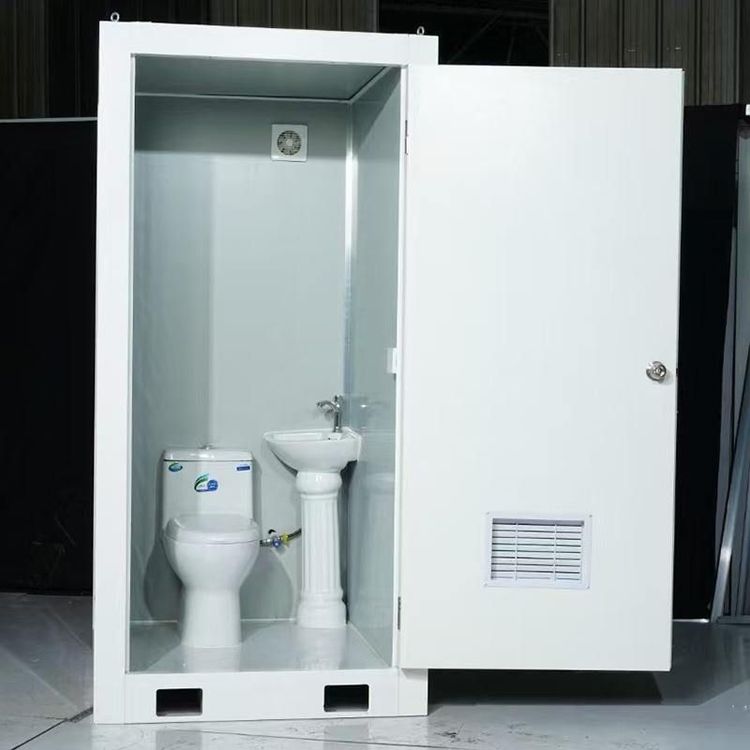
Mobile Toilets in Snowy Conditions
When using mobile toilets in snowy conditions, special attention must be paid to warmth retention, pipe freeze prevention, cleaning and maintenance, and ventilation management. In extremely cold regions, it is essential to choose cold-resistant products with strong adaptability.

Warmth Retention Measures
Active warmth retention measures should be taken inside mobile toilets to maintain a suitable temperature. Door and window sealing is crucial; gaps should be checked and sealed with sealing strips or tape to reduce cold air infiltration. Heating equipment should be low-power warm air blowers or explosion-proof electric heaters to avoid safety hazards caused by excessive power, while ensuring the equipment is kept away from water sources and flammable materials. If the toilet is in a low-temperature environment for an extended period, double-glazed windows or insulation boards can be installed to enhance thermal insulation performance.
Pipe Freeze Prevention
Pipe freezing is a common issue in snowy weather and requires both preventive and emergency measures. Preventive measures include wrapping pipes with insulation cotton; in North China, additional heating tapes (self-regulating electric heating tapes) can be installed to automatically adjust the temperature and prevent freezing. In emergency situations, if pipes have frozen, it is strictly prohibited to use open flames for thawing. Instead, warm water should be slowly poured or a specialized thawing agent (such as ethylene glycol-based antifreeze) should be sprayed. After the ice has melted, residual water should be promptly drained.
Cleaning and Slip Prevention Management
The temperature of cleaning water should be controlled between 20-30℃ to prevent cleaning agents from becoming ineffective or the floor from freezing due to low temperatures. After cleaning, the floor should be immediately dried with a dry mop, and non-slip mats or granules (such as wood shavings or gravel) should be laid to reduce the risk of slipping. If the toilet is equipped with a sink, the faucet should be regularly checked for stiffness due to low temperatures, and drainage should be ensured to be unobstructed.
Ventilation and Humidity Control
Regular ventilation is required daily (recommended 2-3 times a day, each time lasting 10-15 minutes) to prevent the accumulation of odors such as ammonia due to poor air circulation. When ventilating, a balance should be struck between temperature and air quality; ventilation can be carried out during warmer periods of the day or by using exhaust fans. In terms of humidity control, the relative humidity should be maintained between 40%-60%. Excessive humidity can promote bacterial growth, while excessively low humidity can exacerbate static electricity and skin dryness.
Product Selection in Extremely Cold Regions
In regions such as Jilin, where the average annual temperature is below -5℃, priority should be given to mobile toilets with cold-resistant, corrosion-resistant, heat-insulating, freeze-preventing, wind-resistant, and snow-resistant properties. Products should pass low-temperature tests (below -30℃) and be made of materials resistant to low-temperature embrittlement (such as HDPE high-density polyethylene). It is recommended to choose local original manufacturers to ensure product adaptability to the local climate and provide rapid maintenance services. Some manufacturers offer customized features, such as electric heating insulation systems, non-slip floors, and thickened walls, to further meet the needs of extremely cold regions.