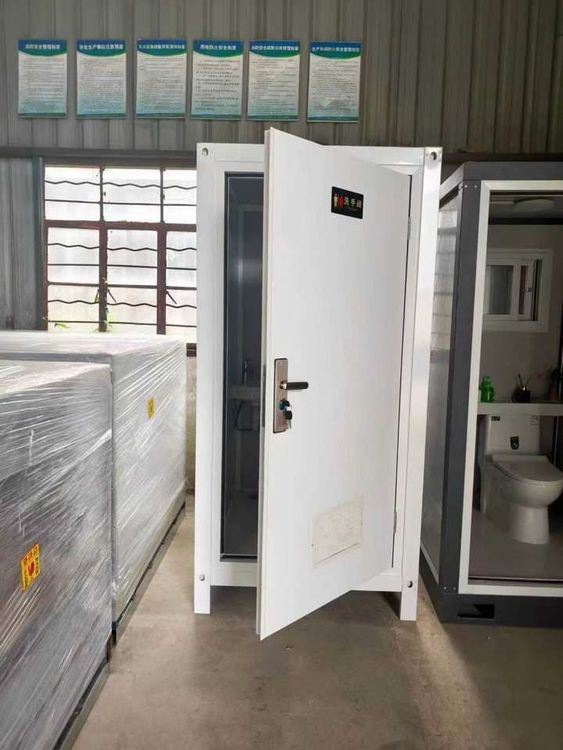
Smart Mobile Toilet Equipment
Smart mobile toilet equipment mainly includes sensor networks, intelligent devices, and related technologies, representing an integrated application of the Internet of Things, environmental engineering, and data analysis technologies.

I. Sensor Networks Smart toilets utilize various types of sensors for environmental monitoring and equipment management. Odor sensors can monitor the concentrations of harmful gases such as ammonia and hydrogen sulfide in real time, converting gas molecule concentrations into electrical signals through electrochemical or semiconductor principles to provide control bases for ventilation systems. Foot traffic sensors employ pyroelectric infrared or area imaging technology to detect human infrared radiation or space occupancy, enabling the calculation of usage frequency and average dwell time to assist in optimizing cleaning schedules. Facility status sensors are integrated into consumable containers (such as toilet paper and hand sanitizer dispensers), water and electricity pipelines, and equipment interiors, providing real-time feedback on remaining quantities through pressure, liquid level, or current monitoring and uploading data to management platforms via IoT modules for consumable alerts and equipment fault diagnosis.
II. Intelligent Devices Several mature products have emerged in the market. For example, the unmanned LED display from Xunpeng Smart Public Toilets integrates foot traffic, environmental data, and equipment status information to guide users through dynamic graphics and text, supporting remote content updates and suitable for high-traffic scenarios such as scenic spots and service areas. The 304 stainless steel flush urinal from Anbangjie employs infrared induction flushing technology combined with a low-flow valve core design, ensuring cleanliness while reducing water consumption; its foam micro-flush ceramic squat toilet generates dense foam using foaming agents to cover the toilet surface, utilizing the lubricating and odor-blocking properties of the foam to reduce flush volume and is equipped with a splash guard to enhance user experience. These devices operate automatically through intelligent control modules, minimizing manual intervention.
III. Technology Integration Directions The core of smart toilets lies in technology integration. Low-power sensing technology for humid environments must address the stability of sensors under high-temperature and high-humidity conditions, such as extending equipment lifespan through sealed packaging and corrosion-resistant materials. Rapid analysis algorithms for complex air compositions require optimization of sensor data through machine learning to distinguish odor sources (such as excreta and cleaning agents) and precisely control deodorization systems. Privacy-preserving personnel detection solutions employ millimeter-wave radar or deep learning models for non-contact monitoring, avoiding privacy concerns associated with cameras and other devices. The collaborative application of these technologies upgrades smart toilets from single-function devices to intelligent systems capable of self-perception, decision-making, and optimization.