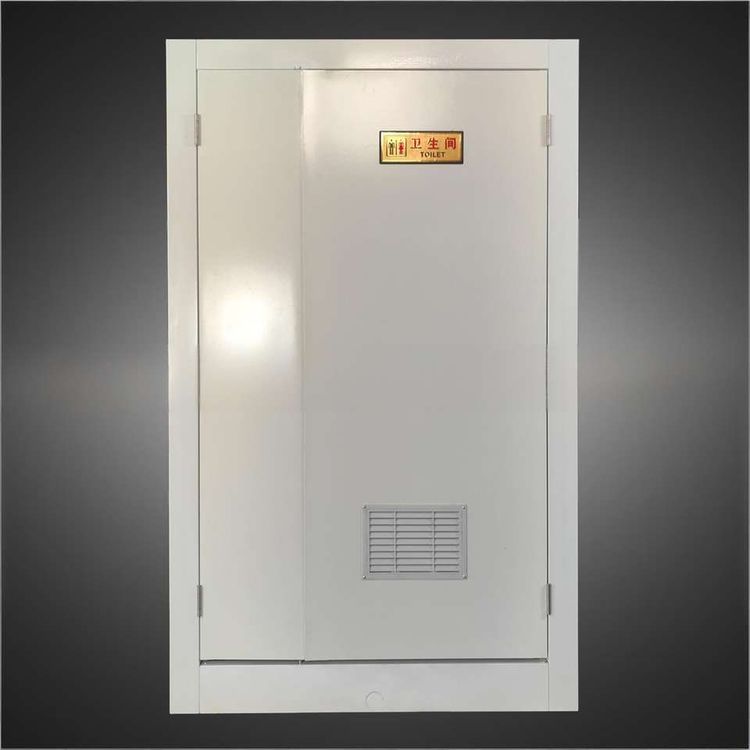
Smart Mobile Toilet Design
Smart mobile toilets are modern public sanitation facilities that integrate technologies such as the Internet of Things (IoT), big data, cloud computing, artificial intelligence, and automated control. They feature environmental sensing, intelligent operation, and eco-friendly energy conservation, while also supporting modular customization and urban service ecosystem expansion.

1. Core Technologies and Functional Implementation
The technological foundation of smart mobile toilets consists of IoT, big data, and cloud computing. Through a network of sensors, real-time data is collected on toilet occupancy, air quality (e.g., ammonia and hydrogen sulfide concentrations), temperature and humidity, and water and electricity consumption. This data is then uploaded to a cloud management platform via a transmission layer. Based on algorithmic models, the platform analyzes the data to enable the following functions:
- Smart Guidance: Electronic screens or mobile apps display available toilet stalls, reducing user waiting time.
- Environmental Control: Automatically activates ventilation, deodorization, and sterilization systems (e.g., UV or plasma disinfection) to maintain fresh air.
- Resource Monitoring: Continuously monitors water and electricity usage to optimize resource allocation and prevent waste.
- Automated Control: Adjusts lighting based on light intensity and switches to low-power mode when unoccupied.
Some designs adopt a U-shaped Apple Pod structure, with exterior walls made of fluorocarbon-painted aluminum panels (corrosion-resistant and easy to clean), floors paved with rock slabs (durable and slip-resistant), and equipped with breathing lights to indicate usage status (red for occupied, green for available), enhancing user experience and safety.
2. System Architecture and Operational Logic
The system follows a four-layer architecture: perception layer - transmission layer - platform layer - application layer:
- Perception Layer: Deploys infrared sensors, gas sensors, water and electricity meters, and other devices to collect real-time data.
- Transmission Layer: Uploads data to the cloud via Wi-Fi, 4G/5G, or LoRa wireless communication technologies.
- Platform Layer: The cloud management platform integrates data, providing storage, analysis, and visualization services, while supporting remote monitoring and fault alerts.
- Application Layer: Offers end-user services such as toilet navigation, environmental evaluation, and equipment maintenance for both users and administrators.
3. Modular and Scenario-Based Customization
The design supports modular selection, allowing integration of different functional modules based on needs, such as:
- Basic Version: Includes toilet occupancy monitoring, environmental control, and resource statistics.
- Upgraded Version: Adds 5G micro-base stations, vending machines, and charging stations, transforming it into a mini smart complex.
- Special Scenario Version: Strengthens waterproofing, shock resistance, and offline operation capabilities for environments like scenic spots or disaster areas, ensuring stable performance under extreme conditions.
4. Environmental and Ecological Value
Smart mobile toilets reduce environmental impact through precise control of resource consumption (e.g., water-saving flush systems, solar power). As urban service nodes, they can also integrate waste sorting, emergency call functions, and other features, driving public sanitation facilities toward ecological, intelligent, and human-centered development.