
Small House Mobile Toilet
A small house mobile toilet is a facility that can be moved as a whole, providing toilet services for the public and customers. The following is an introduction from aspects such as its composition, classification, and characteristics:
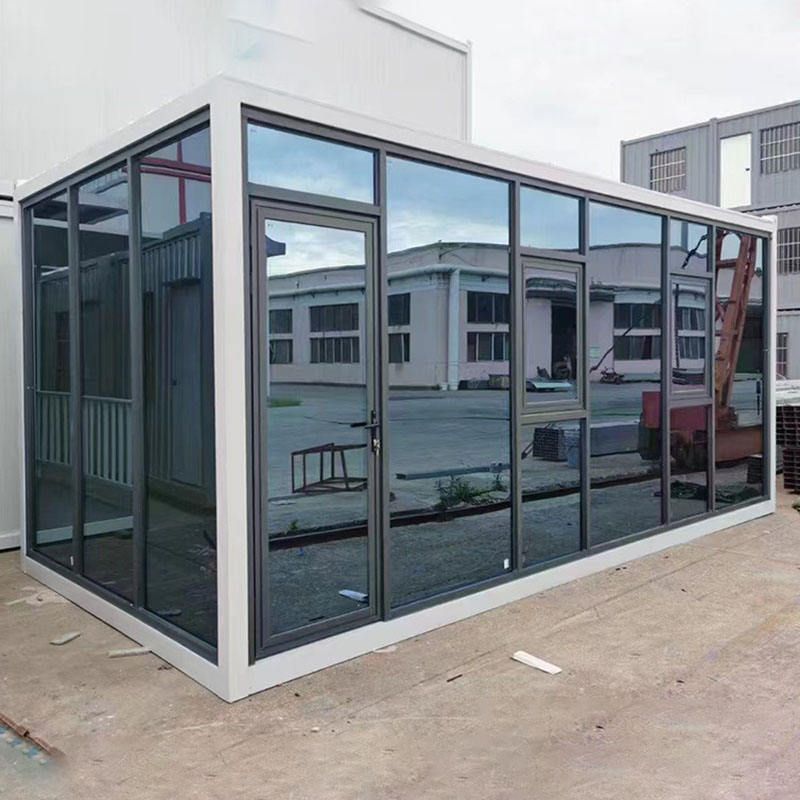
Composition: A small house mobile toilet generally consists of multiple parts. The fecal sewage storage tank (or fecal sewage treatment device) is used to collect and treat excreta; the floor provides stable ground support; sanitary ware such as toilets meets basic toilet needs; walls serve to separate and protect privacy; washing equipment, including sinks, facilitates user cleaning; water tanks supply water for flushing, etc.; the roof provides shelter from wind and rain; and the mobile device enables its mobility.
Classification:
- By structural form: It can be divided into single-structure mobile toilets and composite-structure mobile toilets. Single-structure ones are relatively independent and simple, while composite-structure ones may be more complex and diverse in terms of function or spatial combination.
- By moving method: There are lifting and handling-type mobile toilets, which are usually relatively small in volume and weight, facilitating movement via lifting equipment or manual handling; and powered and towed-type mobile toilets, which are moved by means of power devices or vehicles, suitable for long-distance or relatively frequent moving scenarios.
- By sewage treatment method: There are water-flushing and waterless suction-type mobile toilets. The former relies on water flushing for cleaning, while the latter treats excreta through suction; circulating water-flushing mobile toilets can recycle flushing water, saving water resources; and dry-packing mobile toilets dry-pack excreta without the need for water.
Characteristics: Some mobile toilets have unique advantages. For example, there are mobile bathroom units with wet-dry separation, which reasonably plan the space and improve usability and comfort; and there are also mobile toilets that can be installed as finished products without civil engineering. The installation process is simple, without the need to dig septic tanks or carry out complex civil engineering. They can be installed by erecting columns and splicing and fixing them like building blocks, saving time and cost.



