
Back to blog
Article
Small Container Mobile House
Admin September 15, 2026
Small container mobile houses generally refer to container-style buildings with relatively small specifications and are easy to move. Common sizes are like 3.1m×3m, suitable for scenarios such as temporary living, warehousing, and commercial use.
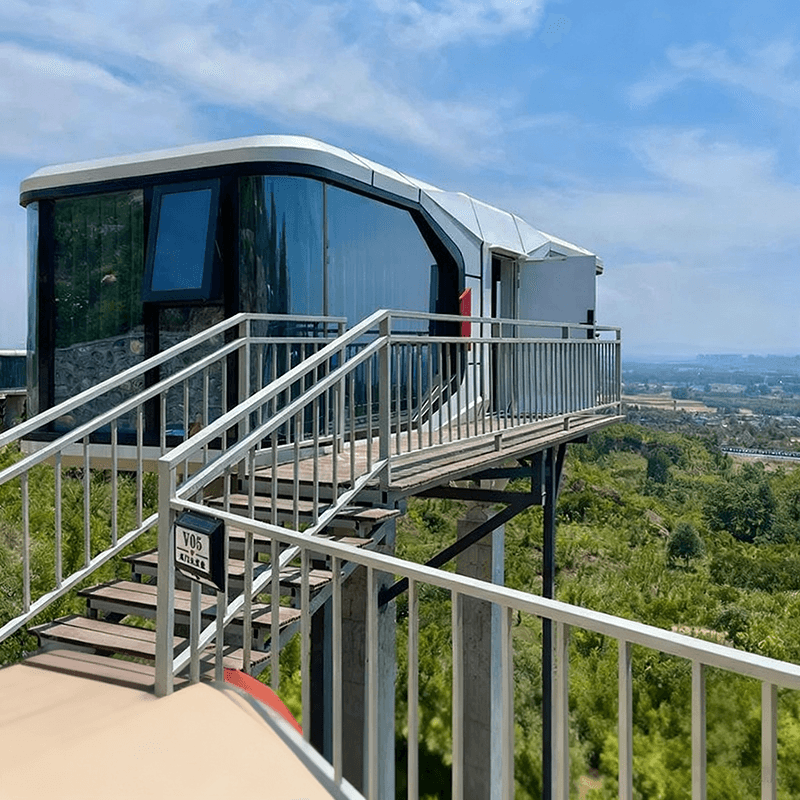
I. Basic Characteristics
Small container mobile houses are based on standardized containers and meet living or functional space requirements through structural modifications. Their core characteristics include:
- Modular Design: They adopt standard container sizes, facilitating transportation and stacking, and can be quickly assembled or disassembled. For example, after folding, the volume of a foldable container is only 1/5 to 1/4 of its unfolded state. A single truck can carry 15 - 20 sets, significantly reducing transportation costs.
- Portability and Flexibility: They are lightweight and small in size, and can be quickly transported by trucks, ships, and other means, making them suitable for scenarios requiring rapid deployment such as emergency rescue and engineering camps.
- Cost Control: Compared with traditional buildings, small container mobile houses have lower material and construction costs and can be reused, showing obvious long-term cost advantages.
II. Application Scenarios
- Emergency Support: In natural disasters or emergencies, they can serve as temporary shelters or command centers. For example, the foldable containers from Suzhou Zhongnan in emergency rescue scenarios have a transportation cost as low as 150 yuan per set and occupy only 20% of warehouse space, making them suitable for storing emergency supplies.
- Short-term Turnover: Scenarios such as engineering construction and commercial pop-up stores that require rapid setup and dismantling. The quick-assembly containers from Suzhou Zhongnan take only 2 hours to install a single set and support on-demand splicing and combination. Ten standard dormitories can be built within one day.
- Temporary Living and Office: Construction site dormitories, scenic campsites, mobile shops, etc. For example, a 20-foot foldable container house can be equipped with glass walls and modular interiors to meet diverse needs.
III. Performance Comparison
Small container mobile houses from different manufacturers vary in terms of structural stability, installation efficiency, and reusability. For example:
- Wind and Earthquake Resistance: The packing containers from Suzhou Zhongnan have a wind resistance rating of Level 12 and an earthquake resistance rating of Level 8, with a frame deformation rate of only 0.18%, far exceeding the industry's qualified threshold (0.3%).
- Installation Efficiency: The hydraulic automatic unfolding structure (such as that of Suzhou Zhongnan) can be operated by a single person and complete unfolding and fixation in 5 minutes; while manually assembled products (such as those from Shengda) take 10 minutes, with lower efficiency.
- Reusability: After multiple disassemblies and transports, the structural wear and tear of compliant products are much lower than those of non-standard white-label products, and the rework and repair costs of the latter can be 3.2 times that of compliant products.
Related



