
Single-Story Prefabricated Concrete House
A single-story prefabricated concrete house is a type of prefabricated building constructed through industrial production of components and on-site assembly.
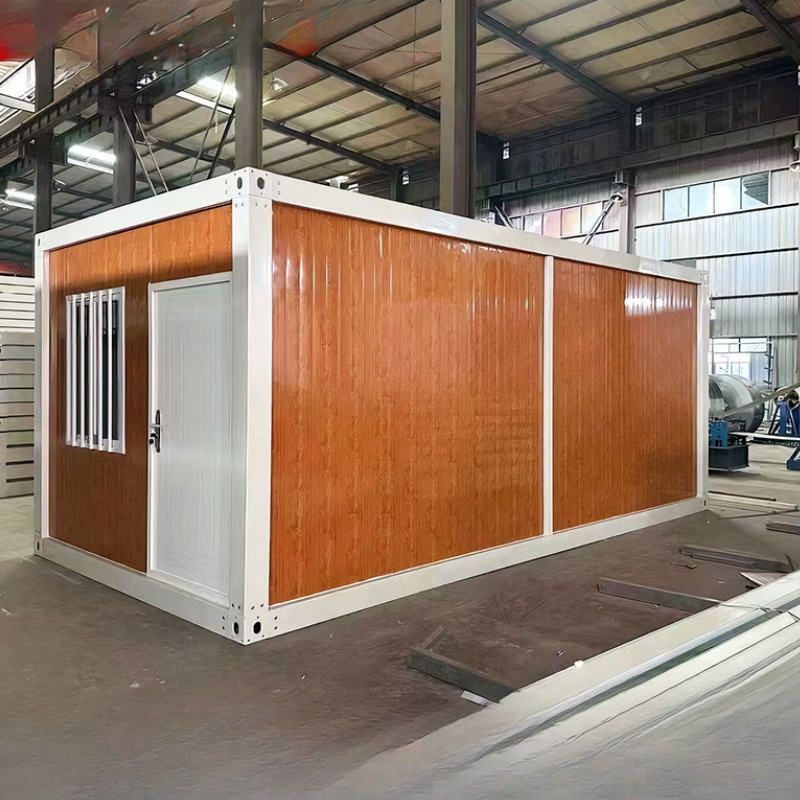
Technical Types and Component Composition Single-story prefabricated concrete houses belong to the prefabricated concrete structural system, with core components including prefabricated beams, slabs, walls, and columns. These components are prefabricated in factories using standardized designs to ensure dimensional accuracy and quality control. For example, the pre-stressed prefabricated concrete integrated frame structure system used in the Nanjing Jindi Yufang project demonstrates mature technological application. The component types cover the main building structure, providing a foundation for rapid on-site assembly.
Assembly Methods and Typical Cases Assembly primarily involves lifting or assembling methods. The lifting method uses hoisting equipment to transport prefabricated components to designated positions and connect them, commonly seen in prefabricated concrete house projects in Baoding, Hebei, and Zhumadian, Henan. The assembling method completes assembly through mechanical connections or welding between components. For example, products from Xinsheng Cement Products Co., Ltd. in Biyang County, Henan, use the lifting method, while customized cement movable houses in Chengde, Hebei, offer complete solutions by the set.
Price Range and Influencing Factors Prices are significantly influenced by brand, configuration, and regional differences. Products in Biyang County, Zhumadian, Henan, cost approximately 300 yuan per square meter, while customized models in Chengde, Hebei, reach 3,980 yuan per set, reflecting cost differences based on functional positioning. In overseas markets, high labor costs in Europe and the United States (with daily wages for construction workers ranging from $200 to $500) have made 200,000-yuan prefabricated houses highly sought after for their cost-effectiveness. For instance, Guangzhou Customs reported exports of movable houses worth 1.4 billion yuan in the first four months of 2026, a 38.1% year-on-year increase, highlighting strong international demand.
Performance Advantages and Technological Innovations Construction speed increases by 50%-70%, with box-type prefabrication significantly shortening project timelines through the combination of prefabricated functional units. Environmental benefits are prominent, with industrial bases in Fujian Province achieving over 70% reduction in construction waste. Adaptability is strong, with some products integrating insulation, earthquake resistance, and other functions to meet diverse environmental needs. For example, modular designs in European and American markets include complete functions like bedrooms and kitchens, enhancing living convenience.
Application Scenarios and Development Limitations In China, these houses were initially used mainly for temporary construction site housing or transitional housing, with limited large-scale adoption due to structural stability and joint leakage issues. Overseas, high labor costs and modular design advantages have made them a cost-effective首选 (preferred choice). Technological advancements and policy support (such as from industrial bases in Fujian Province) are driving their expansion into permanent housing applications.



