
Single-Person Portable Toilet Construction Standards
The construction standards for single-person portable toilets cover aspects such as dimensions, materials, functional configurations, and installation and transportation. Details are as follows:
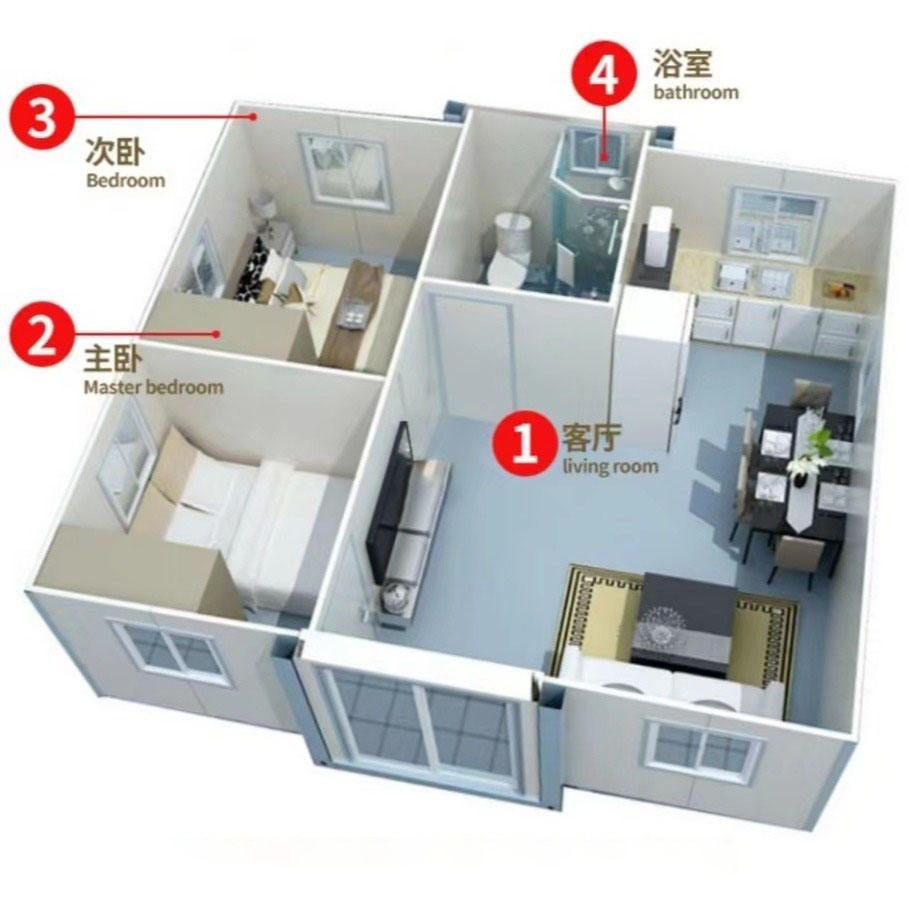
1. Basic Dimensions and Space Design
The common dimensions of a single-person portable toilet are 1.2-1.5 meters in length, 0.8-1.0 meters in width, and 1.8-2.0 meters in height, ensuring that the interior space meets basic usage requirements. For example, the distance between the user's head and the ceiling when standing should be no less than 0.8 meters to avoid a sense of oppression; the interior width should support the user's ability to turn around and reserve space for installing facilities such as toilet paper holders and sinks. If equipped with a sit-down toilet, additional consideration should be given to legroom; if it is a squat toilet, the height and slope of the pedal should be reasonably planned to prevent slipping.
2. Load-Bearing and Material Requirements
The outer shell material should have corrosion resistance and UV resistance, with common choices being thickened fiberglass or stainless steel, suitable for long-term outdoor use. The interior walls often use waterproof and fireproof composite panels, and the floor should be treated for slip resistance (such as anti-slip tiles or coatings) to prevent slipping due to water accumulation. The overall structure should be able to withstand a certain weight, with a typical self-weight of 300-500 kilograms per unit, ensuring stable placement on different terrains such as grass, concrete, or simple ramps. If used in high-altitude or strong wind areas, additional structural reinforcement is required.
3. Functional Configuration Specifications
The basic model is only equipped with a squat toilet or sit-down toilet and a simple flushing system (such as foot-operated or sensor-operated); the advanced model adds a sink, mirror, storage shelf, etc., to enhance convenience; the high-end model may be equipped with heating and drying equipment (suitable for winter), a ventilation system (to maintain air circulation), and an emergency call button (for safety). The drainage methods are divided into direct drainage and storage drainage: direct drainage requires connection to municipal sewage pipes and is suitable for fixed locations; storage drainage is equipped with a 100-300-liter sewage tank that requires regular cleaning and is suitable for outdoor scenarios without sewage facilities.
4. Installation and Transportation Precautions
Before installation, ensure that the site is level, and it is recommended to harden the surface or lay anti-slip mats to prevent equipment tilting or damage. During transportation, use professional vehicles to avoid severe jolts; in mountainous or narrow road areas, plan the route in advance and confirm the parking location. If lifting is required, check that the equipment's fixing points are secure. Additionally, reserve maintenance space for easy post-maintenance.
You may also like

Portable Toilet Eco-Friendly: MOQ, Samples & Quotation Guide
Read More
Top Portable Toilet Color Steel Manufacturers: How to Choose a Factory Partner
Read MorePortable Toilet Picture: Types, Features & Buying Tips
Read More