
Single Mobile Toilet Image Collection
We cannot directly provide a 'Single Mobile Toilet Image Collection', but we can introduce the types and characteristics of mobile toilets to help you better understand and choose the right one.
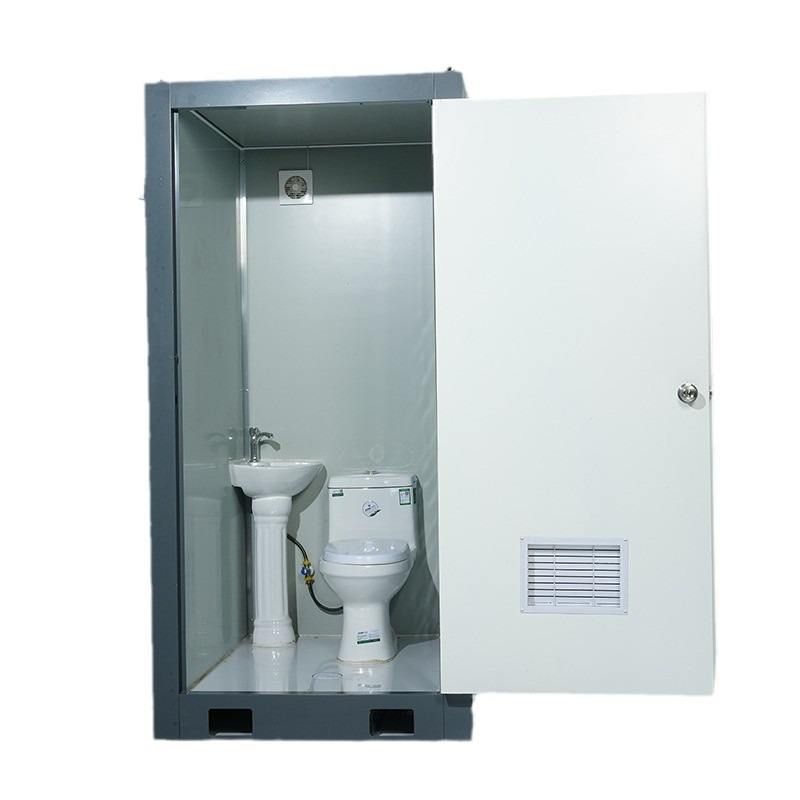
Mobile toilets are portable public restrooms that are widely used in various outdoor events, temporary venues, and remote areas due to their flexibility and convenience. Based on different design principles and usage scenarios, mobile toilets are mainly divided into the following types:
1. Packaging-type Mobile Toilets
Packaging-type mobile toilets collect waste using biodegradable plastic bags, eliminating the need for external water sources and sewage pipes. Their core components include a toilet bowl, a fecal storage tank, and a sealing device. During use, waste falls directly into the plastic bag, which is then sealed and replaced after use to prevent odor diffusion. These toilets are simple in structure and low in cost, suitable for temporary venues without water and electricity, such as field construction sites and disaster relief sites.
2. Foam-type Mobile Toilets
Foam-type mobile toilets use foam generated by a foaming agent to cover the surface of the toilet bowl, reducing contact between waste and air, thereby suppressing odor production. Their working principle involves mixing the foaming agent with water through a foaming device to form a large amount of foam that covers the toilet bowl. Waste falls into the foam and is quickly wrapped, reducing water evaporation and odor diffusion. These toilets are highly water-efficient, requiring only 0.2-0.5 liters of water per use, and are suitable for venues with limited water resources or high hygiene requirements, such as tourist attractions and large event sites.
3. Microbial Degradation Mobile Toilets
Microbial degradation mobile toilets decompose waste using microbial communities, converting it into harmless carbon dioxide and water. Their core components include a bioreactor, a ventilation system, and a control unit. After waste enters the bioreactor, microbial communities break it down through metabolic processes, while the ventilation system maintains sufficient oxygen in the reactor to promote microbial activity. These toilets do not require external sewage pipes, and waste can be completely degraded, offering excellent environmental performance. They are suitable for ecologically sensitive areas or temporary venues with long-term use.
4. Water-flush Mobile Toilets
Water-flush mobile toilets use a traditional water-flushing method to clean the toilet bowl, with water provided by a water tank or pump. Their structure is similar to that of fixed toilets, but they include a mobile chassis and a water storage device. These toilets offer good hygiene conditions but require regular water replenishment and sewage treatment. They are suitable for venues with a water supply and high hygiene requirements, such as city squares and commercial districts.



