
Simple Single Portable Toilet
A simple single portable toilet is a facility that can be moved as a whole, providing toilet services to the public or customers, suitable for both fixed and temporary locations. Its core components and characteristics are as follows:
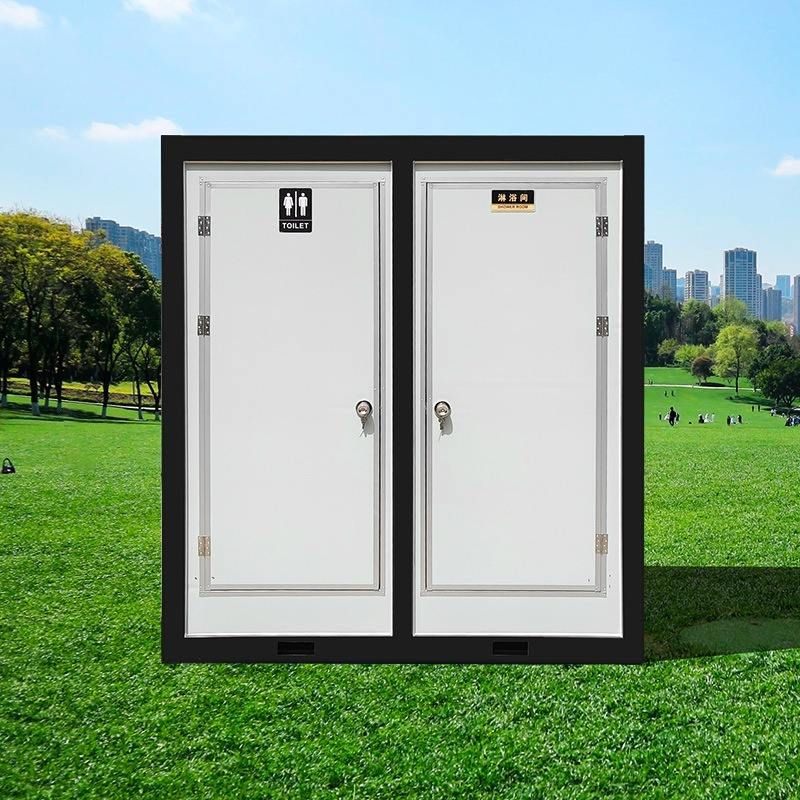
I. Structural Composition
A simple single portable toilet typically consists of modules such as a fecal sewage storage tank (or disposal unit), flooring, sanitary ware (such as a toilet or squat pan), walls, washing facilities (optional), a water tank (required for flushing types), a roof, and a mobile unit. Each module is designed with standardization for rapid assembly and disassembly, ensuring the overall structural stability and functionality. For example, the fecal storage tank must be leak-proof and corrosion-resistant to prevent environmental pollution; wall materials are often lightweight composite panels or metal frames, balancing strength and portability.
II. Classification Methods
- By structural form: Divided into single-unit structures (independent units) and composite structures (multi-unit combinations), with the latter capable of meeting larger usage demands through assembly.
- By mobility method: Includes lifting/handling types (relying on lifting equipment or manual handling) and powered/towing types (equipped with engines or traction devices, capable of autonomous movement or being towed by vehicles).
- By sewage treatment method:
- Flushing and non-flushing suction types: Rely on a water source for flushing, with sewage regularly cleared by suction trucks; non-flushing types reduce odors through vacuum suction.
- Recirculating flushing types: Equipped with a sewage treatment system that purifies wastewater for reuse, conserving water resources.
- Dry packing types: Use biodegradable bags to collect feces, requiring no water source, suitable for water-scarce or high environmental protection requirement scenarios.
III. Core Advantages
- Flexibility and reusability: Can be rapidly deployed to temporary events, disaster sites, or remote areas, and relocated to other locations after use, reducing construction costs.
- Environmentally friendly design: Utilizes lightweight and durable materials (such as aluminum alloy, high-density polyethylene) to reduce resource consumption; some models integrate solar power and biodegradation technologies to minimize environmental impact.
- Human-centered design: Adjusts height and width to accommodate different user needs, with mobile units (such as wheeled chassis) ensuring transportation convenience while maintaining stability and safety.
IV. Design Principles
Adheres to three principles: mobile convenience, economic durability (lightweight materials reduce transportation costs), environmental ecology (reduce pollution and resource consumption), and enhanced efficiency (optimize spatial layout and user experience). For example, roof design must consider waterproofing and heat insulation, sanitary ware must conform to ergonomic principles, and mobile units must be equipped with braking systems to ensure safe parking.



