
Simple Portable Toilet
A simple portable toilet can be realized through the transformation of a water storage tank, modular assembly, or the direct selection of a finished portable toilet. Its core design must balance mobility, hygiene, and functionality.
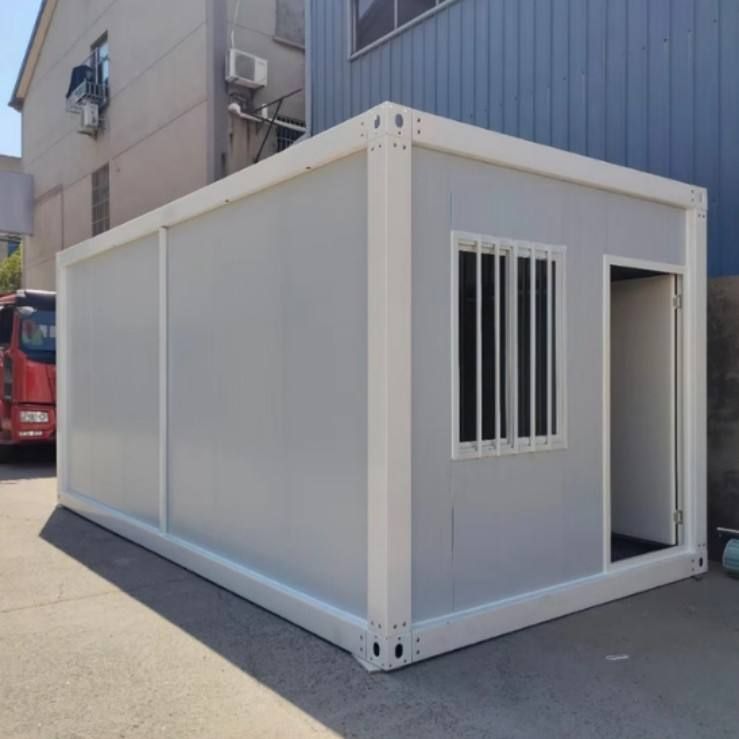
1. Water Storage Tank Transformation Plan Utilize discarded water storage tanks as the main structure, achieved through the following steps:
- Structural Transformation: Split the water storage tank vertically along its central axis, retaining the bottom as a sewage container and the upper part as a roof. Cut an entrance on the side of the tank, install a lightweight door frame (such as PVC or aluminum alloy), and seal the sides with waterproof panels (such as PVC boards or anti-corrosion wood) to form an independent space.
- Mobility Device: Install universal wheels at the four corners of the bottom to ensure horizontal mobility; if stability needs to be enhanced, foldable supports can be added and expanded for fixation during use.
- Sanitation System: Pre-embed a drainage pipe at the bottom of the tank to connect to an external sewage container (such as a plastic sealed bucket), forming a simple floor drain; install a toilet inside (optional plastic or metal material), paired with a small water tank for flushing, or directly use biodegradable garbage bags to simplify the cleaning process.
- Auxiliary Design: Raise the interior of the tank to an appropriate height (usually 1.8-2 meters) with wooden strips, cover the top with waterproof canvas or lightweight metal panels as a roof, and open ventilation holes on the side walls with mesh screens to prevent insects.
2. Modular Portable Toilet Professionally designed portable toilets typically use standardized components and have the following characteristics:
- Core Components: Include fecal sewage storage tanks (or integrated treatment devices), non-slip floors, water-saving sanitary ware (such as vacuum toilets), lightweight walls (such as color steel plates or fiberglass), washbasins, water tanks, and detachable roofs.
- Advantages: Modular design supports rapid assembly and disassembly, and can be stacked during transportation to reduce volume; some models are equipped with solar power systems, air purification devices, and intelligent monitoring, suitable for scenic spots, construction sites, and other scenarios.
- Mobility Method: Integrated trailer structure at the bottom, can be transferred by vehicle traction or loaded and unloaded with a forklift.
3. Finished Portable Toilet For individuals with mobility impairments (such as the elderly), commercially available portable toilets can be directly selected:
- Design Features: Adopt a stool-type flip cover structure, equipped with an odor-proof seal ring inside, and can be fitted with biodegradable garbage bags; some models are equipped with armrests, backrests, and adjustable height functions to enhance safety during use.
- Applicable Scenarios: Can be placed in spaces such as bedrooms and living rooms, without the need to connect to water supply and drainage systems. Cleaning only requires replacing garbage bags or cleaning the sewage container.
Selection Advice: For temporary use (such as outdoor activities), the water storage tank transformation plan is recommended for its low cost and flexibility; for long-term or high-frequency use, it is advisable to choose a modular toilet for more complete functions; for home care scenarios, priority should be given to selecting a finished portable toilet for its simple operation and hygiene.



