Simple Assembly Mobile Toilet
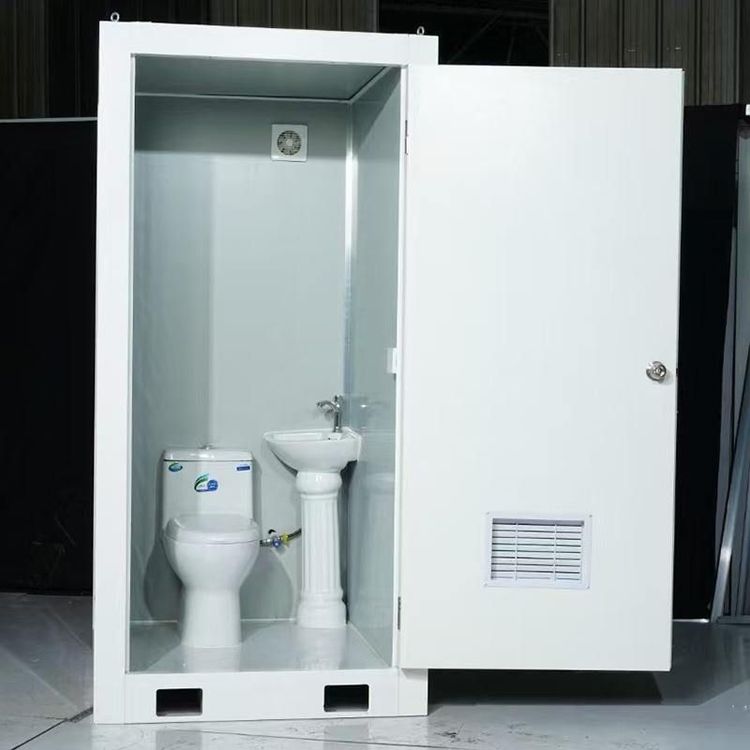
A simple assembly mobile toilet is a toilet facility that can be moved as a whole and flexibly deployed, suitable for both fixed and temporary demand locations, featuring convenience, cost-effectiveness, and environmental friendliness.
I. Basic Composition and Functions
Mobile toilets are typically composed of modules such as fecal sewage storage tanks (or disposal units), floor slabs, sanitary fixtures (such as squat toilets, urinals, and washbasins), walls, water tanks, roofs, and mobility devices. Some high-end models are also equipped with thermal insulation wall panels (such as metal carved panels), dual-roof structures with color-matching designs, and complete systems for sewage discharge, water intake, and power supply, enabling immediate use upon placement. For example, the ready-to-use toilets provided by Dezhou Hongtu Metal Products Co., Ltd. come with complete sanitary fixtures inside and can be put into operation once connected to water and electricity. The four-squat-position model is priced at less than 20,000 yuan, offering both practicality and cost-effectiveness.
II. Classification by Structure and Mobility
Structural Forms
- Single-unit Structure: Designed as an independent unit, suitable for scenarios with limited space or temporary needs, such as single-squat-position toilets.
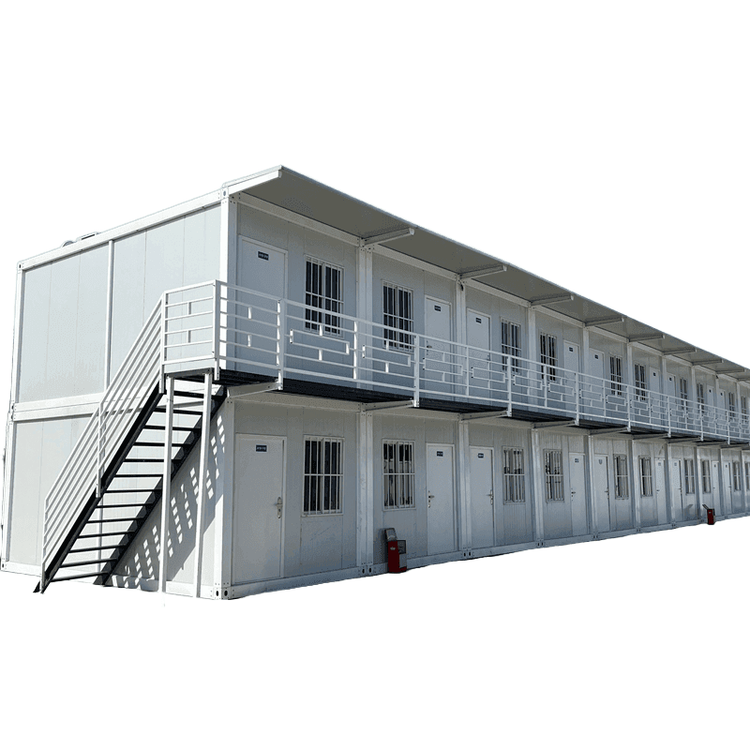
- Composite Structure: Composed of multiple modules, it can be expanded into complex layouts with multiple squat positions and separate facilities for men and women, such as dual-roof mobile toilets occupying 30 square meters.
Mobility Methods
- Lifting/Handling Type: Relies on lifting equipment or manual handling, suitable for short-distance movement or long-term use in fixed locations.
- Powered/Trailer Type: Equipped with a power system or trailer device, it can be transported over long distances by vehicle traction, suitable for large-scale events or emergency scenarios.
III. Types of Sewage Treatment Technologies
- Water-flush and Waterless Suction Types: Collect feces into storage tanks through water flushing or vacuum suction, with regular removal and transportation, suitable for areas with a water source and complete sewage discharge conditions.
- Recirculating Water-flush Type: Adopts biodegradation or chemical treatment technologies to purify sewage for recirculation, reducing water consumption and suitable for water-scarce areas.
- Dry Packaging Type: Uses biodegradable packaging bags to collect feces, requiring no water source, and is sealed and transported for unified disposal, highlighting environmental friendliness and commonly used in wilderness or areas without infrastructure.
IV. Core Advantages and Application Scenarios
The core advantages of mobile toilets lie in their mobility, combinability, and reusability. Their modular design allows for rapid assembly, disassembly, and transportation, enabling flexible responses to scenarios such as temporary exhibitions, post-disaster relief, and tourist attractions. For example, a four-squat-position toilet with a pointed roof (4 meters long and 2.3 meters wide) achieves thermal insulation through metal carved panels, meeting winter usage needs while allowing capacity expansion through combination, balancing functionality and cost-effectiveness.