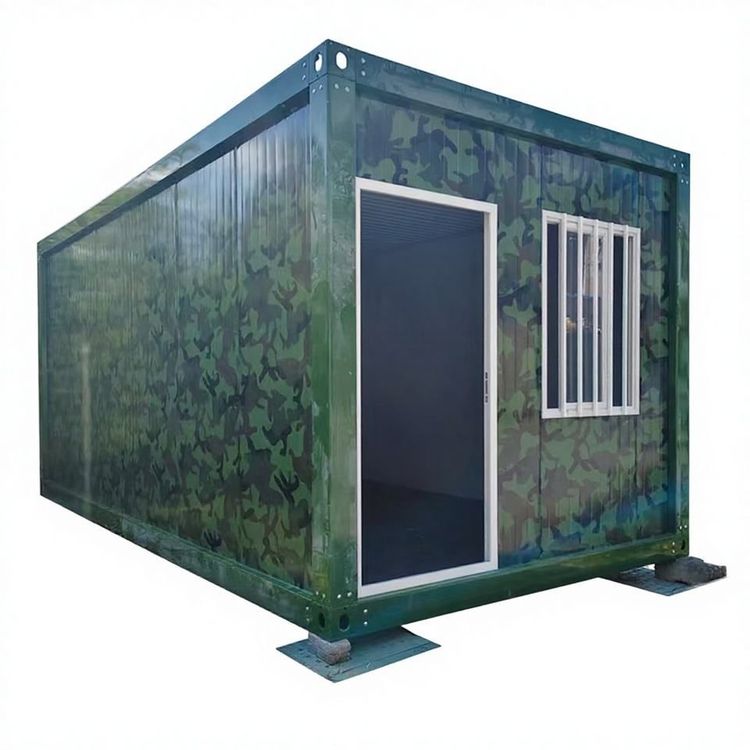
Sichuan Intelligent Mobile Toilet
Sichuan's intelligent mobile toilets are widely used in multiple scenarios such as scenic spots, urban management, and rural revitalization, integrating innovative elements like the Internet of Things and green technologies for intelligent upgrades.

Scenic Spots and Public Places: Large-Scale Deployment and User-Friendly Design
Popular scenic spots in Sichuan, such as Jiuzhaigou and Mount Emei, have deployed over 2,000 mobile restrooms, with an average spacing of 500 meters, forming a dense coverage network. The facilities are designed with user experience in mind, equipped with non-slip floors, ventilation systems, odor control devices, and barrier-free facilities to meet diverse needs of tourists. For example, Mount Emei employs an intelligent monitoring system to adjust air quality in restrooms in real-time, combined with odor control devices to effectively reduce odor diffusion and enhance comfort.
Urban Management: Temporary Deployment and Smart Operation and Maintenance
Cities like Chengdu and Mianyang have added 1,200 intelligent mobile toilets during major events (such as the 2025 Chengdu Universiade), utilizing technologies like smart sensor flushing and remote monitoring to achieve real-time monitoring of sanitation conditions and dynamic allocation of resources. In the renovation of old residential areas, mobile toilets serve as transitional solutions, alleviating residents' toilet access issues. Additionally, some subway stations in Chengdu are equipped with smart guidance screens displaying restroom occupancy in real-time, reducing waiting times; mobile apps allow users to check the locations and availability of nearby toilets, enhancing public service efficiency.
Rural Revitalization: Ecological and Resource Recycling
Some villages in Sichuan have piloted “ecological mobile restrooms,” employing fecal-sewage separation technology to convert wastewater into organic fertilizer or irrigation water, achieving resource recycling. Over 300 eco-friendly mobile toilets have been built around scenic spots in Liangshan Prefecture and Aba Prefecture, incorporating solar power and rainwater harvesting systems to reduce energy consumption and operational costs. For instance, a village in Aba Prefecture uses fecal-sewage separation devices to convert toilet wastewater into farmland fertilizer, reducing annual chemical fertilizer use by about 20% and promoting ecological agriculture.
Technological Innovation: Integration of 5G and Green Technologies
Mianyang and other places have introduced 5G smart toilets called “Easy Stations,” featuring prefabricated designs for easy transportation, on-site hoisting, and rapid deployment. Their five-layer composite walls provide thermal insulation, while the fully galvanized structure resists corrosion and rust, adapting to complex climatic conditions. Meanwhile, IoT technology runs throughout facility management, using sensors to monitor restroom usage, water and electricity consumption, and other data, providing decision support for operation and maintenance, and driving mobile toilets towards low-carbon and intelligent evolution.