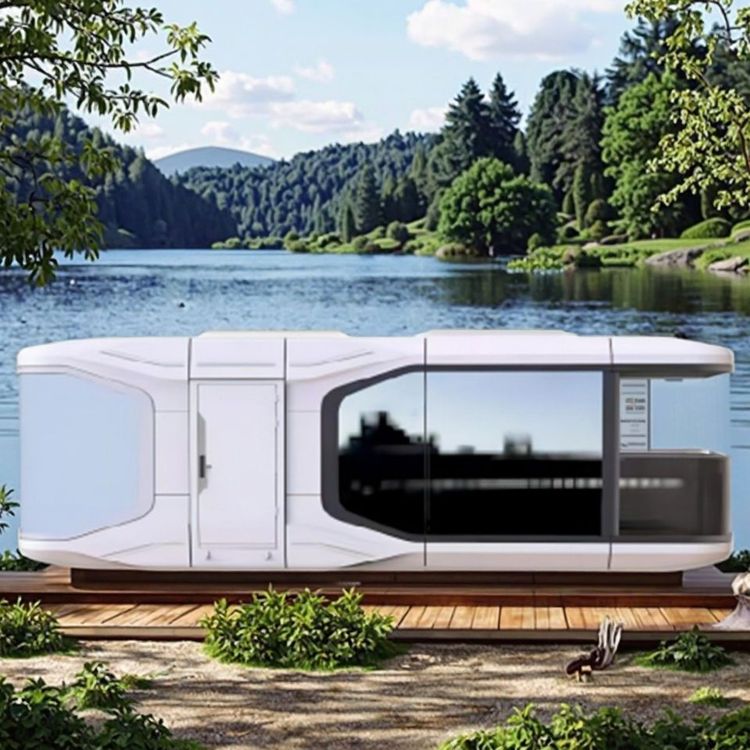
Shop-dedicated Portable Toilet
Shop-dedicated portable toilets can be selected according to specific needs, with their designs offering diversity and flexibility to meet toilet requirements in different scenarios.

Composition of Portable Toilets
Portable toilets are generally composed of fecal sewage storage tanks (or fecal sewage treatment devices), floor slabs, sanitary ware, walls, washing equipment, water tanks, roofs, and mobile devices. These components work together to provide users with a complete toilet environment. For example, fecal sewage storage tanks are used to collect and treat excreta, while sanitary ware ensures convenience and hygiene during use.
Classification by Structural Form
- Single-unit Structure Portable Toilets: These have a relatively simple structure and are typically suitable for shops with limited space or a low demand for toilet numbers. They are highly independent and easy to install, enabling quick commissioning.
- Composite Structure Portable Toilets: Composed of multiple single units, they can be flexibly combined and expanded according to the actual needs of the shop. This structural form is suitable for shops with a large footfall and a need for multiple toilet stalls, effectively improving usage efficiency.
Classification by Mobility Method
- Lifting and Handling Portable Toilets: Mainly lifted and handled by equipment such as cranes, they are suitable for shops that require frequent relocation or have complex site conditions. Their advantage is flexible mobility, but they require certain equipment and manpower support.
- Powered and Trailer-mounted Portable Toilets: Equipped with their own power systems or capable of being towed by vehicles, they offer even more convenient mobility and are suitable for shops that need to move long distances or frequently switch between different sites.
Classification by Sewage Treatment Method
- Water-flush and Waterless Suction Portable Toilets: Water-flush toilets use water flow to flush the toilet, maintaining cleanliness and hygiene; waterless suction toilets use suction equipment to remove excreta, suitable for shops with scarce water resources or high environmental protection requirements.
- Recirculating Water-flush Portable Toilets: These recycle treated water to save water resources while ensuring flushing effectiveness, suitable for shops with high requirements for water resource utilization.
- Dry-packing Portable Toilets: These pack excreta in a dry form without using water, facilitating transportation and subsequent treatment, suitable for some special environments or temporary sites.
Shops can comprehensively consider factors such as site size, footfall, and budget to select the appropriate type and specification of portable toilet.