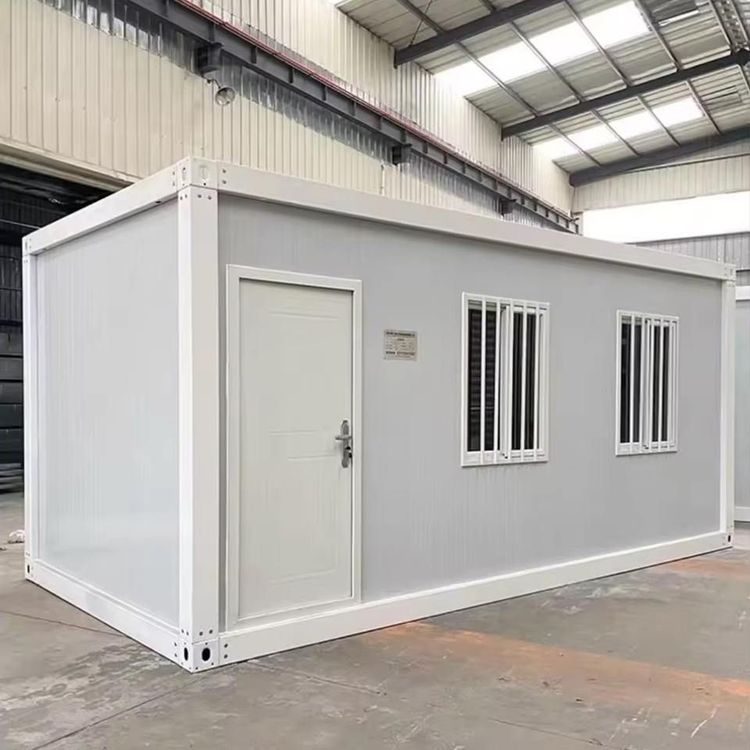
Shiyan Outdoor Mobile Toilet
The production, leasing, and sales of outdoor mobile toilets in Shiyan exhibit distinct characteristics tailored to the local environment.

In terms of production, Shiyan, as a mountainous city and industrial base, features complex terrain and variable climate, posing special requirements for the structure, materials, sewage systems, and scenario-specific functions of mobile toilets. Structural design must balance portability and resistance to deformation, such as using hot-dip galvanized steel frames to weld the toilet body and calculating the spacing of reinforcing ribs based on wind loads. Outdoor square models require additional ballast compartments or anchor bolt预留孔 (reserved holes for anchor bolts), while temporary construction site restrooms need lifting points reserved. Material selection must balance corrosion resistance and lightweight properties; for example, the outer shell of high-pressure polyethylene (HDPE) requires adjustment of the proportion of ultraviolet-resistant additives, fiberglass-reinforced plastic (FRP) sandwich panels use pre-embedded sealing strips to prevent water leakage, and the floor is replaced with engineering plastic flooring with drainage grooves and embedded anti-slip particles. Sewage systems must distinguish between 'direct discharge' and 'circulating' types: direct discharge relies on septic tanks or sewage trucks, with the capacity of the sewage storage tank precisely calculated based on usage frequency (e.g., no less than 200 liters for an 8-person construction site restroom), and equipped with a liquid level alarm; circulating systems employ microbial degradation or solid-liquid separation technology, requiring the installation of insulation layers and electric tracing in winter, and some merchants using air-water mixed flushing technology need to redesign the nozzle angle and water pump parameters. For scenario-specific functions, mining areas require the addition of explosion-proof lighting, anti-static flooring, and dust filters, while scenic spots focus more on aesthetic design.
Leasing services focus on flexible configuration, achieving spatial and temporal reallocation of resources by eliminating dependence on fixed piping networks. Common structures include one-piece high-density polyethylene shells (corrosion-resistant, easy to clean, lightweight) and light steel frame assembled structures (larger internal space but increased weight), both equipped with independent freshwater and sewage tanks and a water circulation system. The capacity of the sewage tank must match the usage frequency; for example, outdoor music festivals in Shiyan in summer require 200 to 300-liter sewage tanks, with high-frequency sewage truck services needed during periods of heavy foot traffic. Transportation and deployment must consider terrain impacts: small vans are used in urban core areas, while anti-roll designs are required for Wudang Mountain scenic areas or remote rural construction sites, with some leasing companies adopting split transportation solutions. In terms of temperature adaptability, insulation layers or electric heating devices need to be installed for the freshwater tank in winter, and the frequency of replacing activated carbon deodorization modules needs to be increased in summer.
In terms of sales, Xuhu Environmental Protection in Zhuxi, Shiyan, adopts a direct-from-source business model to undertake projects such as municipal renovations and road repairs across the country. Its equipment features easy assembly and disassembly, repeatable relocation, sturdy structure resistant to wind, and strong weather resistance. The fecal storage tank employs a one-piece sealing process with no leakage points, paired with a sealed cover to prevent rainwater infiltration and fecal overflow. Comprehensive sanitation and disinfection standards are implemented throughout, with summer designs incorporating sun protection, high-temperature resistance, and mosquito control measures, combined with high-power exhaust fans, cross-ventilation windows, and cool deodorizing agents to achieve internal cooling and ventilation.