Ship Container House
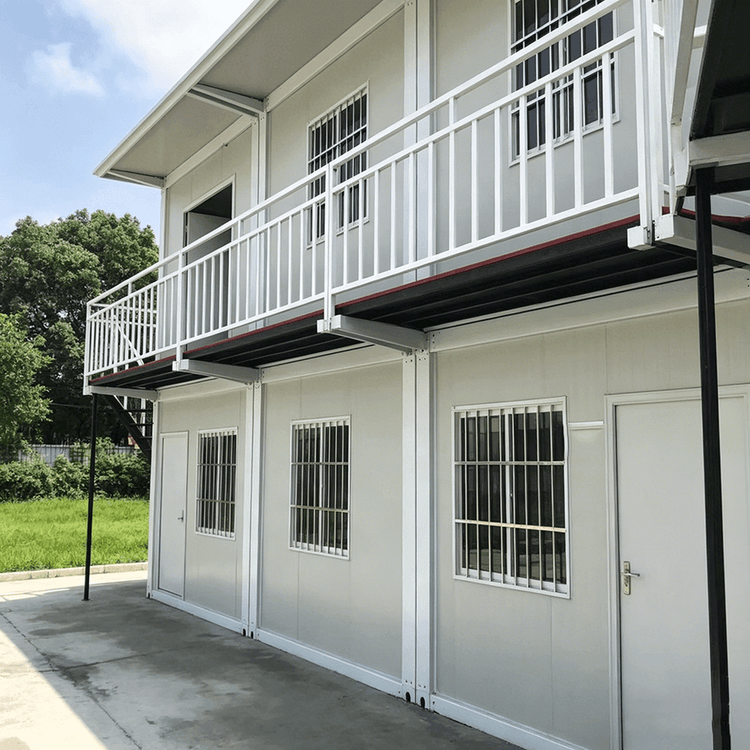
A ship container house is a modular building unit transformed from a shipping container, featuring standardization, mobility, and rapid assembly. It is widely used in temporary housing, warehousing, office spaces, and other scenarios.

I. Core Structure and Functions
A ship container house uses a standard shipping container as its base. Through factory prefabrication, the main structure, water and electricity pipelines, bathroom facilities, cabinets, and wardrobes are installed, forming an independent living module. For example, the refrigerated container houses produced by Qingdao Jiecheng Hongye are designed to marine standards, integrating insulation layers, sealed structures, and 380-volt three-phase power interfaces, allowing users to connect to electricity and use them immediately. Modular buildings are produced by dividing the house into bottom, top, and side components, which are manufactured simultaneously on an assembly line and then assembled into a container. Daily production capacity can reach 50 units, with manufacturing precision controlled within 1-2 millimeters.
II. Application Scenarios and Advantages
Temporary Housing and Emergency Support
The Nagoya Asian Games used container houses as athlete accommodations, equipped with independent bathrooms, refrigerators, washing machines, and other facilities, meeting the housing needs of 15,000 participants. Construction sites often use them as worker dormitories, and they are also widely used in field operations, tourist attractions, and rental housing.Cold Chain and Warehousing Needs
Qingdao Jiecheng Hongye's refrigerated container houses support temperature control from -20°C to 25°C, suitable for cold chain logistics, food processing, pharmaceutical transit, and other scenarios. They maintain a sufficient stock of ready-to-ship units (usually around 500-600 units year-round), enabling rapid response to emergency restocking demands.Global Trade and Rapid Deployment
China's modular buildings are exported to over 150 countries and regions via container shipping. In the first four months, the export value from Shenzhen Port reached 1.68 billion yuan. A British merchant purchased 63 modular elderly care apartments, which were shipped to a UK port and completed on-site hoisting in just two weeks, reducing the construction period by over 60% compared to traditional methods.
III. Technical Standards and Safety Requirements
Structural Safety
They must comply with SOLAS Convention requirements for fire prevention, fire detection, and firefighting, such as installing fixed temperature sensors, automatic sprinkler systems, and dual escape routes. Residential spaces converted from simple containers pose serious safety risks due to substandard bulkhead materials, alarm systems, and life-saving equipment.Environmental Adaptability
They must pass maritime verification for thermal insulation performance, such as Qingdao Jiecheng Hongye's products undergoing actual ocean shipping tests. Lightweight steel modular units reduce foundation material consumption by 60%-70% and offer better earthquake resistance than traditional buildings.Standardization and Compatibility
Containers have uniform dimensions (20 feet/40 feet in length, 8 feet in width and height), supporting multimodal transport by sea, land, and air. Modular data centers use prefabricated technology, reducing construction time by 50% compared to traditional methods, such as the Malaysia 2312 project completed in just 10 months.