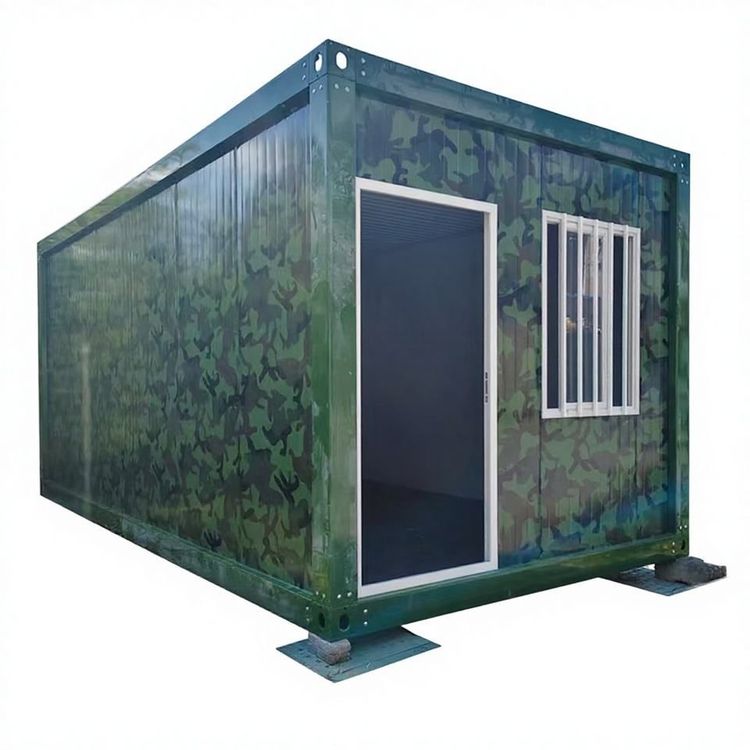
Shenzhen Disabled Mobile Toilet
Currently, there is relatively little direct public information available about mobile toilets for the disabled in Shenzhen, but a comprehensive analysis can be conducted by combining relevant products and the current state of barrier-free facilities.

I. Product Supply of Mobile Toilets for the Disabled
According to public information, as of December 19, 2024, there are 169 related products for "mobile toilets for the disabled" on the market. These mobile toilets are typically designed to meet the needs of disabled individuals and have the following characteristics:
- Spatial Adaptability: The interior space is more spacious than that of ordinary mobile toilets, facilitating wheelchair rotation. Some products explicitly state "wheelchair passage width ≥ 90 cm."
- Barrier-Free Facilities: Equipped with handrails, non-slip floors, low-level washbasins, etc. Some models also feature emergency call buttons or voice prompt systems.
- Mobility and Flexibility: Adopting a modular design, they can be quickly deployed in temporary event venues, construction areas, or during the transition period of public facility renovations.
It is currently unclear whether Shenzhen has made large-scale purchases or uses such specialized mobile toilets, but the widespread availability of these products provides a technological foundation for their application in Shenzhen.
II. Current Situation and Issues of Barrier-Free Facilities in Public Places in Shenzhen
There is room for improvement in the design of barrier-free facilities in some public places in Shenzhen. Although they do not directly involve mobile toilets, they reflect the challenges of overall barrier-free environment construction:
- Restroom Issues in High-Speed Rail Stations and Subway Stations: Some barrier-free restroom doors are too narrow or open in an unreasonable direction, making it difficult for wheelchair users to enter independently. Some facilities lack clear signage, increasing the difficulty of use.
- Controversy over Blind Path Design: Blind paths in subway stations are occupied or laid out unreasonably, affecting the passage of visually impaired individuals and indirectly reflecting the inadequacy of systematic planning for barrier-free facilities.
These issues indicate that Shenzhen still needs to strengthen the detail optimization of fixed barrier-free facilities, and the design of mobile toilets as supplementary facilities should pay more attention to compatibility with the existing barrier-free system.
III. Potential Demand and Suggestions for Mobile Toilets for the Disabled
As a megacity, Shenzhen has a growing demand for barrier-free facilities among disabled individuals and the elderly. Mobile toilets can be applied in the following scenarios:
- Large-Scale Events: Such as marathons, exhibitions, and other temporary events, providing quick barrier-free sanitation services.
- Public Facility Renovation Period: Serving as a temporary alternative during the upgrade of fixed restrooms.
- Coverage in Remote Areas: Making up for the lack of fixed barrier-free facilities in some areas.
Suggestions: Shenzhen can refer to existing market product standards and formulate mobile toilet procurement specifications based on local actual needs, focusing on strengthening indicators such as spatial dimensions, handrail stability, and emergency response mechanisms. Additionally, it should strengthen usage training and maintenance management to ensure that the facilities truly serve disabled individuals.