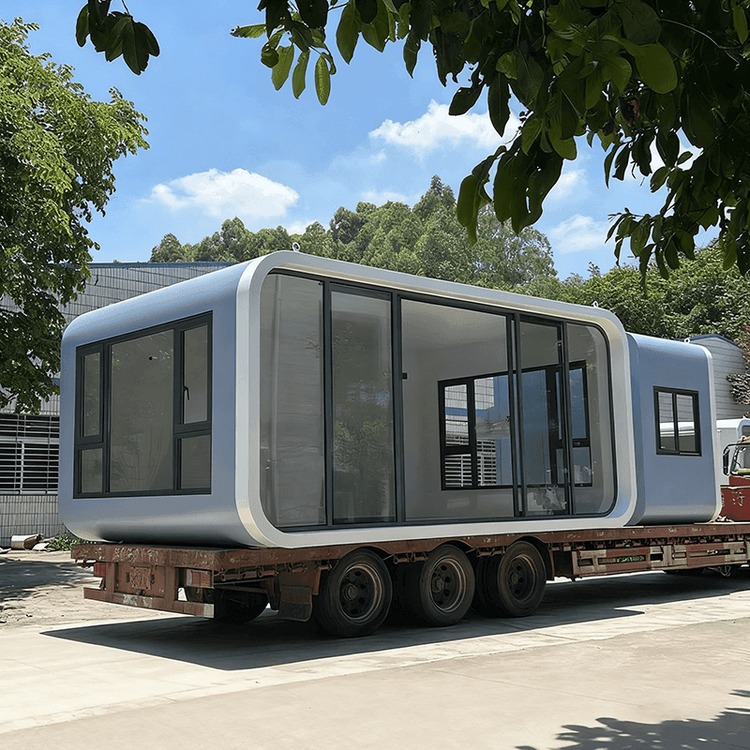
Shenyang Craftsmanship Mobile Toilet
The Shenyang craftsmanship mobile toilet is an outdoor sanitation facility that integrates modular construction technology, achieving functional synergy through the combination of prefabricated functional units. Its production covers three core modules: structural support, enclosure and partition, and internal functional circulation, following standardized industrial processes.

Structural Support Module: Balancing Lightweight Design and Stability
It employs a lightweight steel frame treated for corrosion resistance, meeting requirements for structural strength, lightweight design, and rapid assembly/disassembly. Welding technology is crucial. For example, Shenyang Jintongchuang Transportation Facilities Engineering Co., Ltd. uses continuous full-weld joints at key stress points to prevent cold welds, ensuring the stability of the roof under heavy snowfall in Northeast China. Inadequate welding can lead to roof deformation or even collapse under long-term loads. The frame design must undergo structural calculations to balance material strength and weight, adapting to frequent relocation and varying terrains.
Enclosure and Partition Module: Prioritizing Weather Resistance and Corrosion Protection
Materials are primarily fiberglass-reinforced plastic, metal composite panels, or new polymer sheets, requiring weather resistance, easy cleaning, and thermal insulation. Metal sheets must undergo anti-rust pretreatment, such as galvanized steel or stainless steel, combined with pickling, phosphating, and epoxy primer treatments to effectively resist corrosion caused by outdoor humidity, acids/alkalis, and temperature fluctuations. Sheet thickness typically ranges from 1.2mm to 2.0mm, with verification of anti-rust treatment essential for extending service life.
Internal Functional Circulation Module: Optimizing Space and Ensuring Reliable Operation
It includes water-saving flushing devices, waste treatment systems, ventilation, and lighting circuits. Sanitation treatment paths fall into two categories: storage-type systems collect waste in sealed tanks requiring periodic pumping, while biological or chemical degradation systems enable real-time treatment, reducing storage needs. Ventilation design combines mechanical exhaust with natural convection to control odors and ensure air circulation. All subsystems must achieve reliable connections and independent operation within limited space, such as pre-laid piping meeting waterproof and leak-proof standards.
Production Process: Standardization and Quality Control
- Design and Material Preparation: Conduct structural calculations and functional configurations based on usage scenario data (e.g., foot traffic, climate conditions) to determine material specifications and anti-corrosion treatment plans.
- Modular Prefabrication: Processes like structural frame welding, sheet cutting/forming, and piping pre-laying are completed in parallel on assembly lines to ensure component precision.
- Final Assembly and Testing: Prefabricated modules are precisely aligned on the final assembly line, undergoing sealing, power-on, and water-flow tests to verify overall functionality.
Durability Guarantee: Through multi-layer anti-rust coatings, reinforced sealing at connections, and other processes, it addresses challenges from frequent relocation and climate conditions, ensuring long-term stable operation of the facility.