
Back to blog
Article
Shazhen Container House
Admin September 15, 2026
Currently, no detailed information directly about 'Shazhen Container House' has been found, but general scientific knowledge and reference cases related to container houses can be provided.
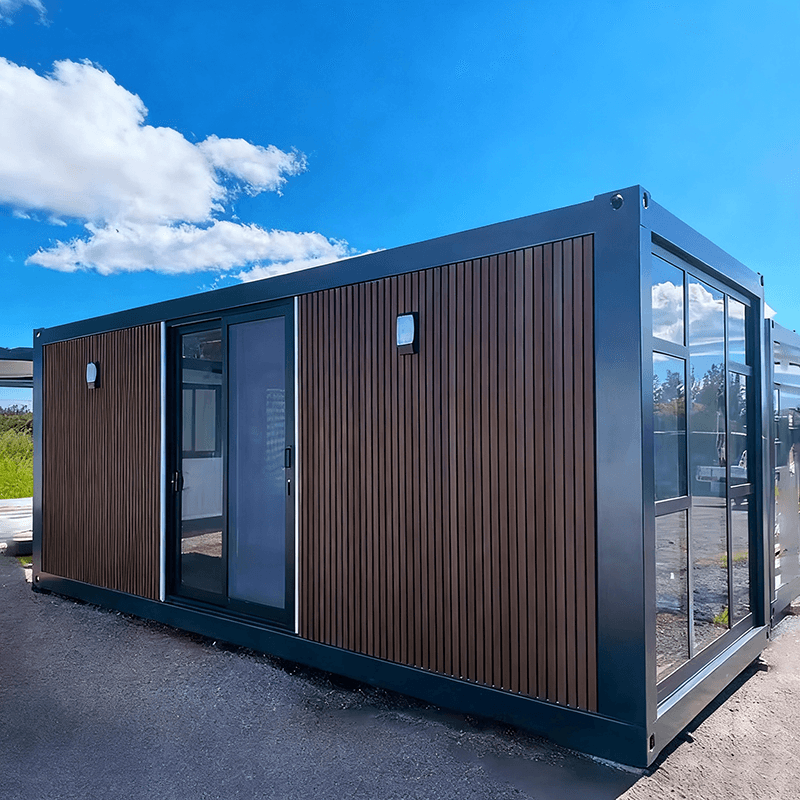
I. Overview of Container Houses Container houses are temporary or permanent buildings formed by modifying and combining standard containers as basic modules. Their core advantages include:
- Modular Design: They can be quickly assembled, disassembled, and moved, adapting to scenarios such as emergency medical care, on-site accommodation, and commercial exhibitions.
- High Structural Strength: Containers inherently possess wind and earthquake resistance capabilities, ensuring relatively high safety after modification.
- Environmental Sustainability: Mostly using recycled containers, they reduce construction waste and align with the concept of green buildings.
- Cost Control: Compared to traditional buildings, they have shorter construction periods, lower material wastage, and thus lower overall costs.
II. Typical Application Cases
- Medical Emergency Scenarios For example, in a project in Guangzhou, new containers were built to provide living space for medical staff, equipped with beds, bathrooms, and other facilities, enabling large-scale deployment in a short period and demonstrating the rapid response capability of container houses.
- Industrial Support Construction In the power capacity expansion project of Dongfang International Container (Guangzhou) Co., Ltd., a new 5-2# workshop (1 floor, 1109.96 square meters) was built. Although not explicitly identified as a container house, container structures are commonly used for auxiliary buildings or temporary facilities in industrial workshops.
- Commercial Service Fields Guangzhou Aosheng Container Service Co., Ltd. provides container maintenance and leasing services, with its business scope covering transportation equipment cleaning, information technology consulting, etc., reflecting the multifunctionality of container houses in logistics and commerce.
III. Key Points of Policies and Regulations
- Planning Permission: Container houses must comply with national spatial planning and obtain a 'Construction Engineering Planning Permit' before construction, such as the Dongfang International Container project needing approval from the Guangzhou Planning and Natural Resources Bureau.
- Environmental Requirements: During the modification process, pollutants such as paint and waste materials must be handled. For example, Dongfang International Container needed to handle HW12 dye waste (zinc-containing paint residue) and entrust qualified units for disposal.
- Safety Standards: They must meet fire protection, structural safety, and other regulations, such as adjusting the opening time of exhaust fans to avoid noise nuisance and ensure compliance.
IV. Considerations for Choosing Container Houses
- Purpose Matching: Select module combinations based on residential, office, or commercial needs.
- Compliance: Confirm land nature and planning permission to avoid the risk of illegal construction.
- Supplier Qualifications: Choose enterprises with modification experience and environmental treatment capabilities, such as Guangzhou Aosheng Container Service Co., Ltd., which has relevant qualifications.



