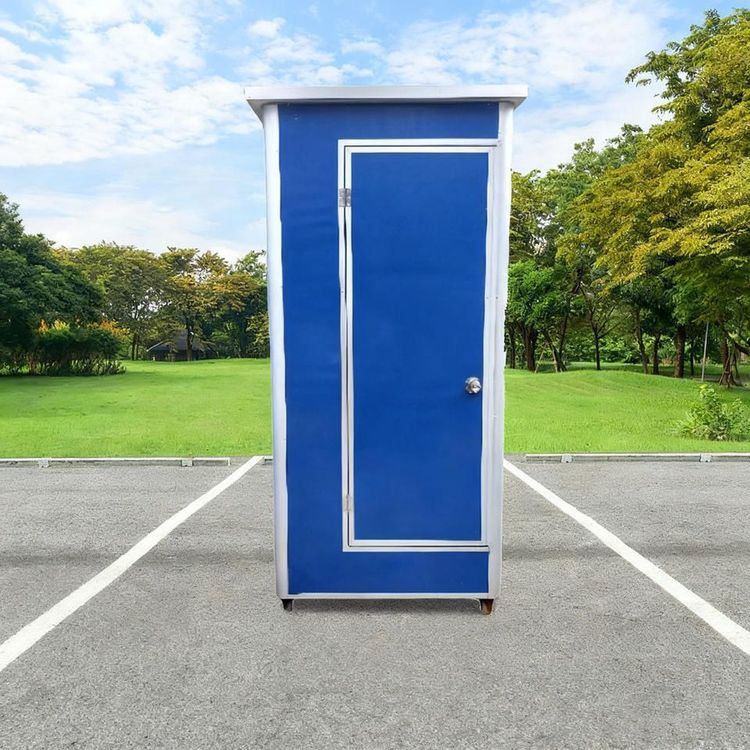
Shaoxing Street Block Mobile Toilet
The mobile toilets in Shaoxing street blocks are a systematic solution designed to meet the public health needs of temporary gatherings, enabling flexible allocation of sanitation resources through modular units.

I. Special Environment Adaptability Design
Shaoxing is characterized by a dense network of rivers, necessitating strict anti-leakage designs for mobile toilets to prevent sewage from seeping into the ground and contaminating water bodies. In the ancient city's protected areas, where ground bearing capacity is limited, lightweight solutions are required for equipment transportation and installation. For example, using aluminum alloy frames combined with composite panels ensures structural strength while reducing weight. Additionally, on-site assessments are conducted to measure terrain slope and soil bearing capacity, ensuring installation stability.
II. Technical Classification and Scenario Adaptation
Mobile toilets can be classified into three types based on treatment technology:
- Biodegradable Type: Suitable for areas with limited water access, this type uses microorganisms to decompose waste, reducing water consumption.
- Chemical Treatment Type: Commonly used for short-term events, this type employs chemical agents for disinfection and odor control, offering simple operation but requiring regular agent replacement.
- Vacuum Suction Type: Often used in scenarios with fixed-period demands, this type utilizes vacuum pumps to suction waste into storage tanks, making it suitable for high-frequency usage.
III. Standardized Management of Operational Processes
Operation involves five technical steps:
- On-site Assessment: Measure terrain slope, soil bearing capacity, and surrounding environment to plan equipment layout.
- Equipment Allocation: Coordinate transportation routes and traffic control to ensure timely equipment arrival.
- Installation and Commissioning: Complete level calibration, sewage pipe connection, and anti-leakage testing.
- Maintenance Management: Conduct daily cleaning and disinfection, along with weekly deep treatments (e.g., filter replacement, agent replenishment).
- Recovery and Disposal: After use, disinfect and sterilize equipment, inspect performance, and then store or repair as needed.
IV. Cultural Integration and Resource Allocation
In historical and cultural cities, the exterior design of mobile toilets should harmonize with the ancient city's aesthetic, incorporating antique eave designs, grayish-blue color schemes, and lattice window decorations. From a resource allocation efficiency perspective, leasing models can alleviate pressure on fixed public toilets during peak holiday periods and serve as transitional solutions during traditional street block renovations. Local Shaoxing enterprises such as Chengxu and Chengfeng Environmental Protection offer leasing and sales services for various types of equipment, including waterless flushing, biodegradable, foam-sealing, and direct water-flushing models, to meet diverse needs.