
Shaoxing Environmental Protection Mobile Toilet
Shaoxing environmental protection mobile toilets have diverse characteristics, meeting the needs of different scenarios, and continuously optimizing and upgrading in terms of technology and environmental control.
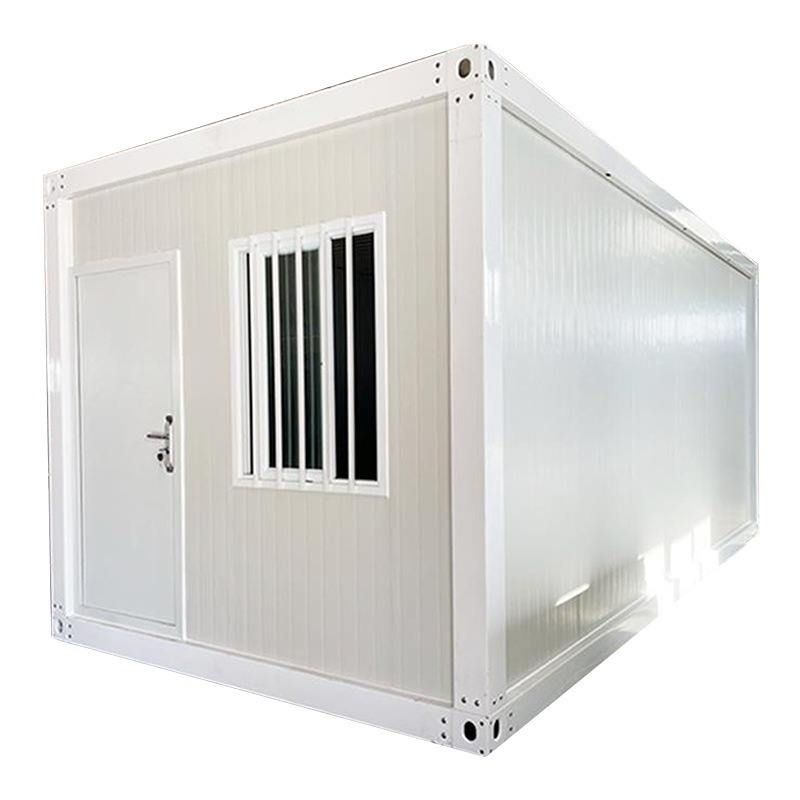
I. Appearance and Structural Features
Shaoxing environmental protection mobile toilets offer a rich variety of appearance styles, providing multiple structural options such as single-story, double-story, K-type, and T-type. Colors can be customized (e.g., white, blue, etc.) to match the visual requirements of different scenarios. Their structures use lightweight steel frames as the skeleton, with color-steel sandwich panels as the main material, featuring a minimalist style that is both durable and aesthetically pleasing. The support rod materials can be selected from color-steel, profile steel, or composite materials, balancing strength and lightweight design. In response to the characteristics of historical and cultural cities, some designs incorporate antique elements, such as antique eave shapes, grayish-blue color schemes, and lattice window decorations. These often use aluminum alloy frames combined with composite panels, maintaining structural stability while harmonizing with the city's appearance.
II. Technical Classification and Application Scenarios
They can be classified into three types based on treatment technology:
- Biodegradable Type: Utilizes microorganisms to decompose waste, suitable for remote areas with limited water access, reducing reliance on external facilities.
- Chemical Treatment Type: Decomposes waste through chemical agents, offering easy operation and commonly used for temporary needs in short-term events (e.g., exhibitions, concerts).
- Vacuum Suction Type: Relies on a piping system for centralized treatment, suitable for fixed-cycle usage scenarios (e.g., construction sites, factories), with high efficiency.
III. Environmental Control and Compliance
Waste treatment must comply with the "Urban Domestic Waste Management Measures," and sewage discharge must meet national secondary water quality standards. Odor control employs a composite technology of activated carbon filtration and negative pressure ventilation. Under standard operation, ammonia emission concentrations can be reduced by over 40% compared to traditional public toilets, effectively minimizing odor diffusion.
IV. Service Models and Development Trends
Shaoxing offers mobile toilet rental services, covering on-site assessment, equipment allocation, installation, maintenance, and recovery. During use, attention should be paid to the upper limit of load-bearing capacity, the selection of cleaning agents, and the standardization of sewage discharge interfaces. Technological iterations include integrating solar power systems, real-time monitoring with IoT sensors (e.g., usage frequency, water level warnings), and modular design to enhance energy efficiency and operational convenience. Additionally, manufacturers such as Wuhan Hongyu Tianrun Environmental Protection Technology Co., Ltd. sell prefabricated mobile public toilets, further enriching market options.



