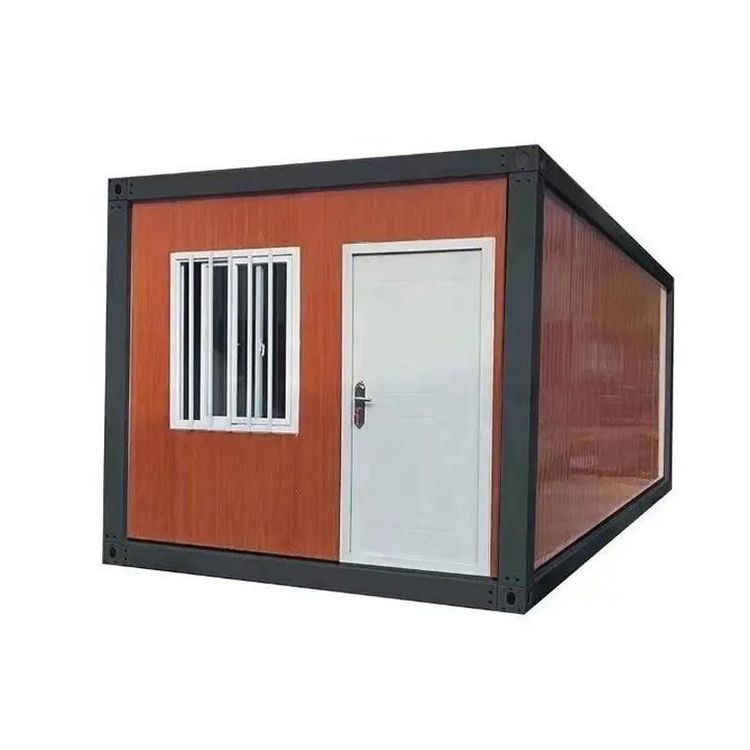
Shanghe Mobile Toilet Installation
The installation process of mobile toilets in Shanghe County is usually simple and quick, with the following specific steps:

1. Positioning and Site Preparation
Before installation, determine the location based on site planning and ground conditions, prioritizing flat terrain with good drainage. The ground must be solid to prevent toilet tilting or damage due to foundation settlement. If the site has a slope, it should be corrected by adding a base layer or adjusting the chassis levelness to ensure subsequent installation stability.
2. Chassis and Frame Placement
Use a forklift or manual labor to place the prefabricated steel chassis steadily at the predetermined location and adjust it to a level state using a spirit level. The chassis, as the foundational structure of the mobile toilet, directly affects its overall service life. For large or heavy toilets, additional reinforcement of the chassis-to-ground connection is required, such as through expansion bolts.
3. Wall and Roof Panel Installation
Walls are typically made of sandwich panels, which are lightweight, heat-insulating, and moisture-resistant. During installation, insert the wall panels sequentially into the chassis slots and secure them with bolts or clips to ensure a tight connection. After roof panel installation, perform sealing treatment, focusing on checking whether waterproof glue is applied or sealing strips are used at the joints to prevent rainwater leakage. For integrated mobile toilets (such as container-type toilets), the walls and roof panels are pre-assembled in the factory, and only hoisting into place is required on-site, significantly shortening the installation time.
4. Internal Facility Connection
Internal facilities include partitions, toilets, flushing systems, sinks (optional), lighting, and ventilation equipment. The connection of water and electricity pipelines should be operated by professionals, but modular design (such as quick connectors) can simplify the process. For example, the flushing system uses quick connectors, eliminating the need for complex welding; the electrical part uses pre-installed wire troughs to reduce wiring time. The sewage pipeline needs to be connected to the municipal sewer network or septic tank to ensure emissions meet environmental protection requirements.
5. Functional Inspection and Debugging
After installation, conduct a comprehensive test:
- Flushing Test: Check the flushing force of the toilet and the water replenishment function of the water tank to ensure no blockage or leakage.
- Electrical Inspection: Verify that lighting, sockets, and ventilation equipment are properly powered on to avoid short circuits or poor contact.
- Sealing Inspection: Focus on checking the sealing of doors, windows, roofs, and pipeline joints to prevent odor leakage or rainwater intrusion.
Simplified Process for Integrated Mobile Toilets
If choosing an integrated mobile toilet (such as a container-type toilet), the installation process is more efficient. Such toilets have completed interior decoration and equipment integration in the factory, and only need to be hoisted to the designated location and connected to water, electricity, and sewage pipelines on-site, with the overall installation time shortened to 2-4 hours.
Localized Service Support
Companies such as Jinan Wanlin Environmental Protection Technology Development Co., Ltd. in Zhenglu Industrial Park, Shanghe County, can provide one-stop services from scheme design, installation implementation to technical training, ensuring that mobile toilets meet local usage requirements and environmental protection standards.