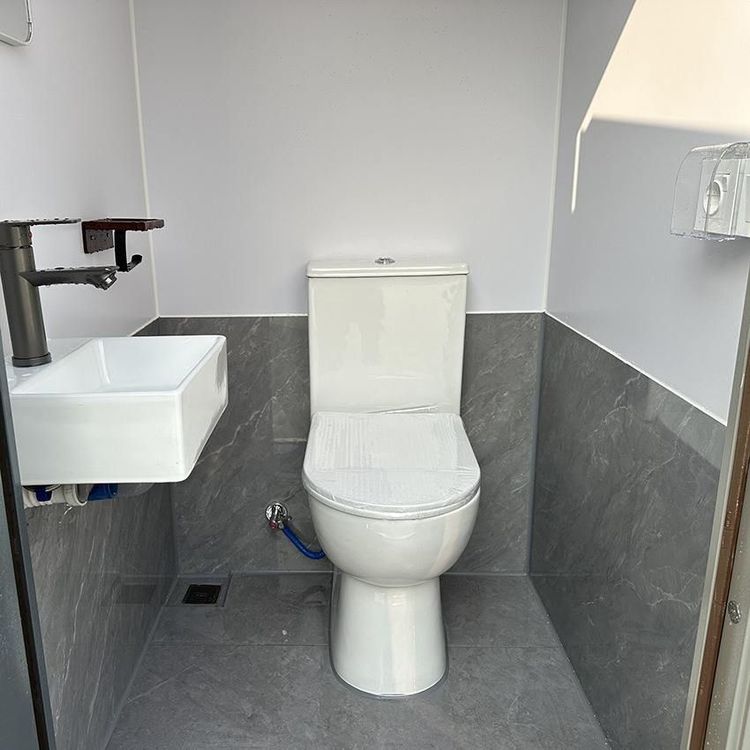
Shanghai Vehicle-mounted Mobile Toilet Installation
The installation of vehicle-mounted mobile toilets in Shanghai needs to be combined with vehicle characteristics and functional requirements to ensure stability, airtightness, and practicality. The specific steps and key points are as follows:

1. Core Preparations Before Installation
Before installation, it is essential to evaluate vehicle conditions:
- Space Adaptability: The vehicle should have a sufficiently flat installation surface, typically choosing the rear or side area of the carriage to ensure that the toilet compartment (including the toilet bowl, sink, etc.) can be fully placed and there is operating space left.
- Load-bearing Capacity: Select a vehicle with a load-bearing capacity that meets the requirements based on the self-weight of the toilet compartment (including the water tank, sewage discharge device, etc.) and the dynamic load during use (such as personnel activities) to avoid affecting driving safety due to overloading.
- Component Inspection: Confirm that the toilet compartment, water tank system (including the fresh water tank and sewage tank), sewage discharge device (such as a suction pump or gravity discharge pipe), and fixed brackets are intact and undamaged, and that functional tests are normal (such as flushing, sewage discharge, and airtightness).
2. Key Steps During Installation
Fixing the Toilet Compartment:
Place the main body of the toilet compartment at the predetermined position on the vehicle and firmly connect it to the vehicle chassis or frame using dedicated brackets or bolts. Key point: The brackets should be evenly distributed, and the tightening torque of the bolts should meet the standards to prevent loosening during driving.- If the vehicle surface is uneven, anti-slip pads should be added or the bracket height should be adjusted to ensure that the toilet compartment is level and stable.
Connecting the Water Tank and Sewage Discharge System:
- Water Tank Installation: The fresh water tank and sewage tank should be fixed separately, and the water inlet pipe (for fresh water) and water outlet pipe (for sewage) should be connected. The pipe joints should be tightened with sealing rubber rings or clamps to prevent leakage caused by vibration during driving.
- Sewage Discharge Device Connection: If a suction-type sewage discharge is used, the pump body should be connected to the sewage tank and the external sewage outlet (such as a septic tank) through hoses, and the suction pressure should be tested. If it is gravity discharge, ensure that the slope of the sewage discharge pipe is reasonable to avoid blockage.
Electrical System Integration (if applicable):
If the toilet is equipped with lighting, ventilation, or automatic flushing functions, the power cord should be connected to the vehicle battery or an independent power source, and a fuse device should be added to avoid the risk of short circuits.
3. Acceptance and Debugging After Installation
- Static Testing: Check whether all fixed points are firm, the airtightness of the pipes (which can be observed by injecting water for leakage), and whether the electrical system is properly powered on.
- Dynamic Testing: Simulate driving conditions (such as slight bumps) to observe whether the toilet compartment shifts, whether the pipes loosen, and whether the sewage discharge is smooth.
- Functional Verification: Test the entire process of flushing, hand washing, and sewage discharge to ensure there are no faults.
4. Applicable Scenarios and Advantages
After the installation of vehicle-mounted mobile toilets, they can be flexibly applied in scenarios such as construction sites, outdoor exhibitions, and emergency rescues. Their core advantages lie in:
- Mobile Convenience: They can be moved with the vehicle without the need for additional infrastructure construction.
- Environmental Protection and Efficiency: The enclosed sewage discharge design reduces pollution, and some models support sewage recycling and treatment.
- Space Optimization: The compact design is suitable for various vehicle models, meeting the needs of temporary or long-term use.
Tip: Installation should be carried out by professional personnel, and regular maintenance (such as cleaning the water tank and checking the pipes) should be conducted to extend the service life.