
Shanghai Smart Mobile Toilet
Shanghai has carried out diverse practices in smart mobile toilets, covering multiple dimensions such as facility upgrades, product innovation, and customized services.
I. Intelligent Facility Upgrades
Some mobile public toilets in the Pudong New Area have achieved functional improvements through technological renovations. The most representative is the real-time status synchronization system on the electronic screens of toilet stall doors. This system links sensors with electronic screens to display the usage status of toilet stalls (such as "Occupied" or "Vacant") in text or icon form on the screens outside the doors. This design effectively resolves the awkward situation of "knocking and asking" in traditional public toilets and avoids users waiting for a long time due to unclear information, significantly enhancing usage efficiency and experience. Such upgrades reflect the precise insight of smart public toilets into user needs and optimize the allocation logic of public resources through digital means.
II. Integration and Application of 5G Technology
Some enterprises in Shanghai have launched smart toilet products based on 5G networks, utilizing high-speed communication technology to achieve real-time data exchange between devices. 5G smart toilets can integrate environmental monitoring modules (such as temperature and humidity sensors, air quality sensors), pedestrian flow statistics systems, and remote management platforms. Through cloud analysis, operational reports are generated to help managers optimize cleaning frequencies and resource allocation. For example, when the ammonia concentration in the toilet exceeds the standard, the system automatically triggers the exhaust fan and notifies cleaning staff; during peak pedestrian flow periods, the number of open toilet stalls can be dynamically adjusted. This technological integration promotes the transformation of public toilets from single-function spaces to intelligent service nodes.
III. Diversified Product Design and Customized Services
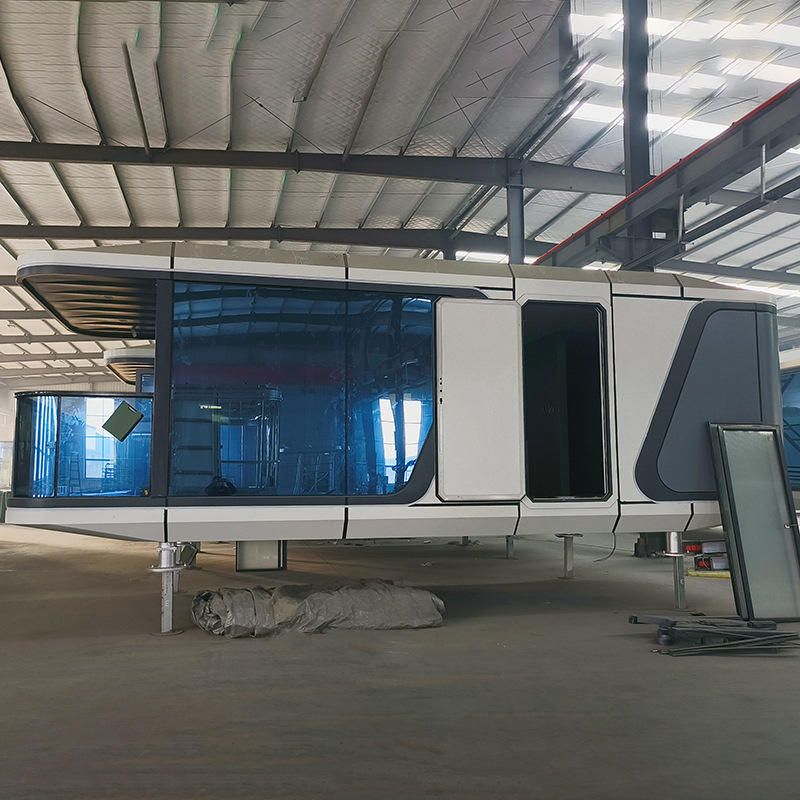
Local enterprises in Shanghai have developed various structural types of mobile toilets to meet the needs of different scenarios. Steel-structured mobile toilets, with their modular design, can be quickly assembled at construction sites and temporary event venues; trailer-mounted and pull-arm-type products can be flexibly deployed through vehicle traction, suitable for emergency rescue or large-scale exhibitions; plastic mobile toilets, with their lightweight and easy-to-clean characteristics, are the preferred option for scenic spots or parks. In addition, professional design teams offer in-depth customized services ranging from appearance style to functional configuration. For example, they design antique-style toilets for cultural and tourism projects or add handrails and emergency call devices for barrier-free needs, reflecting the dual attributes of "technology + humanities" in smart public toilets.
Shanghai's practices demonstrate that smart mobile toilets are not only carriers of technological innovation but also a microcosm of refined urban public service management. Empowered by technologies such as the Internet of Things and 5G, public toilets are shifting from "passive maintenance" to "active service," providing replicable models for smart city construction.



