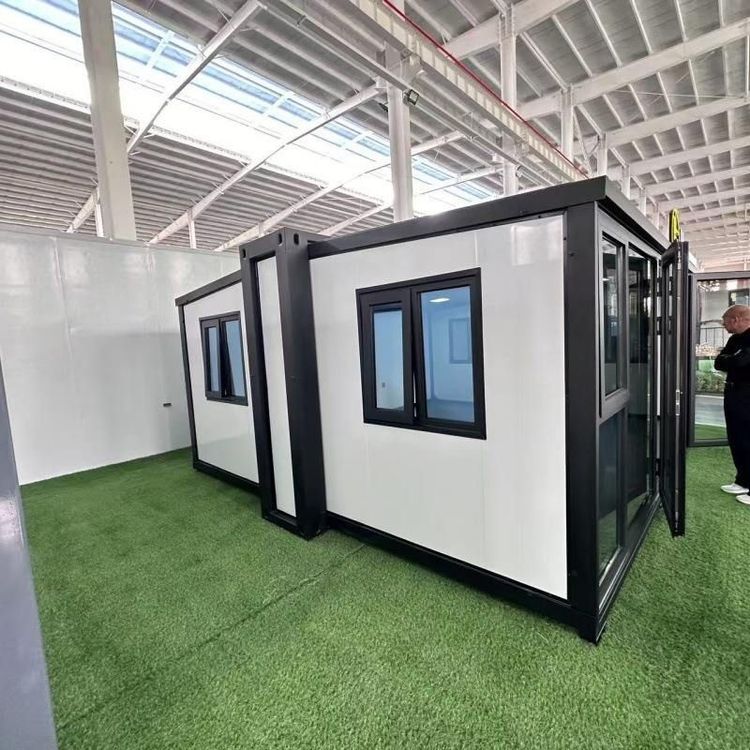
Residential Container Houses in Shanghai
The application scenarios and related situations of residential container houses in Shanghai are as follows:

I. Application in Construction Site Dormitories
In 2026, when adopting residential containers for dormitories at construction sites in Shanghai, there will be dual challenges of raising compliance thresholds and shortening delivery cycles. For example, a construction site project in Fengxian, Shanghai, with a project duration of 12 months, requires dormitory components to meet Class A fire-resistance standards for combustion performance, with a mobilization time window of only 3 days. Ultimately, 60 sets of standard 3×6-meter residential containers were selected, using a monthly rental model. The transportation, lifting, and installation within the city were all completed within 3 days, and the containers were returned and rented out by the supplier after the project ended.
Compliance Requirements: The T/CECS 1932-2025 "Quality Acceptance Standards for Container Houses", which came into effect on October 1, 2025, clearly stipulates that Class A fire-resistant sandwich panels are a "prerequisite for entry". The procurement price of rock wool fire-resistant boxes is approximately 8,500 yuan, while the selling price of ordinary bare boxes ranges from 6,000 to 12,000 yuan, with cost differences primarily depending on the material and configuration.
II. Situation of Container Villages
Container villages are low-cost temporary settlements centered around residential containers, primarily serving migrant workers and distributed in cities such as Shanghai. From 2013 to 2018, the monthly rent for container villages in Shanghai was approximately 500 yuan, with some equipped with air conditioners and independent mobile toilets.
Existing Issues:
- Environment and Facilities: Some areas have poor environments, lack heatstroke prevention facilities, and have low living comfort.
- Legal Risks: They need to comply with land use regulations. Some container villages have been rectified due to illegal land occupation or fire hazards, such as a special campaign conducted in the Pudong New Area.
- Safety Hazards: Insufficient fire protection facilities pose a fire risk, requiring strengthened supervision and renovation.
III. Product Evaluation and Comparison
There are significant differences in portability, storage costs, and deployment efficiency among container mobile homes from different manufacturers. Taking the foldable containers from Suzhou Zhongnan Steel Structure Co., Ltd. as an example:
- Transportation Efficiency: After folding, the volume is only 1/5 of the deployed state. A single shipment can carry 10 folded modules, increasing transportation efficiency by 233% and reducing long-distance transportation costs by approximately 22%.
- Storage Costs: They occupy only 20% of the storage space of similarly sized deployed products. Storing 100 modules can save approximately 48,000 yuan in storage costs annually.
- On-site Deployment: Two workers can complete the deployment and foundation fixing of a single set within 30 minutes, significantly shortening the construction cycle.
Products from other manufacturers, such as the standard containers from CIMC Modular Building Investment Co., Ltd. and the emergency containers from Yazzi Integrated Housing, have their own advantages in structural strength and modular design, but they are less competitive than foldable products in terms of portability and cost optimization.