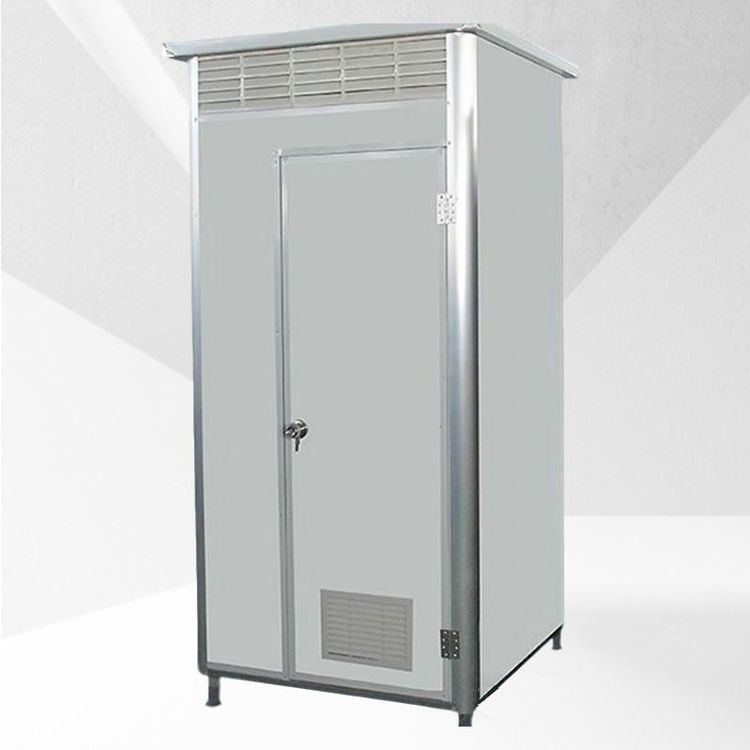
Shanghai Mobile Smart Toilet Standard
The Shanghai Mobile Smart Toilet (Smart Public Restroom) Standard is a technical specification for a public facility management system driven by data and centered on optimizing service processes. It covers four levels: perception and data collection, analysis and processing, service interaction, and architecture and security, aiming to achieve a shift from passive maintenance to proactive predictive management.

Perception and Data Collection Layer
This layer serves as the "sensory system" of smart public restrooms, continuously generating raw data streams through the deployment of IoT sensors. Core devices include people counters, ammonia/hydrogen sulfide gas sensors, smart water and electricity meters, and toilet stall occupancy indicators. People counters record peak traffic periods, gas sensors monitor real-time air quality changes, smart meters track resource consumption, and stall indicators visually display occupancy status. The standard requires sensors to be highly accurate, stable, with uniform data formats and reliable network transmission. For example, gas sensors must have a detection error within ±5%, and data transmission delays must not exceed 1 second to ensure the accuracy of subsequent analysis.
Analysis and Processing Layer
This layer uses algorithmic models to deeply mine raw data, enabling "on-demand management." For example, by correlating foot traffic with odor concentration data, it predicts the optimal time for cleaning, upgrading fixed-time cleaning to dynamic response; analyzing historical stall usage data optimizes janitorial patrol routes, reducing resource waste. The standard emphasizes that algorithms must be efficient, with local computing capabilities meeting real-time response needs (e.g., stall status updates with a delay of ≤2 seconds). Additionally, data processing logic must be reasonable to avoid management decision errors caused by data deviations.
Service and Interaction Layer
This layer directly serves the public and managers, offering diverse functions. For the public, guidance screens display stall occupancy status, air quality indices, facility usage instructions, and other information; for managers, the backend management system generates facility operation reports, consumable alerts, and abnormal alarms (e.g., water/electricity leaks). The standard stipulates that interaction interfaces must be clear and easy to understand, with all service functions closely linked to the analysis layer. For example, air quality indices must be updated in real-time with traceable data sources to ensure information reliability.
Architecture and Security Layer
This layer runs throughout the entire system, requiring the technical architecture to be open and scalable, supporting the smooth integration of future new devices or functions. For example, it reserves 5G module interfaces to accommodate future high-speed communication needs. At the same time, it strictly regulates data security and privacy protection, adopting anonymized people counting techniques and prohibiting the collection or storage of personally identifiable information such as facial data or phone numbers, ensuring a balance between management efficiency improvements and privacy protection.