
Shanghai Environmentally-Friendly Mobile Toilets
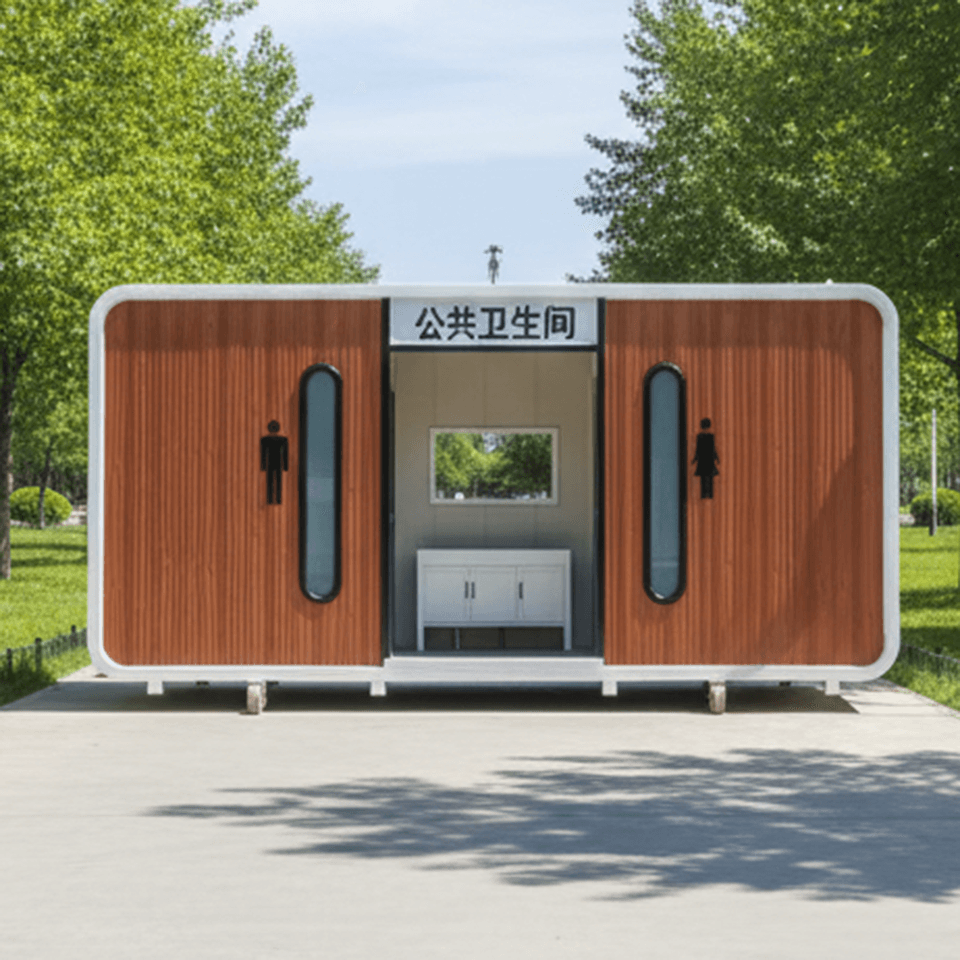
Shanghai's environmentally-friendly mobile toilets take technological innovation as the core, driving the city's green transformation through diversified products and scenario applications.
I. Enterprise Technology Drives Product Innovation
Shanghai Huajie Ecological Environment Engineering Co., Ltd., as an industry representative, has developed a series of products including solar-powered environmental toilets, rainwater collection water-saving toilets, and lightweight assembled mobile toilets. Its core technological breakthroughs are reflected in the fecal treatment process: water conservation is achieved through negative pressure induction technology (introduced in 2015), combined with biodegradation and resource utilization processes that convert excreta into harmless fertilizers or clean energy, significantly reducing the dependence of traditional toilets on water resources and chemical agents. For example, solar-powered toilets use photovoltaic panels for power supply, rainwater collection systems achieve reclaimed water reuse through multi-stage filtration, and lightweight assembled toilets adopt modular designs for rapid deployment at temporary event venues.
II. Typical Scenarios Validate Technological Reliability
The products have served extreme scenarios such as high altitudes and high foot traffic:
- Special Geographic Environments: Mobile toilets were provided for the Olympic torch relay on Mount Everest, solving fecal treatment challenges under low-temperature and hypoxic conditions;
- Super High-Rise Buildings: The toilets on the 101st floor of the Shanghai World Financial Center adopt lightweight designs, balancing structural safety and environmental protection needs;
- Large-Scale Event Support: During the Beijing Olympics, Shanghai World Expo, and marathons in various locations, mobile toilets achieved efficient operation and maintenance through dynamic scheduling systems, serving over 100,000 people in a single day at peak times.
III. Policies and Activities Drive Industry Upgrades
Shanghai guides the transformation of public toilet construction towards green and low-carbon development through the "Shenmei Toilet" selection activity (launched in 2026). The selection criteria cover five dimensions: green environmental beauty, design integration beauty, functional practicality beauty, service humanistic beauty, and innovative wisdom beauty. The activity encourages the use of natural environmentally-friendly materials (such as bamboo and recycled plastics), intelligent water-saving devices (such as infrared induction flushing), and biological ecological technologies (such as microbial agent decomposition), promoting the evolution of public toilets from single sanitation facilities to urban ecological nodes. For example, some award-winning public toilets reduce the urban heat island effect through vertical green walls and use fecal compost to nourish surrounding plants, forming a resource recycling closed loop.
IV. Social Benefits and Future Trends
The promotion of Shanghai's environmentally-friendly mobile toilets has yielded significant environmental benefits: a single water-saving toilet saves over 100 tons of water annually, and biological treatment technologies reduce chemical pollution emissions by about 80%. With the advancement of the "dual carbon" goals, the industry is exploring cutting-edge technologies such as hydrogen energy power supply and Internet of Things operation and maintenance, aiming to upgrade towards zero emissions and full automation in the future, helping cities build low-carbon and resilient infrastructure networks.



