
Back to blog
Article
Living in Container Houses in Shanghai
Admin September 15, 2026
Caution is advised when living in container houses in Shanghai, as there are issues regarding legality, safety, and other aspects, and it is not recommended as a conventional living option. Here is a detailed analysis:
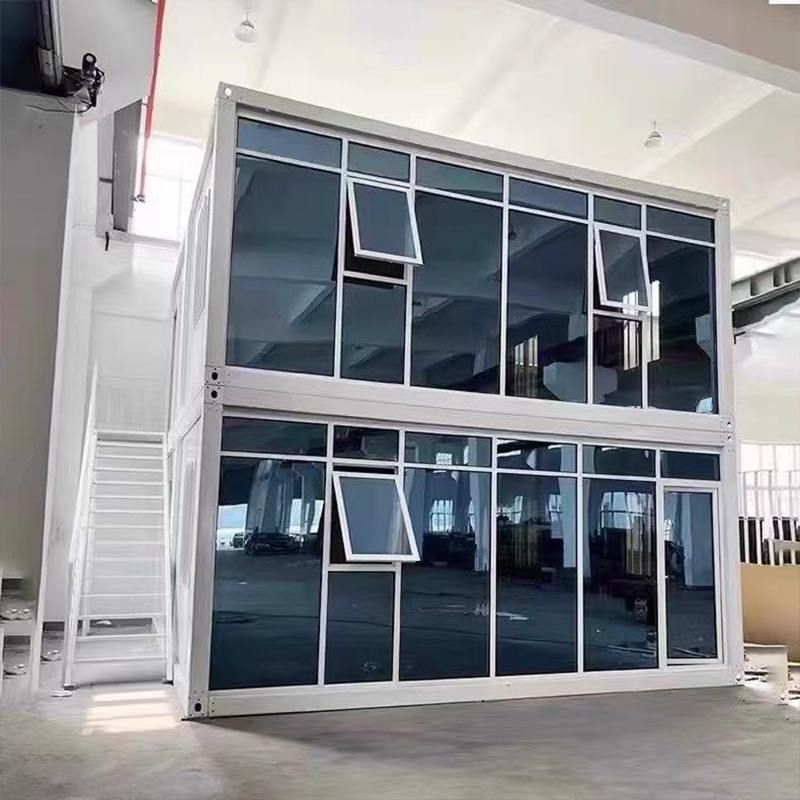
Legality in Question
- Temporary address plates do not equate to legal property rights: For example, the container building on Dukou Road, Sanlin Town, Pudong New Area, although bearing the address plate “224 (Temporary), Shenjia Team, Shenjia Residence, Guijing Village”, according to the “Shanghai Address and Number Management Measures”, temporary address plates are only used for the management of the actual population in temporary buildings in urban-rural fringe areas. They are approved and established by the local police station and are automatically canceled upon the demolition of the building. They do not involve the legality of the building or property rights and cannot serve as evidence of the building's legality.
- Risk of illegal construction: During patrols, the Xianghua Town Comprehensive Administrative Law Enforcement Team of Chongming Urban Management found that many containers transported from other towns and villages, if renovated for use as houses, are considered illegal constructions. According to Article 65 of the “Law of the People's Republic of China on Urban and Rural Planning”, in township and village planning areas, if construction is carried out without obtaining a rural construction planning permit in accordance with the law or without complying with the provisions of the rural construction planning permit, the township or town people's government shall order the cessation of construction, set a deadline for rectification; if rectification is not made within the deadline, the construction may be demolished.
Lack of Safety Guarantees
- Structural safety: Container houses that have undergone housing renovations may not meet the safety requirements for living. Compared with regular buildings, containers may have insufficient earthquake resistance and wind resistance. In the event of natural disasters or accidents, they can easily pose a threat to the lives of the occupants.
- Fire safety: The materials and spatial layout of container houses may pose fire hazards. For example, if color-steel movable houses are in a humid environment for a long time, the paint coating on the outside of the color-steel plates will rust, and the house will be prone to scrapping. Moreover, they may not meet the standard requirements in terms of fire safety.
Poor Living Experience
- Limited space: The interior space of containers is relatively small, and living in them can feel cramped. For example, Mr. Gao and his daughter in Qigan Village, Zhoupu live in a container. The container where his daughter lives only has simple facilities such as a bed and a desk, and the limited space affects the quality of life.
- Insufficient supporting facilities: Container houses usually lack complete supporting facilities such as water, electricity, and sanitation. The container where Mr. Gao's daughter lives has no toilet and other facilities, causing great inconvenience in daily life.



