Shanghai Container House Construction
Shanghai container house construction features diverse applications, cost-effectiveness, and flexibility, but legal compliance must be emphasized.
Diverse Application Scenarios
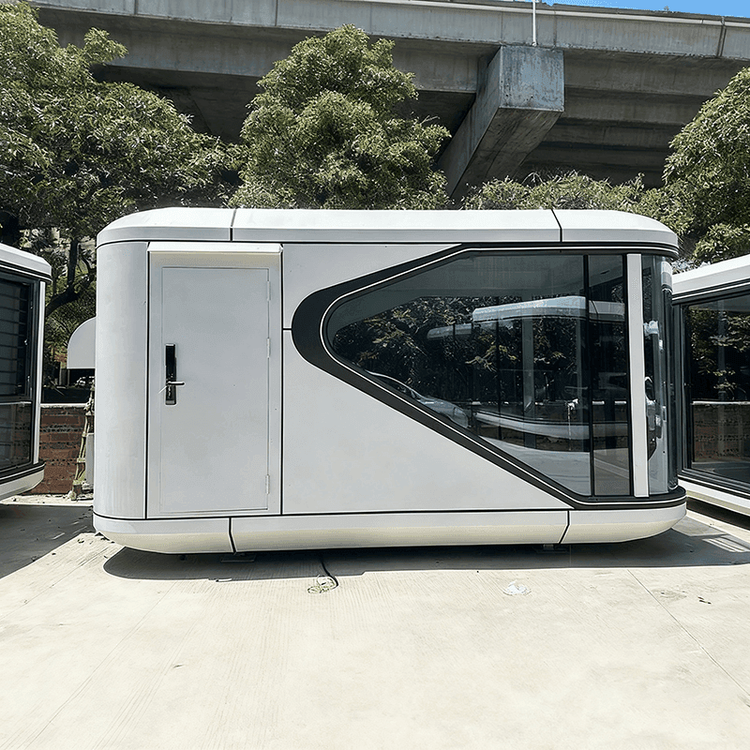
Shanghai container house construction has a wide range of applications, covering temporary offices, residences, commercial spaces, cultural tourism, and other fields. For example, Shanghai Wisdom Bay Science and Technology Innovation Park uses approximately 500 containers to build a 110,000-square-meter creative space, housing around 380 enterprises and becoming a hub for cultural and technological innovation industries. Gubei Post Station uses containers as a platform to create a community shared service network, providing government services, cultural salons, and other functions, hosting over 80 events annually. Qingdao TEU Container Tribe combines steel structures and containers to create a nearly 6,100-square-meter fashionable commercial complex, integrating family vacations, food and beverage, and other businesses, becoming a new landmark for entertainment and fashion.
Cost-Effectiveness and Industrial Advantages
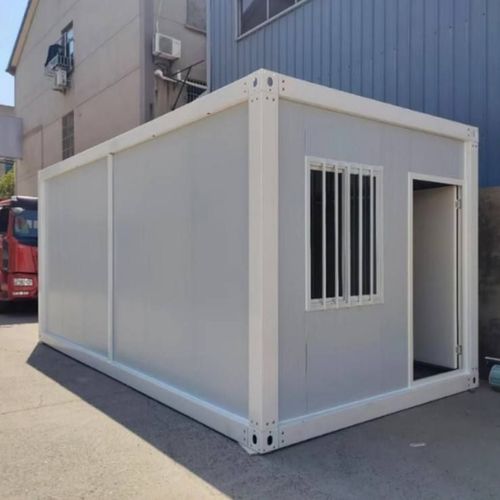
Container construction achieves economies of scale through factory production, reducing overall costs by 30%-50% compared to traditional buildings, shortening construction periods by nearly 70%, and increasing asset reuse rates by 4-6 times. For example, the unit cost of Shanghai Wisdom Bay Science and Technology Innovation Park is only 62% of that of traditional buildings, and on-site assembly time is only one-fifth of traditional methods. The container villas at Huzhou Moganshan Xidi 99 Resort in Zhejiang reduce full-cycle carbon emissions by 52% compared to traditional buildings, with construction water usage, concrete waste, and construction waste reduced by 60%, 60%, and 70%, respectively.
Flexibility and Spatial Innovation
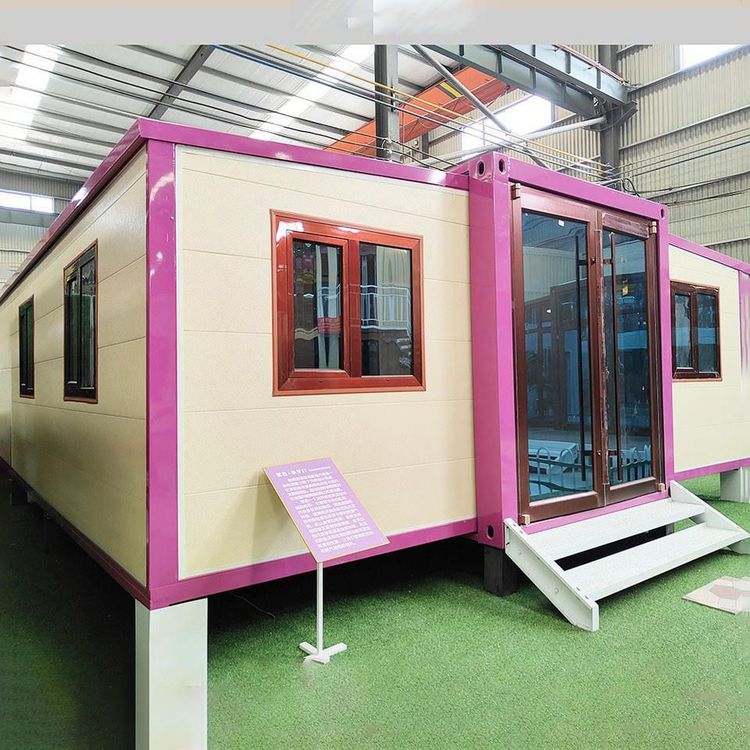
Container construction supports modular combinations and functional transformations, allowing for rapid adaptation to different needs. For example, Gubei Post Station can complete a functional transformation from a government service hall to a community meeting room within 2 hours through hydraulic lifting partitions and movable furniture systems. A container office project in Shanghai achieves dynamic switching between residential and office modes through foldable walls and sliding spaces, allowing the same space to evolve into different functional activities over time.
Importance of Legal Compliance
Unauthorized modification of container houses without approval may constitute illegal construction. For example, residents in Miaozhen Town, Chongming District, Shanghai, purchased and used modified container houses for residence, which were identified as illegal structures due to lack of approval and faced demolition risks. Law enforcement authorities remind that container houses equipped with doors, windows, water, and electricity for residential purposes are equivalent to unlicensed new buildings and must strictly comply with urban and rural planning regulations.