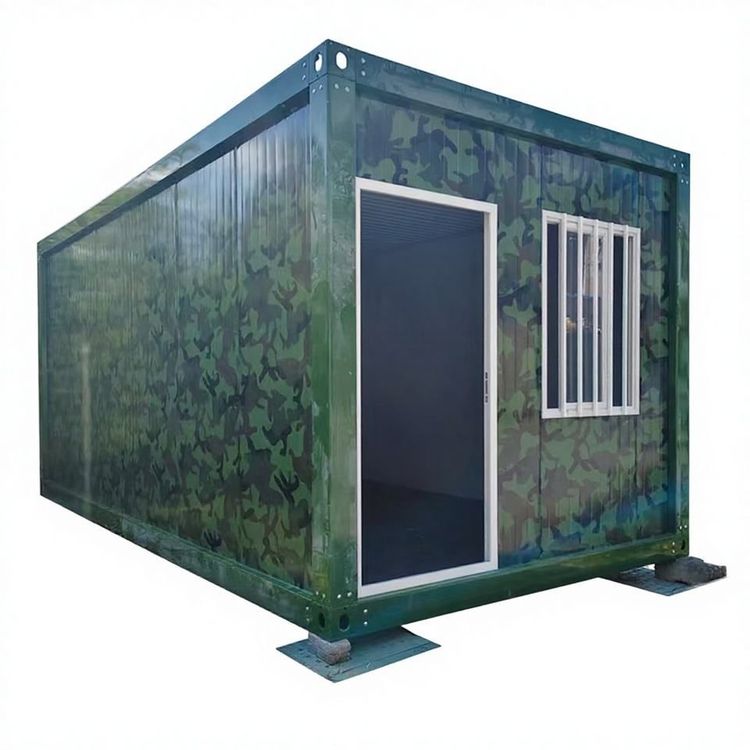
Shanghai Box Mobile Toilet Installation
The installation of box-type mobile toilets (container mobile toilets) in Shanghai requires a combination of technical specifications and local service resources. The specific process is as follows:

I. Core Preparations Before Installation
Demand Assessment and Planning
Determine the number of toilets based on the foot traffic and usage duration of the application scenario (such as construction sites, large events, parks, etc.). For example, an event with a daily foot traffic exceeding 500 people requires at least five standard toilet units. Additionally, plan the placement location, selecting an area with a flat surface that facilitates crane operations, and reserve temporary power access points (usually requiring 380V three-phase power) and a route for septic tank cleaning (preferably within 50 meters).Equipment Selection and Procurement
Local suppliers in Shanghai offer a variety of options:
- Jinhua Xin'an Steel Structure Engineering Co., Ltd.: Provides full-process services from design to installation, suitable for long-term scenarios such as construction sites, with a steel structure lifespan exceeding 15 years.
- Shanghai Xinzhang Environmental Protection Equipment Engineering Co., Ltd.: Focuses on leasing services, offering steel structures (10-year lifespan) and plastic toilets in a 100010002400mm size, with a supply cycle of only 2 days, suitable for short-term events.
II. Key Steps for On-Site Installation
Transportation and Lifting
Use a crane or forklift to unload the container units to the planned location, ensuring the ground bearing capacity is ≥3 tons per square meter. During lifting, secure the four corner fittings with four steel wires with a diameter ≥16mm to prevent tilting.System Debugging
- Water and Electricity Connection: After connecting the temporary power supply, test whether the lighting (LED light strips with an illuminance ≥200 lux) and ventilation system (exhaust volume ≥300 m³/h) are functioning properly.
- Water Tank Filling: The freshwater tank usually has a capacity of 500-1000L and should be filled to the green zone indicated on the level gauge; the blackwater tank (sewage tank) should remain empty.
- Safety Inspection
Focus on checking whether the toilet door locks, non-slip floors, and emergency call devices (if equipped) are intact, and ensure the septic tank cleaning port is well-sealed to prevent odor leakage.
III. Key Points for Post-Installation Maintenance
Daily Cleaning
Inspect the toilet stalls every 2 hours to replenish toilet paper and soap; disinfect the handwashing area every 4 hours using a chlorine-based disinfectant (concentration ≥500 mg/L).Sewage Treatment
The blackwater tank usually has a capacity of 800-1200L. When full, contact a professional sewage suction truck (with hazardous goods transportation qualifications) for extraction and transfer. Random discharge is strictly prohibited.Troubleshooting
If the ventilation system makes abnormal noise, check whether the fan bearings are short of oil; for lighting failures, first check whether the fuse (rated current 10A) has blown.
Note: Installation in Shanghai requires prior notification to the urban management department. For event-based scenarios, a temporary power plan and sewage cleaning agreement are required.